
Antique Glass Fixture
An antique glass fixture brings together period metalwork and luminous panes or drops to cast a distinctive glow in a room.
Antique Glass Fixture
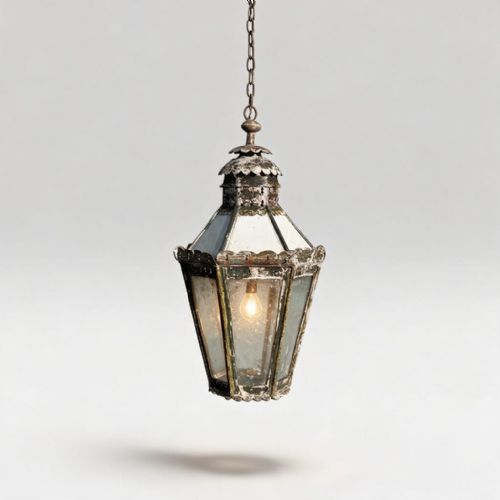
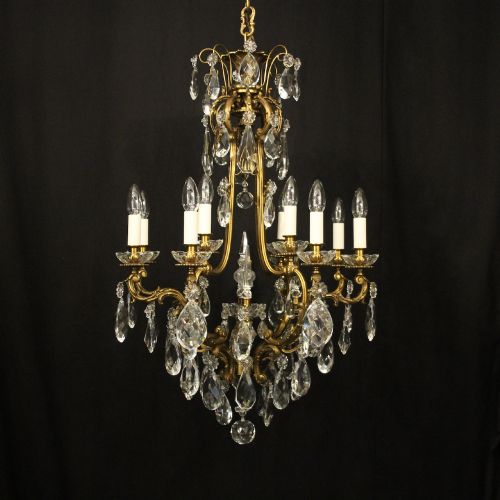
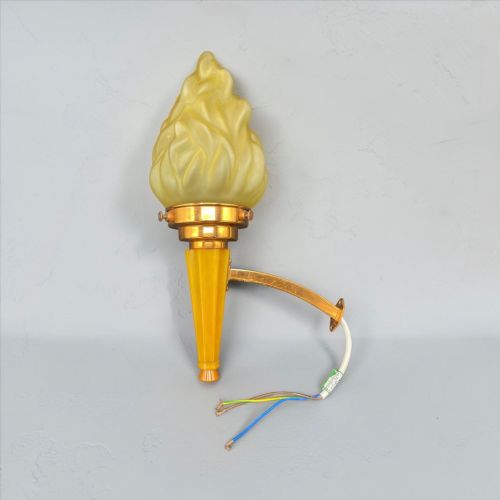
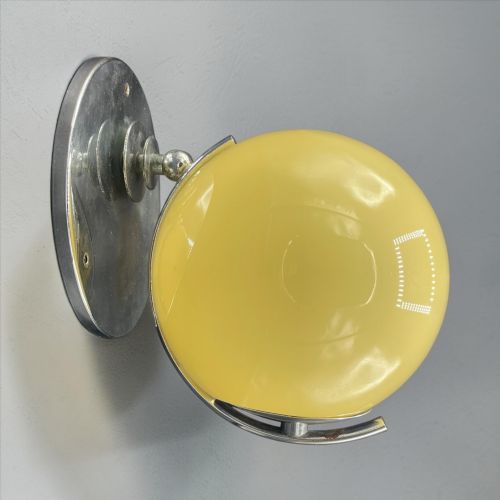
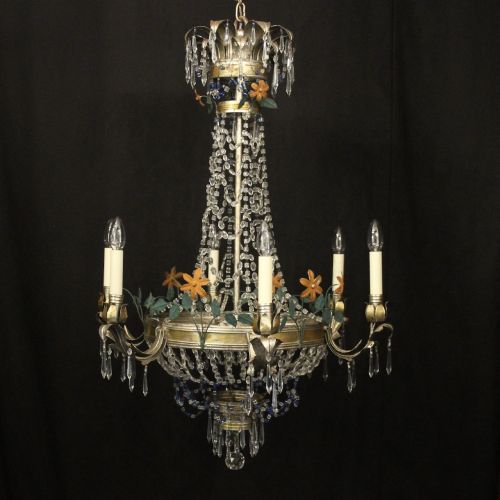
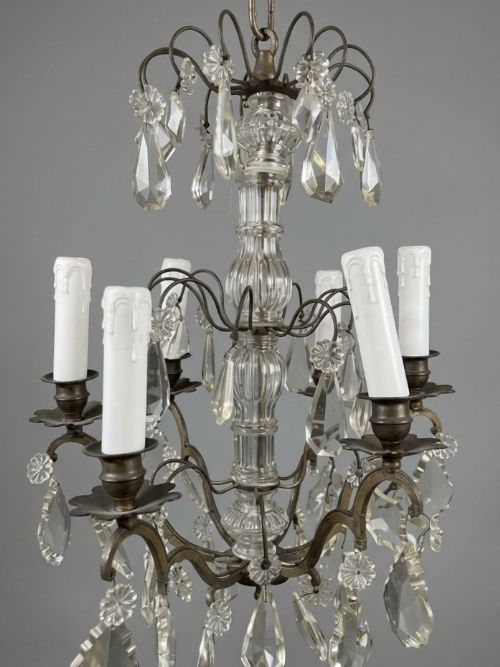
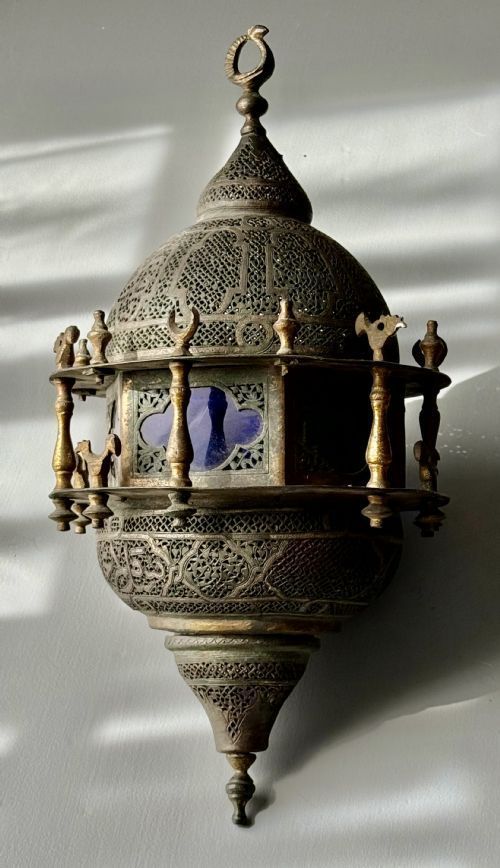
When you search for an antique glass fixture, you encounter a diverse array of lighting designed for ceilings and walls across various historical periods. The selection spans grand multi-arm chandeliers, hanging lanterns, flush-mounted plafonniers, and practical wall lights.
You are most likely to meet French pieces dating from the nineteenth century into the 1930s on this page. These encompass ornate styles like French Rococo and French Empire alongside streamlined Art Deco designs.
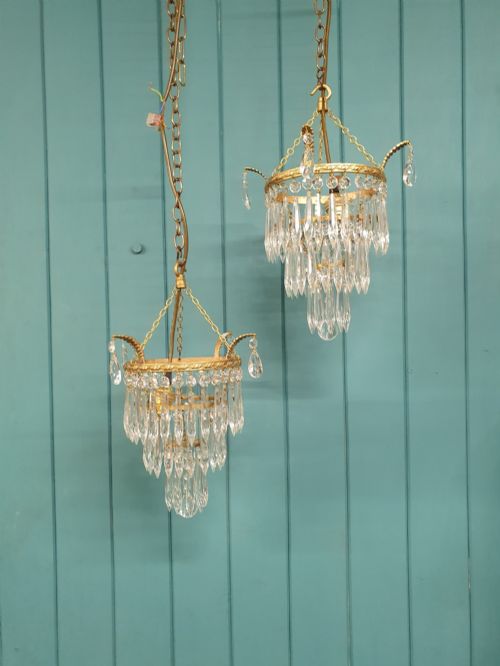
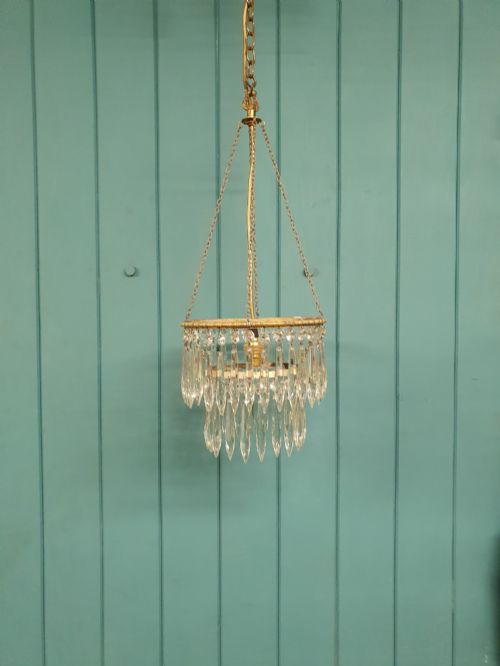
The objects serve primarily as overhead or wall illumination while functioning as decorative centrepieces. Their forms range from simple glass shades to elaborate tiered crystal structures hung with lustres.
Materials and construction methods
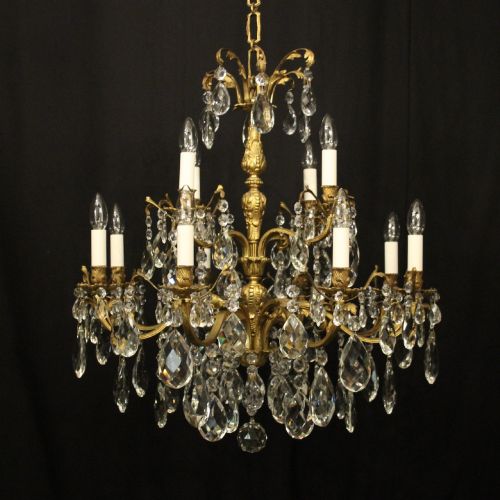
Makers built these fixtures using a combination of cast metal frames and glass components. Brass, bronze, or gilt metal formed the structural skeletons that supported cut glass, crystal drops, or blown glass shades.
Techniques varied from hand-cut crystal prisms wired to metal armatures to pierced brass work framing coloured glass panels. Individual components like ceiling lights and wall sconces utilised moulded glass or slip shades secured in metal mounts.
Among the ceiling lights hide flying cherubs holding glass spike chandeliers.
Evaluating the standard of workmanship
Quality separates fixtures by the precision of their metal casting and the clarity of their glass elements. Finer pieces display crisp chasing on gilt bronze frames and hand-cut facets on crystal lustres that refract light cleanly.
Substantial weight in the brass or bronze armature and secure, integrated fixings distinguish superior examples from simpler production. The purity of the glass, whether clear crystal or tinted art glass, dictates the depth of illumination.
Charles Schneider·Degué·Émile-Jacques Ruhlmann
The Antique Glass Fixture Glossary
- Plafonnier
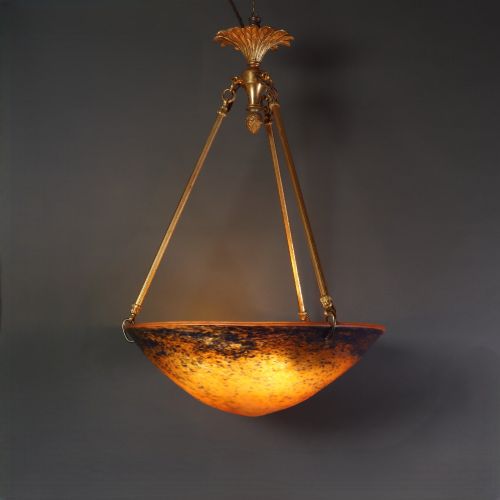
- A ceiling light that mounts flat or close against the ceiling surface. These often utilise moulded art glass bowls popular in the Art Deco period.
- Lustre
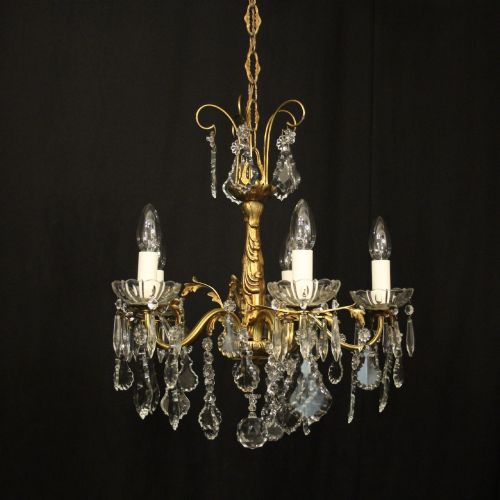
- A cut glass pendant or drop hung from a chandelier or wall sconce. Lustres catch and reflect the light from the bulbs or candles.
- Tent and waterfall
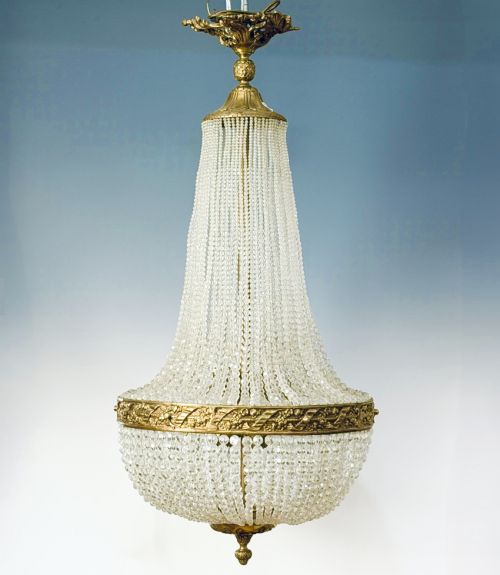
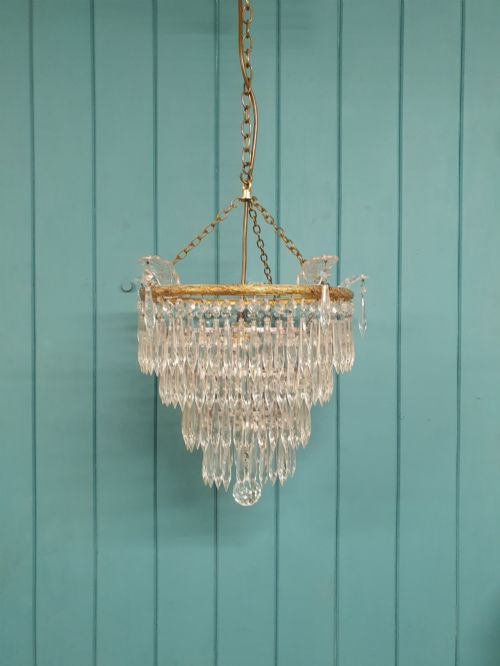
- A chandelier configuration where strings of crystal beads form an upper cone shape above a cascading arrangement of drops.
- Ormolu
- Gilt bronze or brass mounted on decorative objects, created by applying a gold amalgam to a bronze base. This finish provides a warm golden sheen to the metal parts.
- Slip shade
- A type of glass shade that slips into a metal frame or bowl holder, commonly found on American and European ceiling lights from the 1930s.
Antique Glass Fixture: Frequently Asked Questions
How do I hang a heavy antique fixture?
Most substantial chandeliers and lanterns require professional installation with direct ceiling joist support. The weight of the metal frame and glass components demands secure electrical and mechanical anchoring.
Qualified electricians should handle the hanging process to ensure the fixture is safely balanced and properly wired for modern standards.
Can I clean the glass components safely?
Regular dusting keeps glass and crystal clear without removing the fixture from its ceiling mount. For a deeper clean, delicate parts like lustres can be removed and washed in warm soapy water.
Harsh chemical cleaners should be avoided to protect antique metal finishes and gilt surfaces near the glass.
How do I tell Art Deco from Victorian pieces?
Art Deco fixtures from the 1920s and 1930s typically feature geometric lines, chrome, or slip shades. They reflect a modern, streamlined aesthetic compared to earlier designs.
Victorian and nineteenth-century pieces lean towards ornate brass, cast bronze, and cascading crystal drops influenced by French Rococo or Empire styles.