

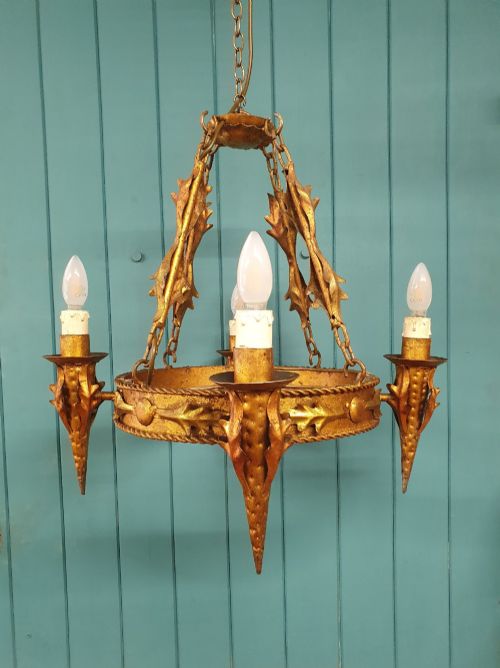
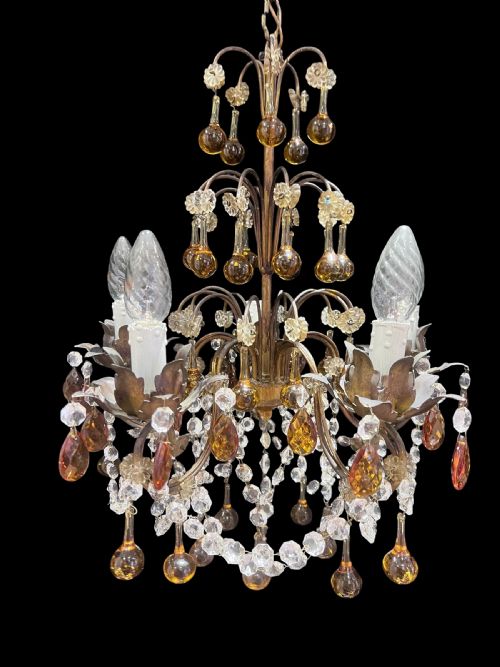
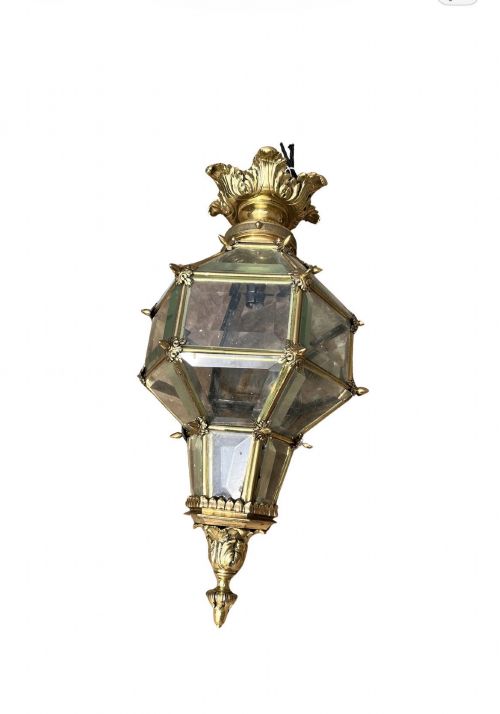
Antique Gilt Ceiling Lamp
An antique gilt ceiling lamp brings warmth and a distinct period presence to a room, offering functional illumination dressed in historic metalwork.
Antique Gilt Ceiling Lamp
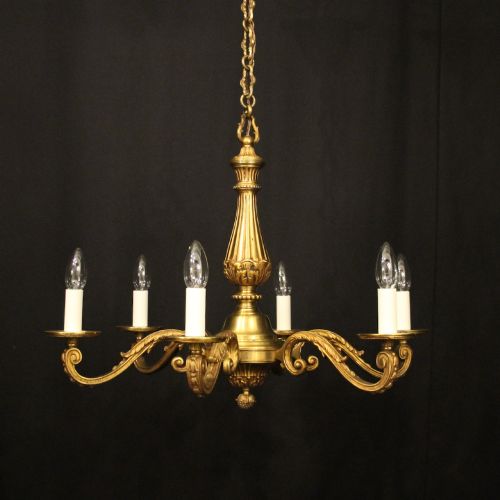
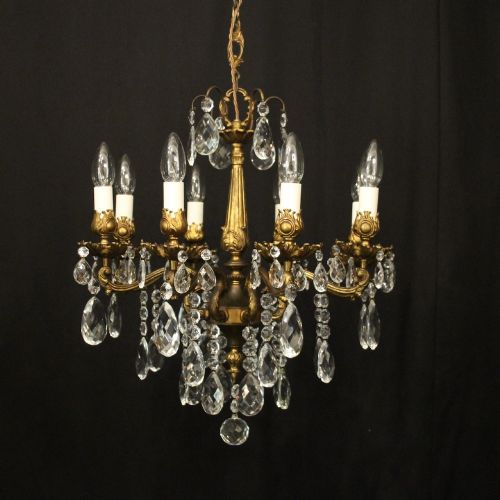
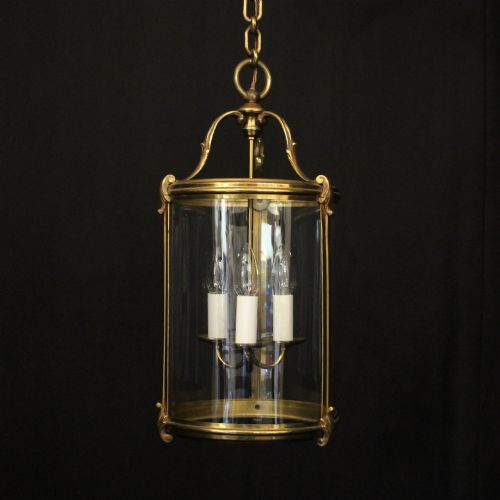
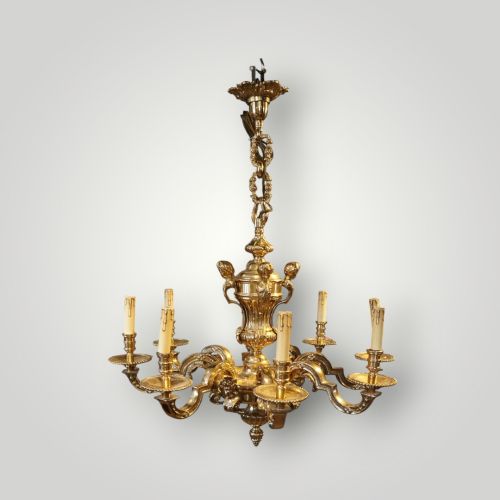
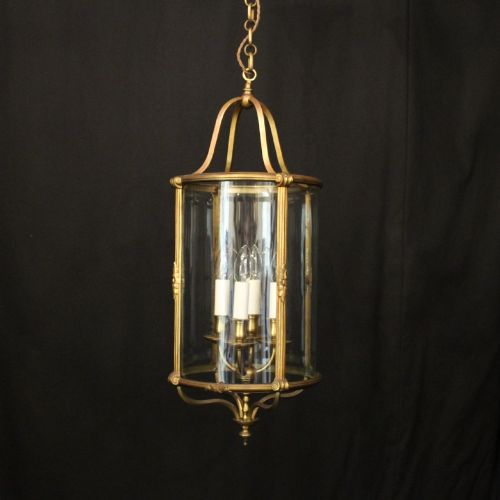
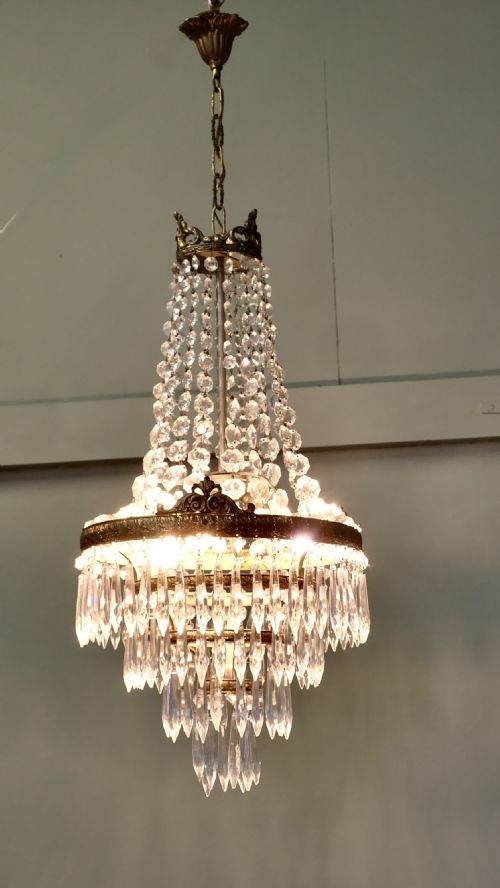
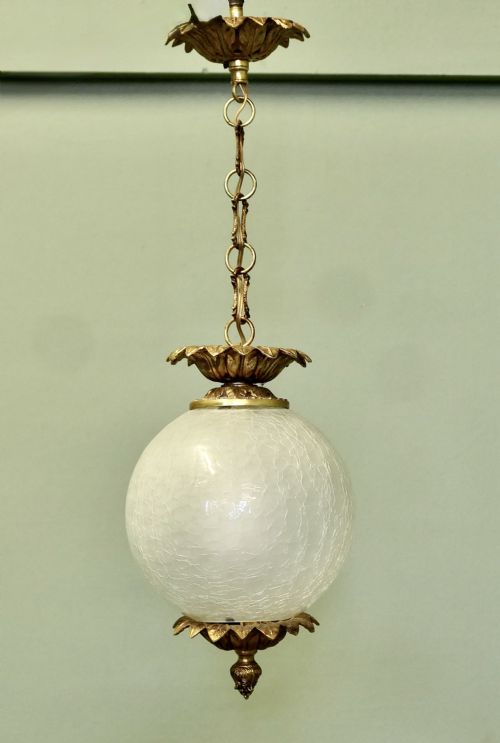
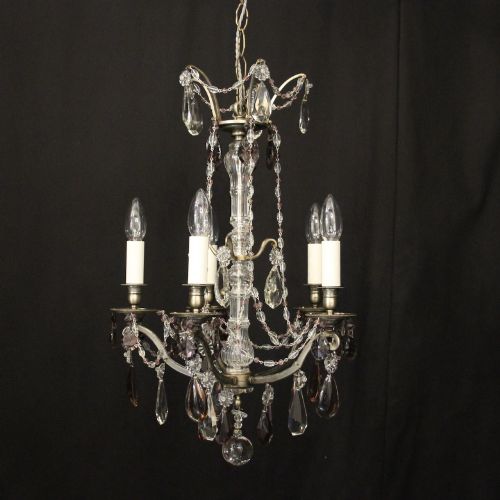
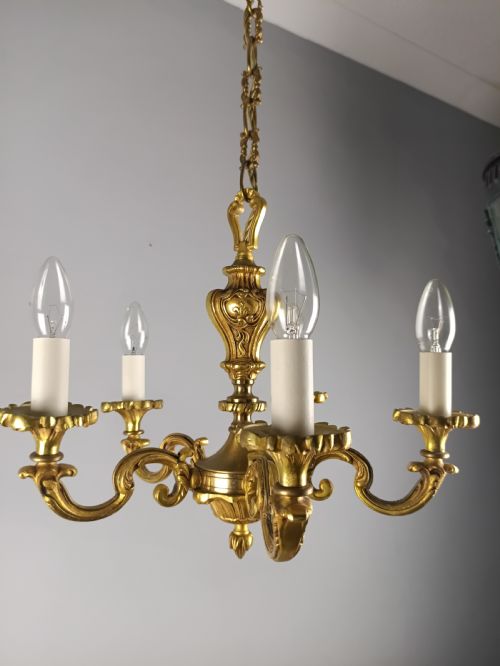
When searching for an antique gilt ceiling lamp, buyers encounter a diverse array of overhead fixtures spanning from the Victorian era through the Art Deco period. The selection includes multi-arm chandeliers, hanging lanterns, and pendant lights rooted in French design styles such as Empire, Neoclassical, and Rococo.
The most common examples on this page date from the early twentieth century and the 1930s, alongside nineteenth-century pieces. These fixtures range from intimate single-light hall lanterns to grand multi-light chandeliers embellished with crystal drops and gilded bronze.
Materials and construction
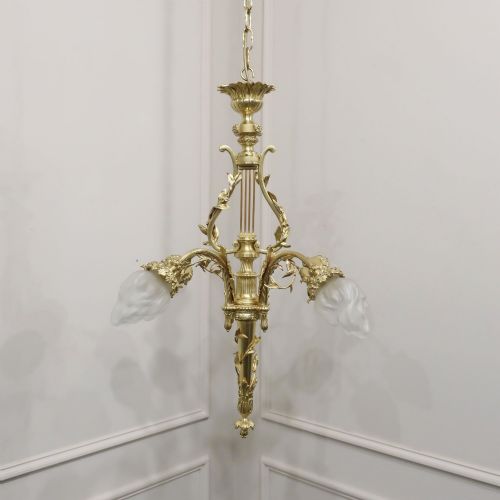
Construction relies heavily on metals such as bronze, brass, spelter, and cast iron, finished with gilding, silver gilding, or applied gold colour. Frames frequently incorporate glass components, opaline glass globes, and cut crystal spikes or waterfall drops to refract light.
Maker execution involves casting bronze and brass components, shaping giltwood, and assembling multi-tier crystal elements by hand. Structural integrity depends on secure arm joints and fitted bezels holding glass lanterns and shades.
Materials recorded across the inventory include bronze, brass, giltwood, opaline glass, and cut crystal.
Assessing quality in gilt lighting
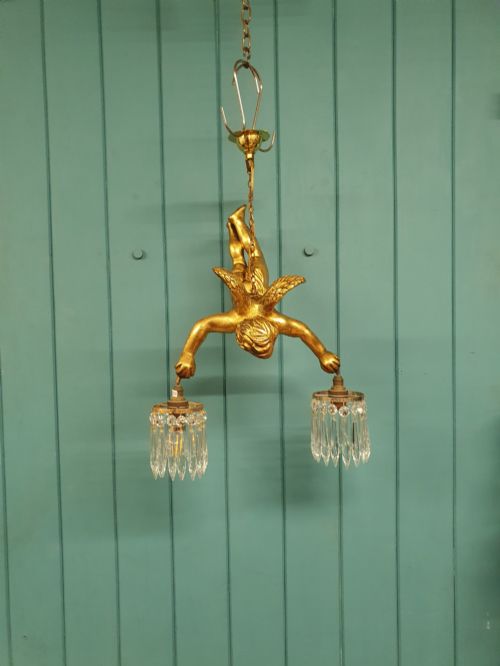
Quality separates through the crispness of metal casting and the depth of the original gilding. Finer pieces display sharply rendered details on bronze mounts, flying cherubs, or coronets, whereas simpler items utilise plain brass or spun metal.
The integration of glass and crystal distinguishes the tier of the piece. Superior examples feature heavy cut crystal drops, coloured crystals, and hand-blown opaline or art deco glass globes fitted securely within heavy metal frameworks.
Perry And Co
The Antique Gilt Ceiling Lamp Glossary
- Gilt bronze
- Metal cast in bronze and treated with a gold-coloured finish or gold leaf. It forms the primary structural body for many French chandeliers.
- Spike chandelier
- A specific chandelier configuration featuring upright crystal spikes arranged around the central frame. They appear frequently in early twentieth-century listings.
- Opaline glass
- A milky, translucent glass popular in nineteenth-century and Victorian pendant lanterns. It diffuses light softly across a room.
- Toleware
- Painted sheet metal used for decorative light fixtures and chandeliers. It introduces polychrome colour accents into an interior scheme.
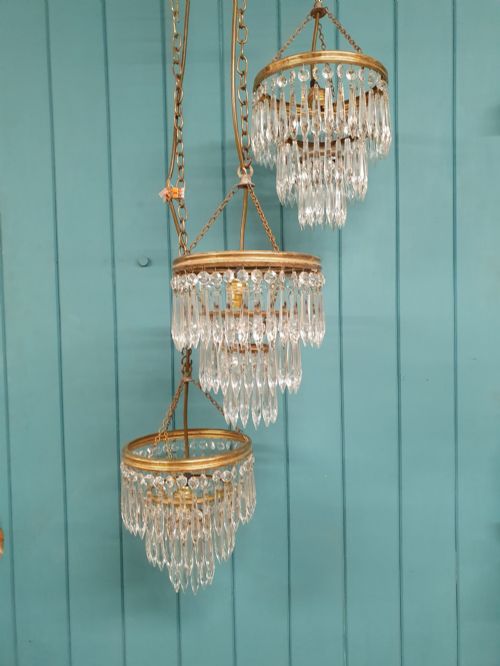
- Waterfall chandelier
- A lighting form characterised by cascading tiers of glass crystals. They project a dramatic silhouette against a ceiling.
Antique Gilt Ceiling Lamp: Frequently Asked Questions
How do I choose the right size ceiling lamp?
Consider the proportion of the room and the height of the ceiling when selecting a multi-light chandelier or hanging lantern. Larger spaces accommodate multi-arm or multi-tier fixtures holding ten or more lights.
Smaller rooms or hallways benefit from compact single-light lanterns or low-profile pendant lights that maintain adequate clearance below.
What periods do these ceiling lamps come from?
The inventory spans the Victorian and Edwardian eras, stretching through the 1900s, 1910s, 1920s, and 1930s. Nineteenth-century examples sit alongside interwar pieces.
Design styles reflect this timeline, moving from ornate French Empire and Rococo revivals toward cleaner Art Deco and mid-century aesthetic influences.
Are these lamps wired for modern electrical systems?
Most antique ceiling fixtures require professional rewiring to meet current electrical standards and safety codes upon installation. Components from the nineteenth and early twentieth centuries were originally built for gas or early electric systems.
Consult a qualified electrician to adapt internal wiring safely while preserving the historic exterior metalwork and crystal drops.
How should I clean crystal and gilt metal?
Dust gilt bronze and brass surfaces gently with a soft dry cloth to protect the underlying gold finish. Avoid harsh chemical cleaners that strip historical gilding.
Remove crystal components periodically for careful washing in warm soapy water, drying them thoroughly before reattachment to the frame.