


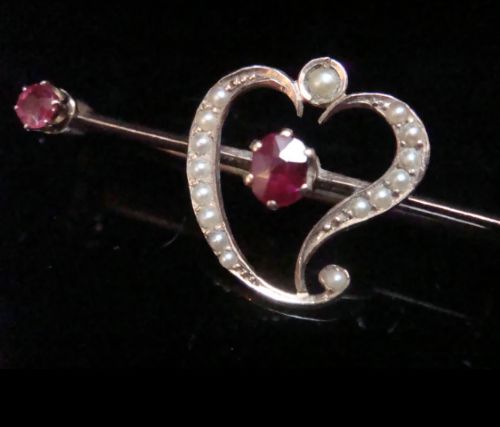


Antique Gemstone Bar Brooch
An antique gemstone bar brooch fastens a lapel with periods from Georgian through Art Deco, carrying diamonds, rubies, and pearls along a slender metal line.
Antique Gemstone Bar Brooch
An antique gemstone bar brooch presents a linear metal pin set with stones like ruby, diamond, peridot, and sapphire. These pieces stretch horizontally across fabric, originating in periods spanning Georgian, Victorian, Edwardian, and Art Deco eras.
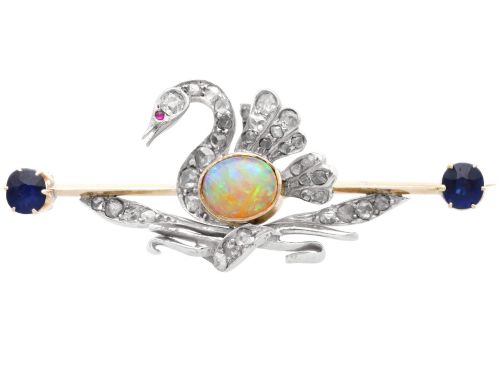
The layout typically centres on a single prominent gem or a cluster of stones mounted directly onto a slender metal bar. Edwardian and Victorian examples frequently incorporate hearts, crescents, or insect motifs alongside the core linear format.
Gold in nine carat, fifteen carat, and yellow or white varieties forms the framework, alongside silver and platinum settings. Buyers encounter these items as functional fasteners that double as period decorative ornaments.
Materials and construction
Goldsmiths utilised nine carat and fifteen carat gold, silver, and white gold to construct the foundational bars and box settings. Gemstones including chrysoberyl, tourmaline, aquamarine, and natural pearls were secured using claw or collet mounts.
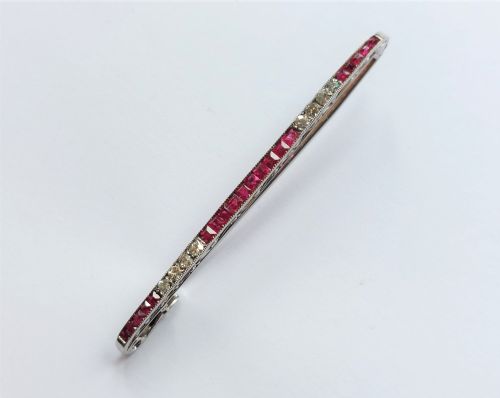
Metal fabrication relied on hand-drawn wire for the bars and soldered box or bezel housings for the precious stones. Old cut diamonds and calibrated rubies were set by hand, often backed by silver to enhance the brightness of the stones in earlier pieces.
Antique Gemstone Bar Brooch Retail Price Guide 2026
Typical asking prices for gemstone bar brooch among the pieces listed under this phrase on Sellingantiques today, from the lower quarter to the upper quarter. They describe what is for sale here now, not the wider market.
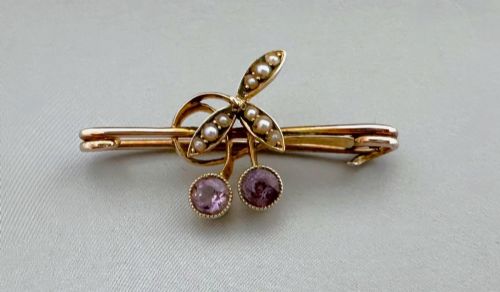
Clover, heart, and insect motifs perch upon the metal bars, bringing beetles and blooms straight to the lapel.
Quality variations
The grade of an antique gemstone bar brooch depends upon the purity and depth of colour found in the central stones, such as unheated sapphires or imperial pink topaz. Superior examples display clean gemstone cutting and secure, original setting work without modern metal replacements.
Construction robustness separates standard production from finer goldsmithing, visible in the spring tension of the pin and the crispness of applied motifs like leaves or crescent borders. Original clasps and safety chains further indicate a higher tier of preservation.
The Antique Gemstone Bar Brooch Glossary
- Bar brooch
- A decorative pin featuring a narrow horizontal metal shaft that spans fabric. These items provide a structural platform for mounting gemstones and central clusters.
- Old cut diamond
- A precursor to modern brilliant cuts, characterised by a smaller table, higher crown, and open culet. These stones display softer scintillation under candlelight.
- Chrysoberyl
- A golden-green mineral valued for its durability and distinct pleochroism. It appears frequently in late Victorian and Edwardian cluster and bar settings.
- Collet setting
- A low collar of metal that encircles the girdle of a gemstone to hold it in place. This technique predates modern prong settings in many antique pieces.
Antique Gemstone Bar Brooch: Frequently Asked Questions
How do I wear a bar brooch safely?
Fasten the pin through a sturdy layer of woven fabric, such as a lapel or heavy wool scarf, rather than delicate silks. Ensure the safety catch or C-clasp holds the pin firmly against the bar.
Store the brooch flat in a lined jewellery box when not in use to prevent the pin from bending under pressure. Avoid catching the protruding pin on knitwear during removal.
What periods do these brooches come from?
The listings span Georgian, Victorian, Edwardian, Art Deco, and mid-century eras, reflecting changing jewellery aesthetics from eighteen hundred to the nineteen sixties. Georgian and early Victorian pieces often feature foiled stones and closed-back settings.
Later Edwardian and Art Deco examples favour platinum, white gold, and open-backed settings that maximise light transmission through diamonds and coloured gemstones.
Are the gemstones natural?
Gemstones in these pieces are period originals, encompassing natural diamonds, rubies, sapphires, peridots, and tourmalines. Earlier pieces utilise stones mined and cut before modern synthetic gem production began.
Independent certifications sometimes accompany higher-value pieces to confirm the natural origin and treatment status of central coloured stones like sapphires or opals.