
Antique Furniture Shelving
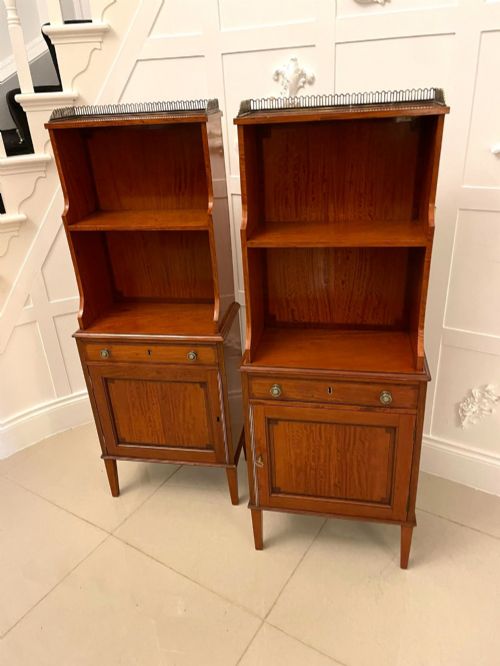
Antique furniture shelving comprises open bookcases, hanging racks and multitier whatnots built to display books and domestic objects with architectural clarity.
Antique Furniture Shelving
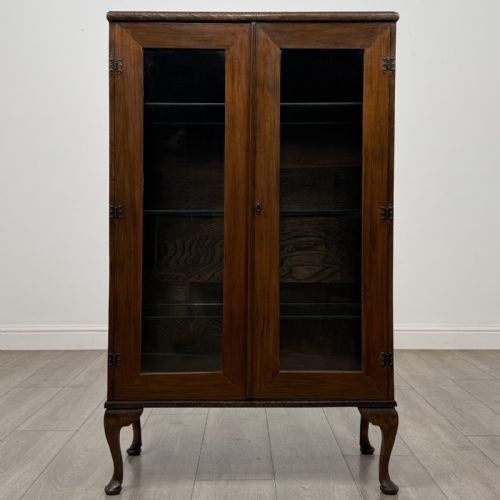
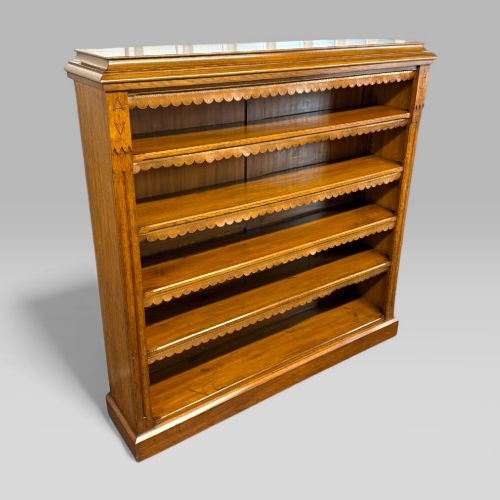
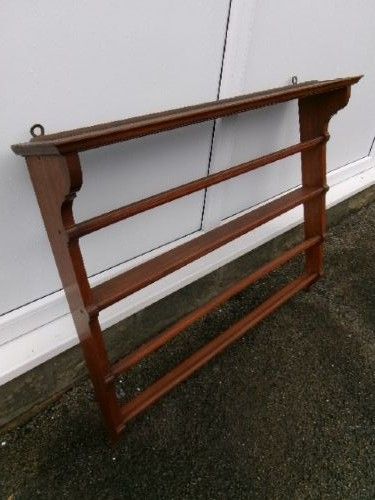
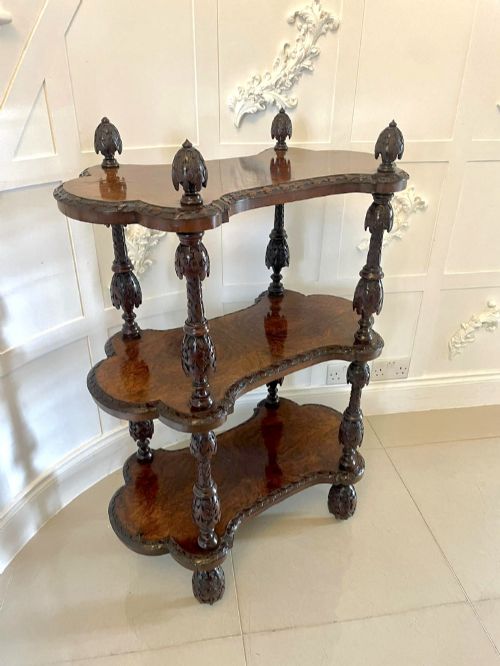
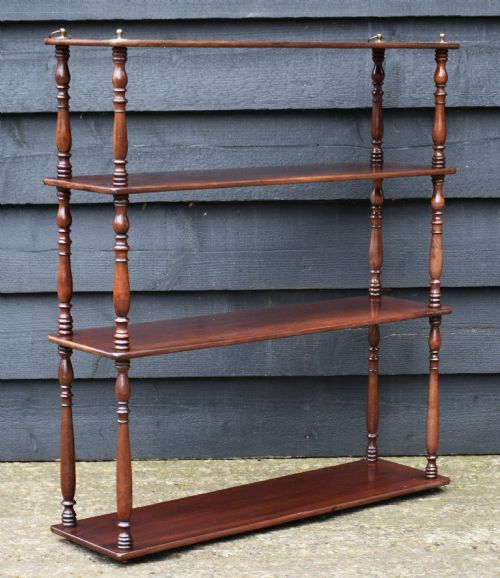
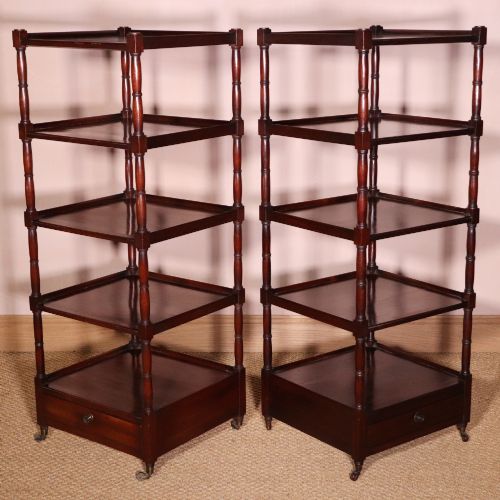
When you examine antique furniture shelving, you encounter a varied lineage spanning the George III, Regency, Victorian and Edwardian eras. The selection on this page leans heavily toward nineteenth-century forms, where open bookcases, wall hanging shelves and multitier whatnots predominate.
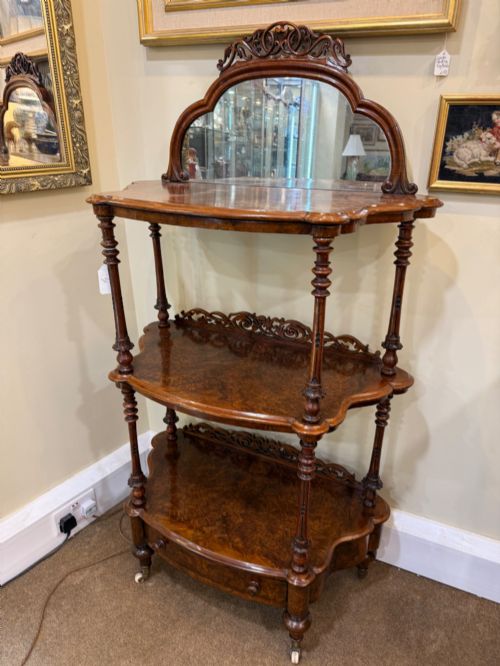
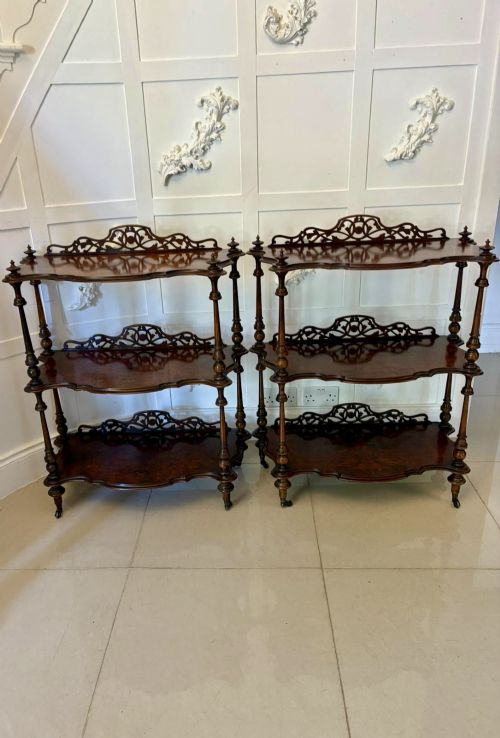
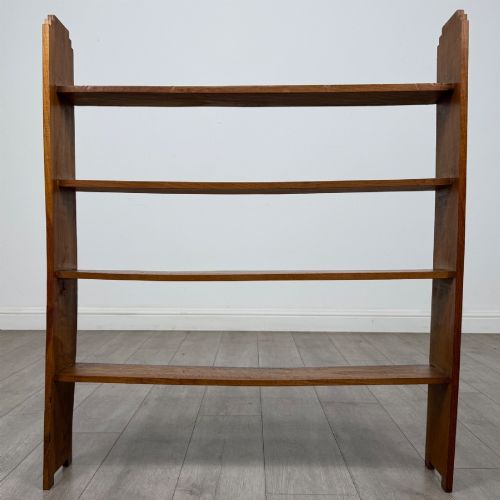
Makers of the period addressed specific domestic needs through distinct formats, ranging from freestanding walnut corner whatnots with pierced fretwork to oak open bookcases designed for libraries and studies. You will find mahogany and rosewood pieces sharing space with burr walnut and golden oak.
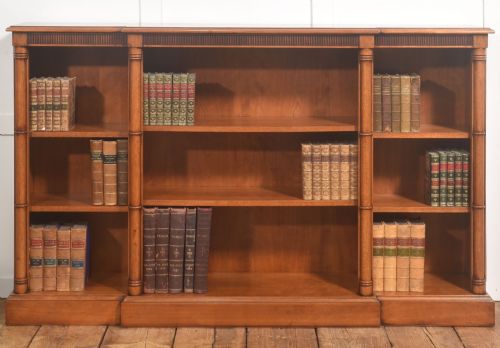
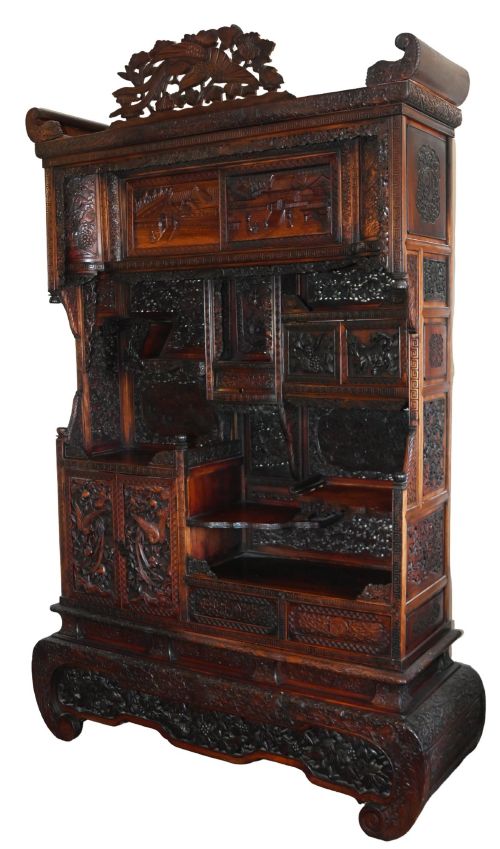
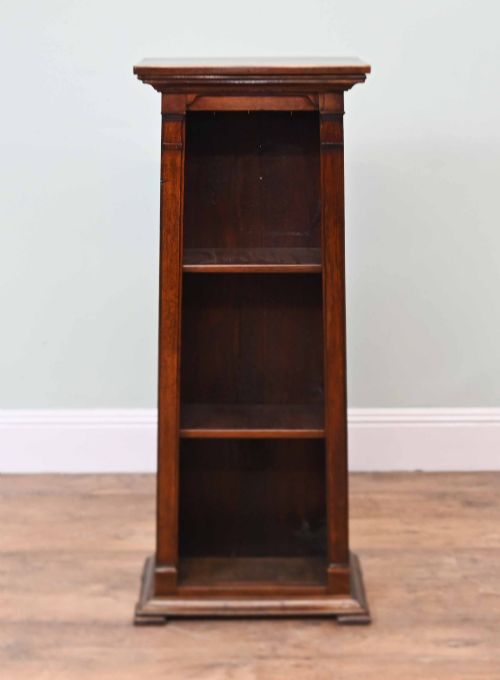
The typology extends from low dwarf bookcases with adjustable internal shelves to towering freestanding tiers and Japanese-influenced shodonas. Each piece reflects the interior hierarchy of its decade, whether intended for a formal drawing room or a working parlour.
Materials and construction
Cabinetmakers relied on dense timber selections, most notably mahogany, walnut, burr walnut and oak, augmented by accents of brass, ormolu and glass. Timber choice dictated the structural integrity of upright supports and the decorative impact of visible grain.
Joinery techniques combined traditional dovetailed carcass construction with turned barley twist columns, carved galleries and fretwork panels. Freestanding whatnots often utilised tiered platforms held by slender columns, whilst wall shelves depended on sturdy backplates and secure hanging brackets.
Several pieces incorporate secret compartments behind false book spines, offering unsuspecting Victorians a discreet place to hide their correspondence.
Standards of execution
Quality in these pieces rests upon the selection of timber figures, such as highly figured burr walnut veneers or dense, straight-grained mahogany. Superior workshops expended greater care on secondary timbers and internal fittings, including adjustable shelving tracks made of brass.
The crispness of carved details, whether dealing with Aesthetic Movement motifs or Arts and Crafts linear simplicity, separates standard production from exhibition-grade work. Proportion and stability across multiple tiers also dictate the visual success of the piece.
Gillows·Bowman Brothers·Johnstone and Jeanes·Dubois of Lyon·James Mein of Kelso
The Antique Furniture Shelving Glossary
- Whatnot
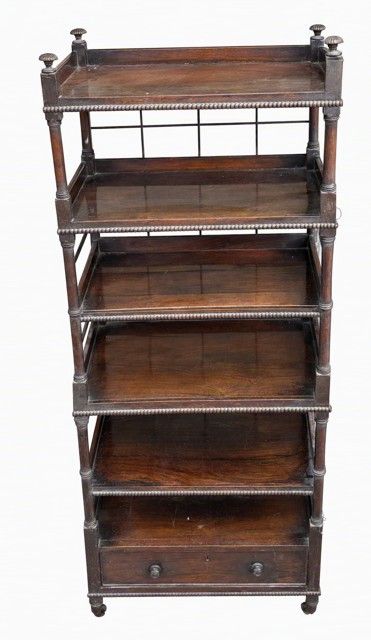
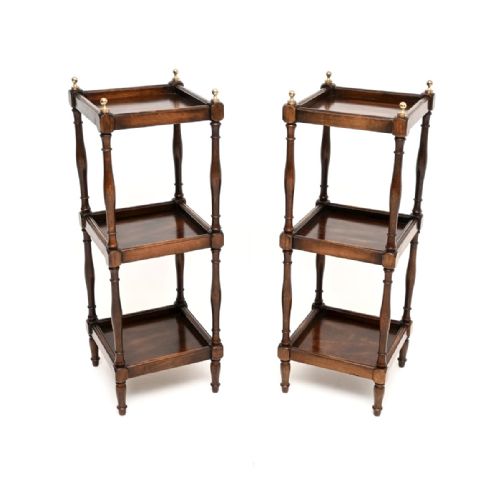
- A multitiered movable piece of furniture with shelves supported by columns or slender legs, designed for displaying ornaments or books. It developed during the eighteenth century and remained popular throughout the Victorian period.
- Waterfall bookcase
- A piece of shelving where each successive shelf is shallower than the one below it, creating a stepped profile reminiscent of cascading water. These units appeared frequently in Regency and nineteenth-century parlours.
- Fretwork
- Openwork ornamentation carved or pierced through thin wood to create geometric or flowing patterns. This technique frequently embellished the galleries and brackets of Victorian whatnots and wall shelves.
- Dwarf bookcase
- A low open bookcase designed to sit beneath dado height, allowing wall space above for pictures or mirrors. They often feature adjustable shelves supported on timber ratchets or brass pins.
- Shodona
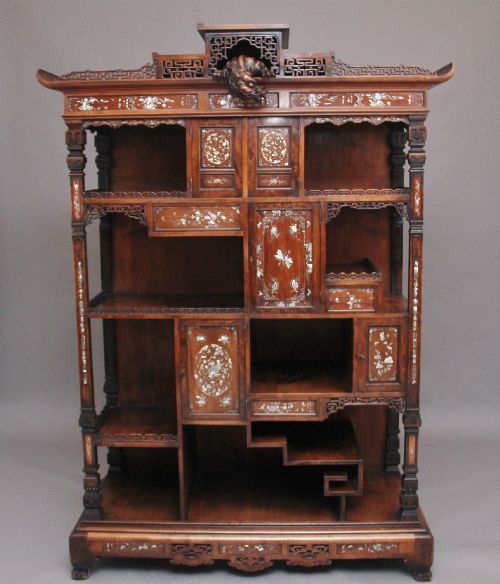
- A Japanese-inspired display cabinet featuring asymmetrical shelving, sliding doors and decorative compartments. These forms entered Western design vocabulary during the nineteenth century following international trade expositions.
Antique Furniture Shelving: Frequently Asked Questions
How do I hang wall shelves?
Antique wall hanging shelves require secure fixings into structural wall studs or solid masonry using appropriate weight-bearing brackets.
Because these pieces are constructed from dense timbers like mahogany and oak, checking the wall integrity before mounting is essential for safety.
Are shelves usually adjustable?
Many open bookcases and modular shelving units from the nineteenth century feature adjustable shelves supported on wooden ratchets or metal pins.
This adaptability allowed owners to alter shelf heights for varying book sizes without compromising the structural rigidity of the carcass.
How do I identify Victorian pieces?
Victorian shelving often utilises burr walnut, rosewood or heavy mahogany, frequently decorated with barley twist columns, pierced fretwork or carved foliate motifs.
The scale tends to be substantial, reflecting the domestic architecture and interior tastes of the mid to late nineteenth century.