


Antique Four Leg Stool
These antique four leg stool examples are honest everyday seats shaped by utility, offering tactile warmth and sturdy timber construction to any room.
Antique Four Leg Stool
When you search for an antique four leg stool, you encounter robust seating shaped by utilitarian needs across past centuries. The selection spans domestic utility forms, low hearth seats, and rustic vernacular items designed for specific household tasks.
You are most likely to meet pieces originating from the eighteenth and nineteenth centuries, finished in materials like oak, elm, ash, and pine. Styles lean heavily towards primitive country, rustic farmhouse, and vernacular traditions rather than formal court aesthetics.
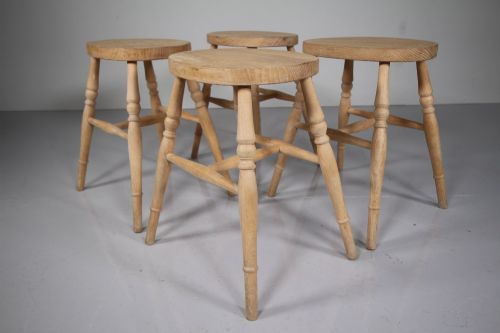
Forms vary from diminutive sculpted seats to larger dining sets and low milking stools. Their origins stretch from English country workshops to Eastern European farmsteads, each carrying the distinct marks of regional makers.
Construction and materials
These stools rely on solid timbers such as oak, elm, yew wood, and pine, often worked by hand using traditional joinery methods. Makers selected local hardwoods for legs and frames to withstand heavy daily use in cottages and farmhouses.
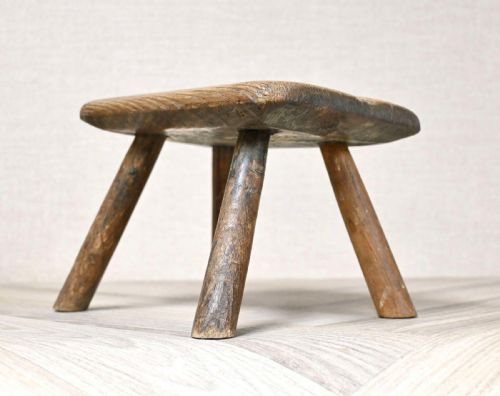
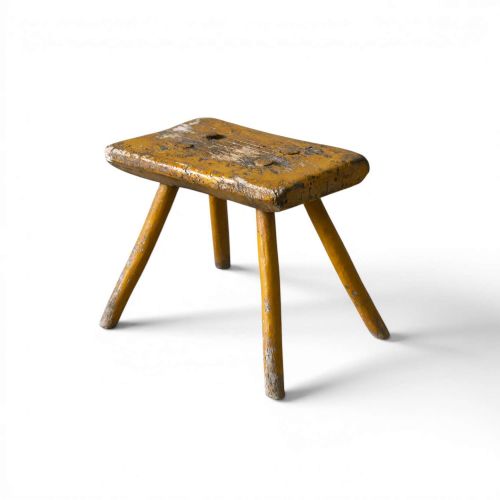
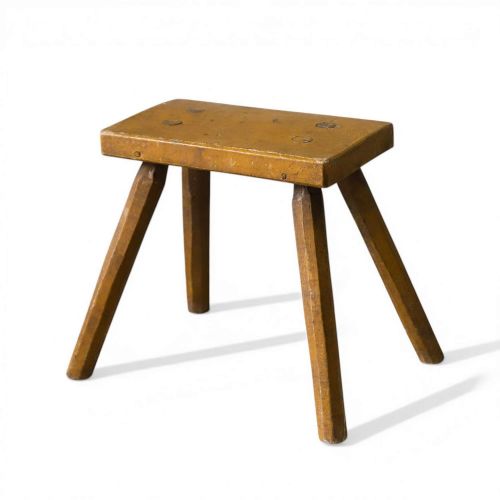
Surfaces frequently show the original character of the wood, sometimes enhanced by historical layers of ochre or yellow paint. Seats were often shaped from single thick slabs of timber, sculpted with adzes or gouges for comfort.
Some diminutive stools were thoughtfully sculpted with rounded seats, offering pocket-sized rustic charm for small corners.
Assessing quality and character
Quality in these pieces rests in the integrity of the timber and the honesty of the construction. A superior stool displays balanced proportions, tight joints, and timber that has aged gracefully through decades of use.
The presence of original surface treatments, such as early paint or undisturbed patination, elevates a piece significantly. Finer examples retain their original structural harmony without excessive modern intervention or replacement parts.
The Antique Four Leg Stool Glossary
- Vernacular
- Everyday objects made by local tradespeople rather than academic designers. These items prioritise function and local material availability above prevailing metropolitan fashions.
- Hearth stool
- A low seat positioned near the fireplace for warmth or domestic chores. They typically feature compact dimensions and sturdy four-leg construction.
- Milking stool
- A small, stable seat traditionally used during agricultural labour. They often combine a thick wooden top with splayed legs for stability on uneven ground.
- Patina
- The deep surface sheen and colour acquired by wood and paint over long periods of handling and exposure. It serves as a visual indicator of genuine age.
- Primitive
- Description for unpretentious, straightforward pieces lacking decorative refinement. Their appeal lies in direct utility and unvarnished construction.
Antique Four Leg Stool: Frequently Asked Questions
Where were antique four leg stools used?
These stools served practical roles throughout the home, from farm kitchens to firesides and workshops. They provided movable, sturdy seating where space was limited.
Their robust construction allowed them to be carried outdoors or moved between rooms as daily tasks required.
How do I care for a painted wooden stool?
Keep wooden and painted surfaces away from direct heat sources and strong sunlight to prevent drying and fading. Dust gently with a dry cloth rather than using harsh liquid cleaners.
Preserve the original finish by maintaining stable room humidity and avoiding abrasive polishes.
What woods were commonly used?
Makers relied on accessible native hardwoods and softwoods like oak, elm, ash, yew, and pine. The choice depended on local timber supplies and the specific structural demands of the seat.
Seats were often carved from thick elm or ash slabs, while legs utilised straight-grained timber for strength.
Are these stools suitable for daily seating?
Most surviving examples remain structurally sound and capable of supporting normal weight. Their low heights and solid frames make them practical for occasional seating or as side tables.
Inspect the leg joints and timber stability before regular use to ensure the antique construction remains secure.