



Antique Foo Dog Burner
An antique foo dog burner holds aromatic incense within its hollow body while a guardian lion watches over the lid.
Antique Foo Dog Burner
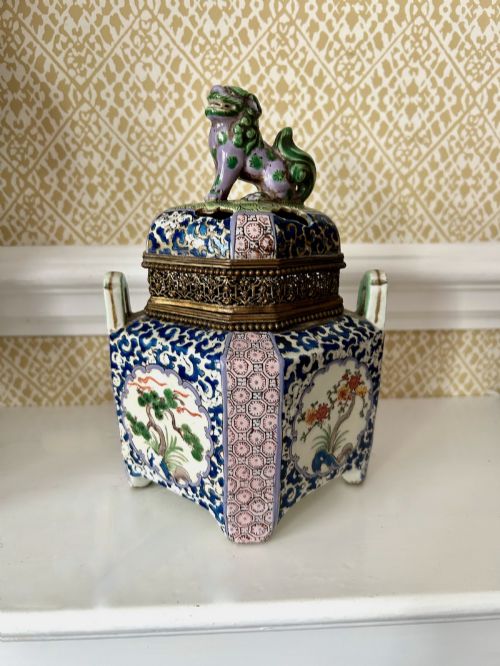
When you search for an antique foo dog burner, you are looking at lidded vessels designed to hold burning aromatics, usually topped with a guardian lion known variously as a foo dog, fu lion, qilin, karashishi or kylin. These objects serve both practical and symbolic purposes, guarding spaces while releasing scented smoke through pierced covers.
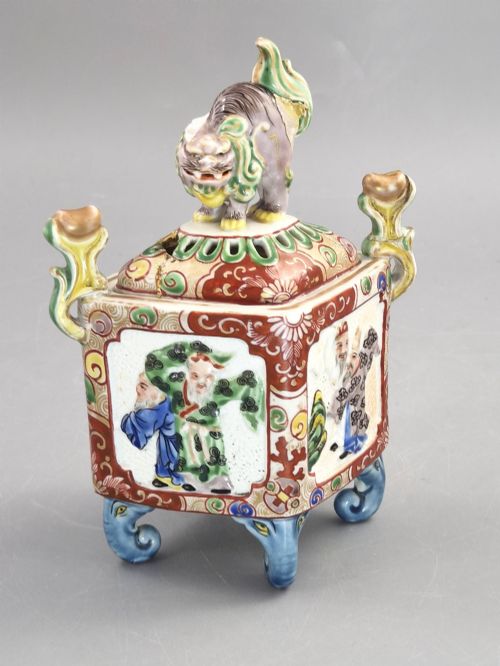
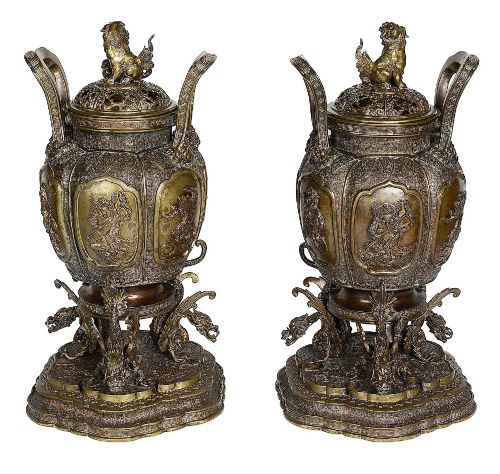
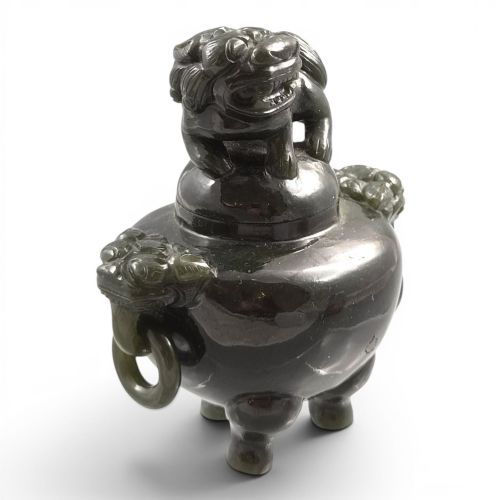
You are most likely to meet Chinese bronze examples from the nineteenth century on this page, alongside Japanese porcelain and cloisonné pieces from the Meiji period. Forms range from tripod censers with animal head feet to large lidded urns, spanning the eighteenth century through to the Edwardian era.
Materials and construction
These pieces rely on metalworking and ceramic techniques, primarily cast bronze and fired porcelain decorated with enamel or glazes. Bronze versions are formed through traditional casting methods, often featuring separate tripod legs and detailed figural finials.
Porcelain and cloisonné pieces employ intricate surface decoration, utilising coloured enamels fired onto ceramic bodies or wire-inlaid metal surfaces. Artisans shaped handles as elephant heads and moulded guardian lions to sit atop the removable covers.
Antique Foo Dog Burner Retail Price Guide 2026
Typical asking prices for foo dog burner among the pieces listed under this phrase on Sellingantiques today, from the lower quarter to the upper quarter. They describe what is for sale here now, not the wider market.
The pieces span multiple eras, encompassing the eighteenth century, the nineteenth century, the Meiji period, the Qing Dynasty and the Edwardian era.
Judgements of quality
The choice of material also dictates distinction, moving from standard brass or bronze to heavy cast vessels, carved dark green jade or complex cloisonné enamel work. Integration between the body and the lid indicates the care taken by the maker.
The Antique Foo Dog Burner Glossary
- Foo dog
- A traditional guardian lion figure placed atop incense burner lids. These mythical creatures symbolize protection and prosperity.
- Censer
- A vessel designed for burning incense. These often feature pierced covers to allow fragrant smoke to escape.
- Koro
- A Japanese term for an incense burner. They frequently appear in porcelain or bronze with decorative covers.
- Cloisonne
- An enamelwork technique where metal wire creates compartments on a vessel surface. These cells are filled with coloured paste and fired.
- Tripod
- A vessel supported by three feet. These legs often take the form of animal paws or stylized heads.
Antique Foo Dog Burner: Frequently Asked Questions
What is a foo dog burner used for?
These vessels were traditionally used to burn aromatic incense sticks or resins during rituals, ceremonies or quiet contemplation.
As the incense burns, scented smoke drifts out through the pierced lids, filling the room while the guardian lion watches over the space.
How do I care for a bronze burner?
Bronze vessels require minimal maintenance beyond gentle dusting with a soft, dry cloth to protect the metal surface.
Avoid using polishes or chemical cleaners that might strip away the natural patination accumulated over the centuries.
Are these pieces Chinese or Japanese?
The listings include both Chinese and Japanese examples created across different centuries and dynasties.
Chinese pieces frequently appear in cast bronze or jade, while Japanese works often showcase Kutani porcelain or Meiji period bronze and cloisonné.
How can I tell the period?
Dating relies on observing material characteristics, casting techniques and stylistic markers associated with specific eras like the Qing Dynasty or Meiji period.
Examining the wear on the base and the depth of the metal patina also helps place the piece within its historical timeline.