
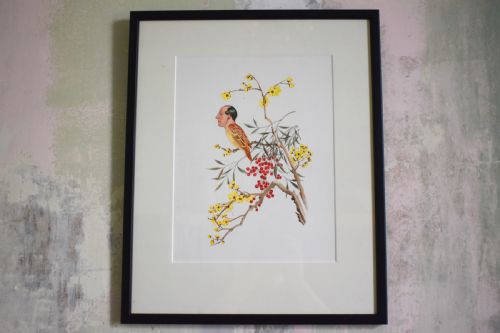


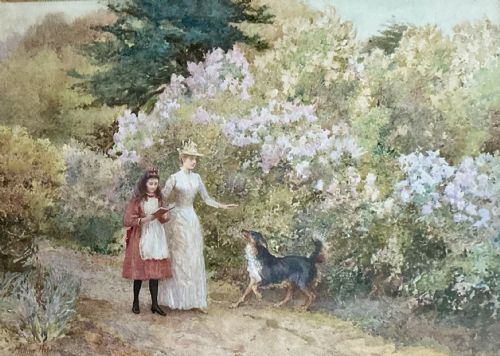


Antique Floral Watercolour Picture
An antique floral watercolour picture captures botanical detail and garden scenes on paper, offering a delicate touch of nature for interior walls.
Antique Floral Watercolour Picture
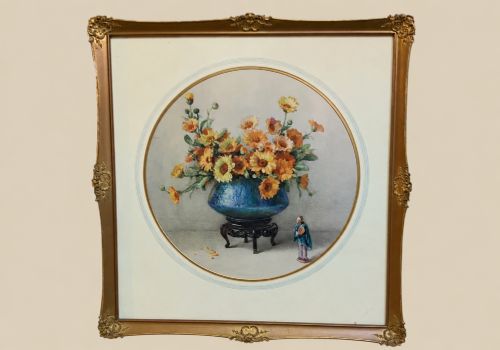
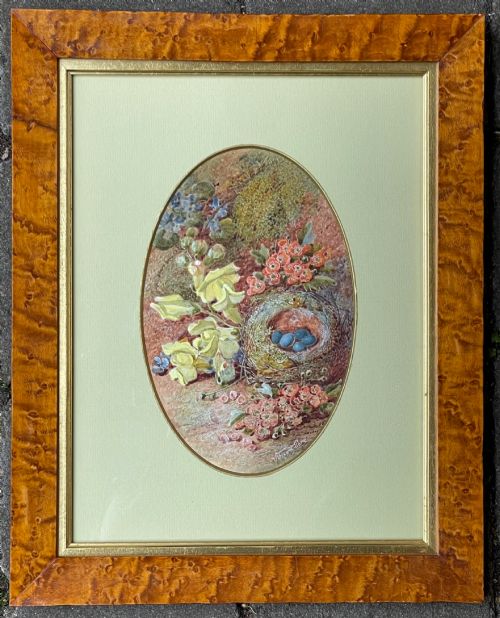
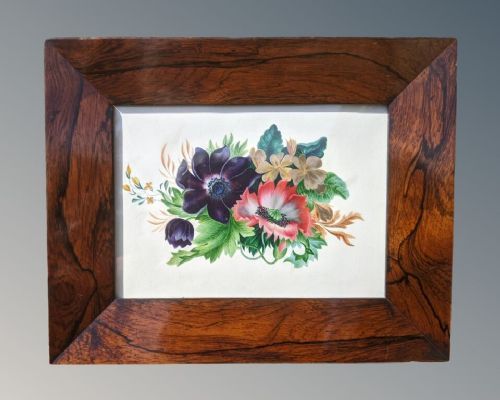
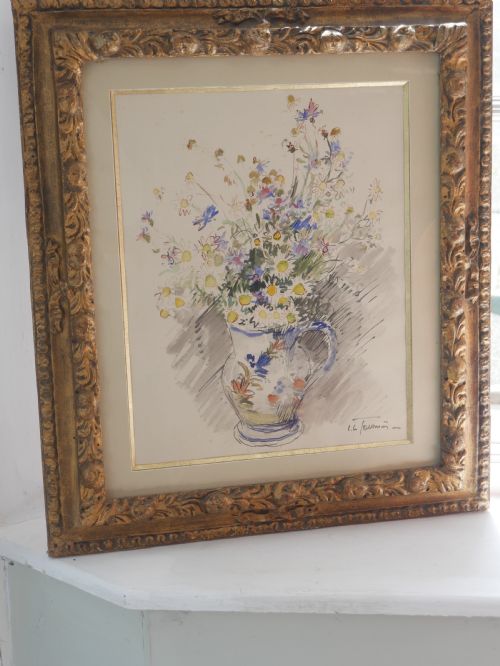
An antique floral watercolour picture focuses primarily on botanical studies, garden views, and still life arrangements of flowers rendered in water-soluble pigment. Buyers searching for an antique floral watercolour picture will discover works ranging from nineteenth-century botanical sheets to early twentieth-century garden landscapes and still lifes.
The selections span the nineteenth century, the Victorian era, and into the twentieth century, encompassing British Impressionism, Victorian Naturalism, and the Aesthetic Movement. Most examples appear on paper, housed within wood or gilt wood frames under glass.
Subjects vary from individual studies of wallflowers, roses, pansies, and gladioli to cottage gardens and walled enclosures. Regional English works and specific nineteenth-century school studies sit alongside named artist pieces.
How they were made
Artists applied watercolour pigment and watercolour paint onto paper supports, occasionally incorporating gouache and pencil for finer botanical definition. These water-based media allowed for subtle washes and transparent layering to capture the soft petals and stems of flowers.
Completed paintings were typically set behind glass within wood or gilt wood frames, sometimes housed in decorative metal surrounds such as French Aesthetic movement pewter frames. The framing protected the delicate paper surface from atmospheric moisture and handling.
Listings feature works spanning the nineteenth century through to the nineteen fifties, including Victorian, Edwardian, and Aesthetic Movement examples.
What varies in quality
Quality rests upon the artist's precision in botanical rendering, brushwork control, and the overall composition of the floral arrangement or garden scene. Masterful works capture light, texture, and natural colour variations vividly on the paper surface.
The preservation of the paper and the vibrancy of the pigments determine desirability, alongside the quality of the period framing. Pieces retaining crisp pencil underdrawing and unfaded watercolour tones stand apart from lesser examples.
Vincent Clare·Catherine Thomas·Harry Wanless·Arthur Hopkins·Lilian Stannard·William Hough·Eloise Harriet Stannard·Grace Hastie·Marian Chase·Owen Bowen·Charlotte Isa James·David Woodlock·Alice Macallan Swan·Jane Utley·Theresa Sylvester Stannard·George Frederick Nicholls·Arthur H Buckland·Alfred Parsons
The Antique Floral Watercolour Picture Glossary
- Watercolour pigment
- The finely ground colour particles suspended in a water-soluble binder used to create these paintings.
- Gouache
- An opaque watercolour paint containing an added white pigment to create solid, heavier areas of colour.
- Botanical study
- A precise scientific or artistic rendering of plant structures, flowers, and leaves.
- Aesthetic Movement
- A late nineteenth-century design style emphasising visual beauty over narrative or moral themes.
- Victorian Naturalism
- An art movement focusing on the detailed, accurate depiction of the natural world.
Antique Floral Watercolour Picture: Frequently Asked Questions
How should I hang an antique watercolour?
Position the picture away from direct sunlight to prevent the watercolour pigments from fading over time. Maintain a stable room temperature to protect both the paper and the wooden frame.
Ensure the wall is free from dampness, and use proper picture-hanging fixings suited to the weight of the framed artwork.
What is the difference between botanical and still life works?
Botanical studies focus on the scientific accuracy and detailed structure of specific plants, often isolating flowers or leaves against a plain background. Still life paintings arrange cut flowers in vases, baskets, or jugs within a composed domestic setting.
Both forms appear frequently across nineteenth and twentieth-century watercolours.
Are these paintings original?
The listings comprise original hand-painted watercolours created directly by artists on paper. Each piece is a unique work rather than a mechanical reproduction.
Signatures, dates, and stylistic markers help establish authenticity and period origin.
How do I date an antique floral picture?
Dating relies on artist signatures, period framing styles, inscriptions, and paper characteristics. Victorian and Edwardian works often exhibit specific palettes and subject matter typical of their decade.
Comparative study of known artist active dates provides further chronological clarity.