







Antique Flatware Slice
An antique flatware slice delivers the generous weight and pierced grace of Georgian and Victorian serving silver directly to your table.
Antique Flatware Slice
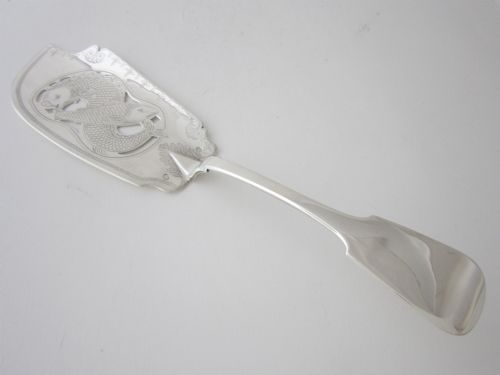
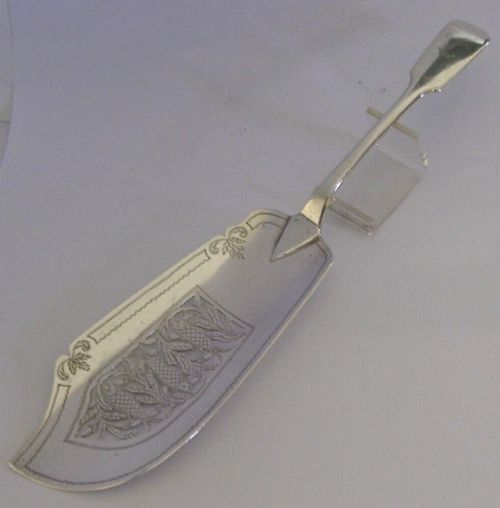
When you search for an antique flatware slice, you encounter specialised serving utensils designed for fish, pastry, cake, and ice cream. These pieces span the Georgian, Victorian, and Edwardian periods, appearing both individually and as matched pairs with accompanying forks.
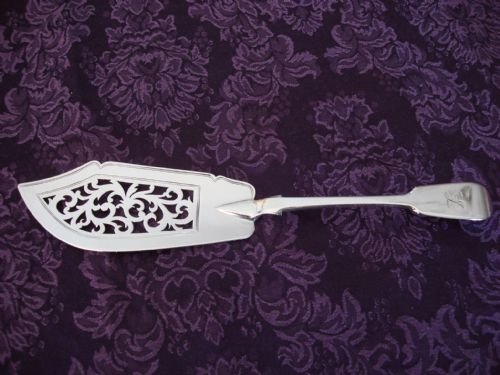
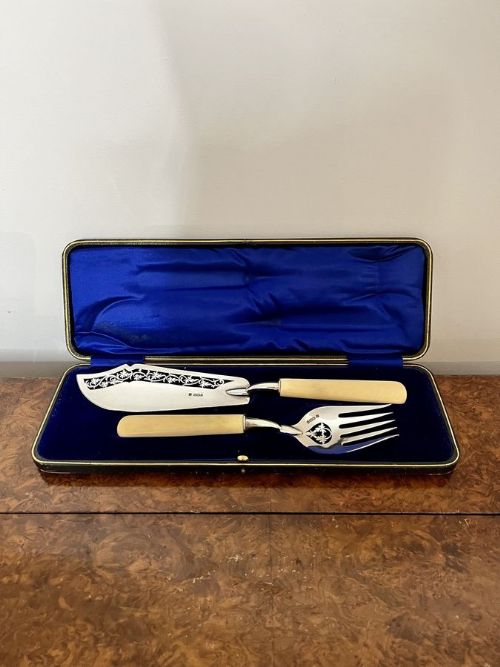
The most common versions on this page are sterling silver fish slices featuring pierced blades and fiddle pattern handles. You will also find silver-plated variations with antler or bone handles, alongside dedicated pastry trowels and dessert servers from the nineteenth and early twentieth centuries.
Materials and construction
Makers fashioned these pieces primarily from solid sterling silver or silver plate, utilising traditional silversmithing techniques such as piercing, engraving, and casting. Blades often feature intricate pierced geometric or floral motifs that reduce weight while maintaining structural strength.
Handles introduce diverse natural materials into the construction, including bone and antler secured with pins. Fitted presentation cases lined with velvet and silk also accompany specific high-end serving sets from the Victorian era.
Antique Flatware Slice Retail Price Guide 2026
Typical asking prices for flatware slice among the pieces listed under this phrase on Sellingantiques today, from the lower quarter to the upper quarter. They describe what is for sale here now, not the wider market.
Some Victorian fish servers wore antler handles, proving that even formal dining occasionally demanded a touch of the forest floor.
Distinctions in quality
Quality rests upon the crispness of the blade piercing and the structural integrity of the handle attachment. A superior piece exhibits balanced weight in the hand, deep and legible hallmarks, and finely detailed engraving that remains sharp across the surface.
Lower quality typically manifests as thin gauge metal that flexes under pressure, worn plating on silver-plated items, or poorly fitted handles where natural materials have shrunk away from the metal bolster.
Martin Hall Co·Thomas Daniell·GEORGE ADAMS·Charles Boyton
The Antique Flatware Slice Glossary
- Fiddle pattern
- A nineteenth-century flatware handle style characterised by a narrow stem widening towards a squared, shoulders-notched terminal resembling a violin. It remains one of the most recognisable silhouettes in British silver.
- Pierced blade
- A metal serving surface cut through with decorative openwork designs. This technique lightens the utensil and allows juices or crumbs to fall away during service.
- Pastry trowel
- A triangular serving slice specifically proportioned for cakes, pies, and pastries. These implements often feature flat, shovel-like blades and decorative handles.
- Hallmark
- An official stamp applied by an assay office indicating the purity of the metal, the year of manufacture, and the maker's mark. It provides definitive dating evidence for British silver.
Antique Flatware Slice: Frequently Asked Questions
What was an antique flatware slice used for?
These utensils served specific courses at formal dining tables, primarily lifting delicate portions of fish, pastry, cake, or ice cream without breaking them.
The wide, flat blades allowed hosts to present food neatly to guests during multi-course Victorian and Georgian meals.
How do I date a silver slice?
You determine the date by examining the hallmarks stamped into the metal, which reveal the assay office, standard of silver, and a specific date letter.
Style, handle materials, and decorative motifs like piercing also help assign pieces to periods such as the Georgian era or Victorian reign.
Can I use these for modern dining?
Yes, many collectors and hosts actively use sterling silver serving slices for dinner parties, weddings, and holiday meals.
Solid silver and quality silver plate remain robust enough for regular service provided you wash them by hand rather than in a dishwasher.
Why do some slices have antler handles?
Antler handles gained popularity during the Victorian period for fish servers and game-related cutlery, introducing a rustic texture to formal table settings.
Victorian dining embraced varied natural materials like bone, ivory, and stag horn alongside traditional precious metals.