

Antique Five Band Ring
An antique five band ring brings together multiple stones across a narrow band, offering a distinctive look shaped by Victorian and Edwardian craftsmanship.
Antique Five Band Ring
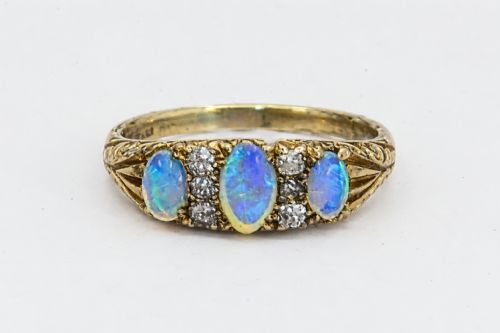
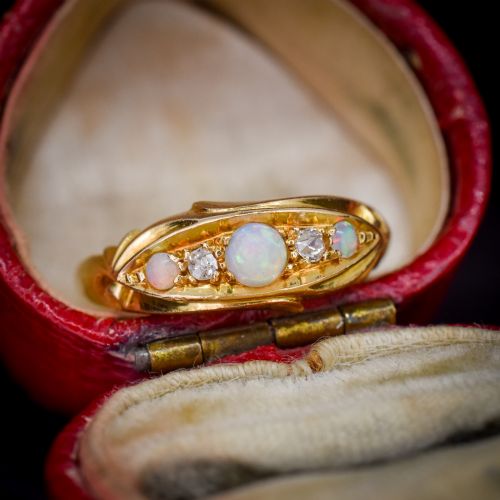
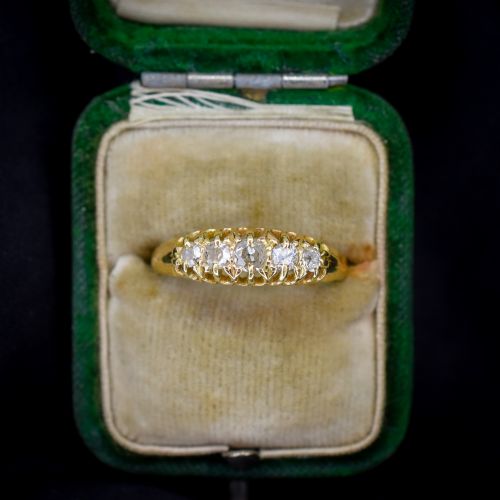
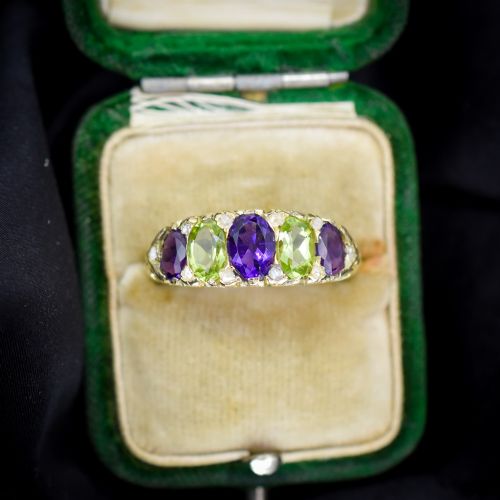
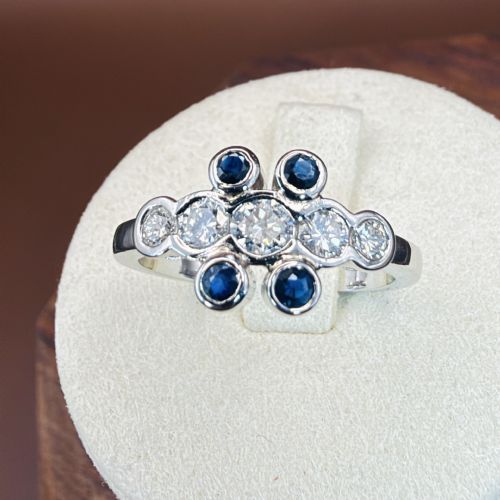
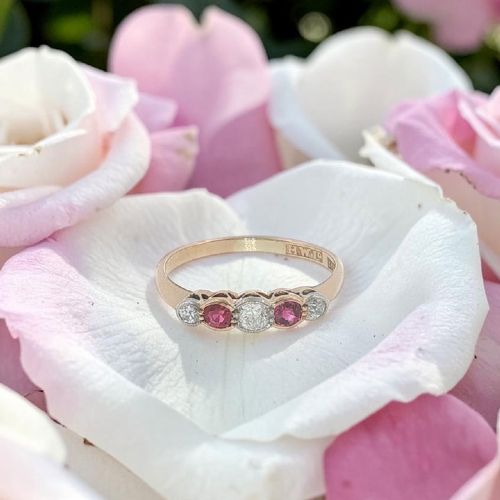
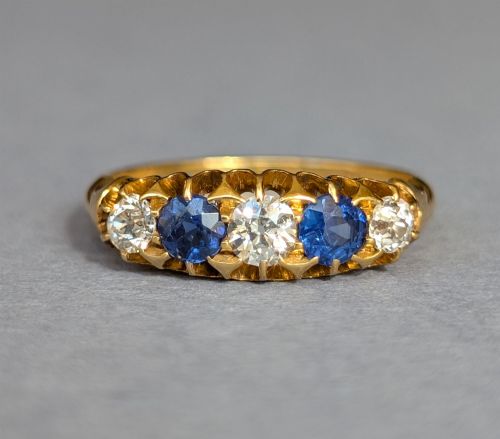
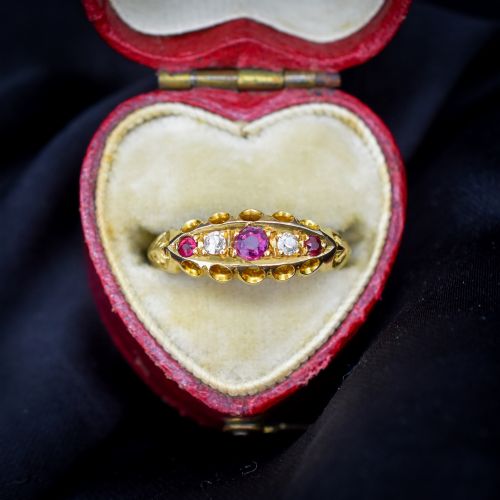
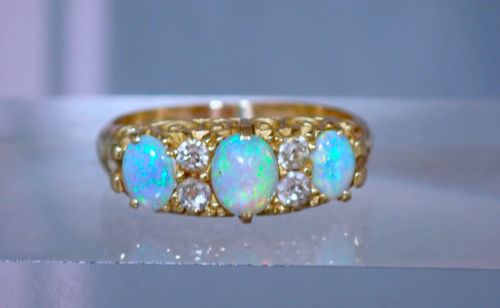
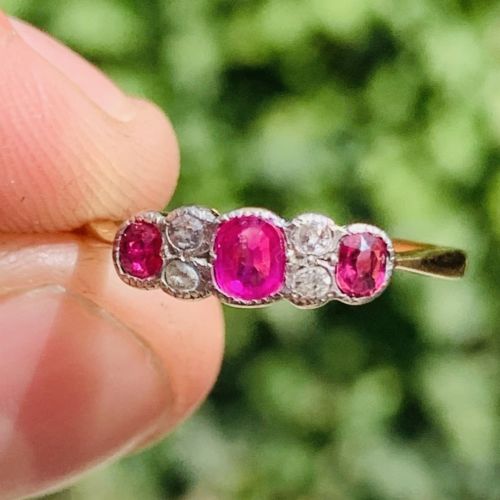
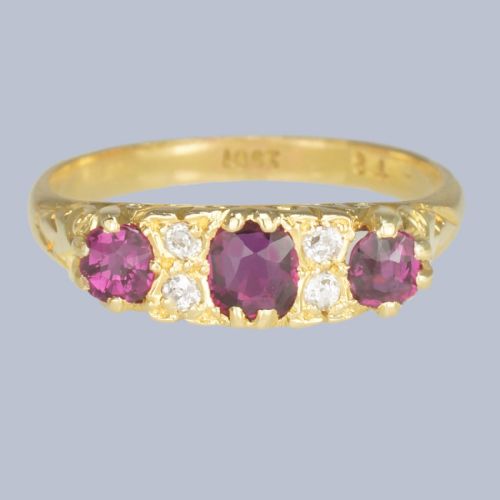
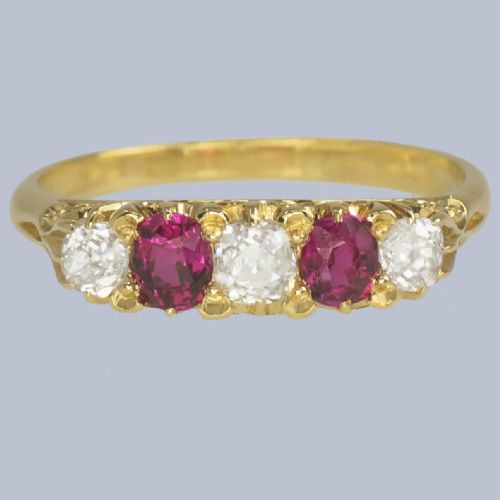
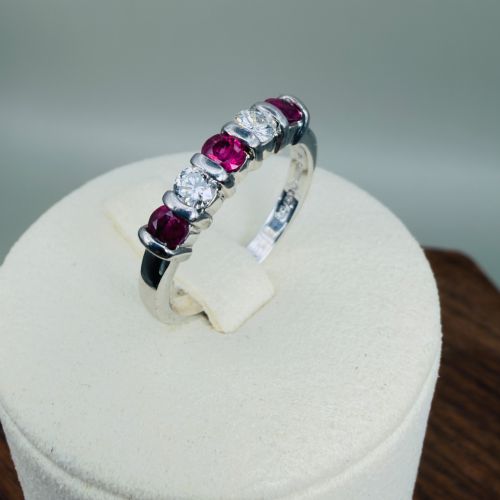
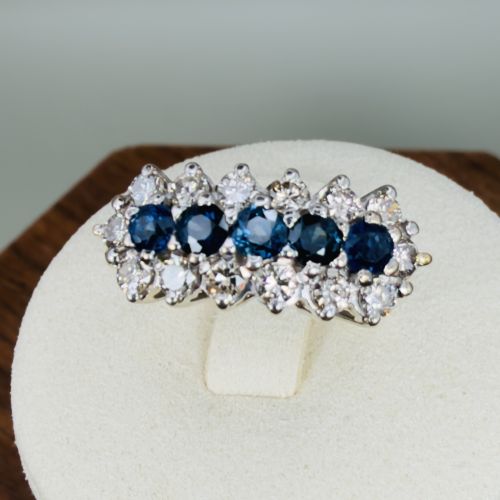
An antique five band ring typically presents a sequence of five stones set linearly along the finger, spanning Victorian, Edwardian and later twentieth-century periods. These pieces often take the form of five-stone configurations, boat settings, or patterned bands holding gems like diamonds, rubies, opals, and sapphires.
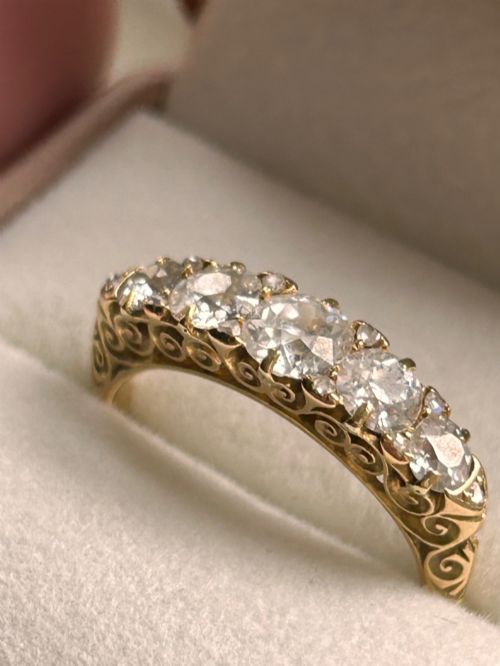
The version most commonly met on this page is an 18ct gold band incorporating alternating or matching gemstones such as old-cut diamonds and natural opals, rubies, or turquoises. Originating frequently from around nineteen hundred, these rings reflect the prevalent jewellery styles of late nineteenth and early twentieth-century makers.
How they were made
Metals such as 18ct yellow gold, 18ct white gold, and platinum form the structural bands, providing a durable foundation for stone settings. Workshops utilised traditional casting and fabrication methods to shape the metal into slender hoops and boat-shaped platforms.
Gemstones including old-cut and rose-cut diamonds, rubies, opals, sapphires, and pearls are secured across the face of the band using claw settings, starburst engravings, or flush mounts. These stones are hand-selected to fit the linear progression characteristic of the design.
What varies in quality
The refinement of the gemstone cutting and the symmetry of the stone arrangement dictate the visual harmony of the piece. Matching stones for consistent colour, size, and brilliance requires careful selection by the jeweller.
The weight and integrity of the 18ct gold or platinum mounting, alongside the precision of any hand-engraved patterns or scrollwork along the band, distinguish finer examples from standard production.
The Antique Five Band Ring Glossary
- Boat ring
- A ring featuring a curved, boat-shaped setting that tapers towards the shoulders and houses a row of stones.
- Old-cut diamond
- A diamond cut by hand during the eighteenth or nineteenth century, characterised by a small table, high crown, and large culet.
- Five stone ring
- A ring design displaying a linear row of five gems across the top of the band.
- Half hoop ring
- A band where gemstones encircle approximately half the circumference of the finger.
- Gypsy set
- A setting style where the stone is flush-mounted directly into the heavy metal band, leaving minimal metal protruding.
Antique Five Band Ring: Frequently Asked Questions
What periods do these rings come from?
The pieces span the Victorian, Edwardian, and mid-twentieth-century eras, with significant representation from around nineteen hundred. Makers during these times favoured distinct stone combinations and mounting styles.
Items frequently display hallmarks from British assay offices such as Chester and Birmingham, helping to date the metalwork precisely.
What stones are used in these rings?
Gems commonly seen include old-cut diamonds, rubies, sapphires, natural opals, pearls, turquoise, and garnets. These are frequently set into 18ct yellow gold or platinum.
Combinations vary from diamond-only rows to mixed groupings like ruby and diamond or amethyst, peridot, and diamond.
How should I wear an antique ring?
Due to the age of the settings and softer stones like opals or pearls, these rings suit careful daily wear or special occasions. Removing them during manual tasks prevents unnecessary strain on the claws and band.
Pairing them with plain wedding bands requires attention to the shoulders and gallery to avoid mutual abrasion.
How do I care for antique gold and gems?
Cleaning requires warm soapy water and a soft brush, avoiding harsh chemical dips that can damage softer stones or antique metals. Professional inspection of the claws ensures stones remain secure within their settings.
Store each ring individually in a fabric-lined box to protect the metal surface and prevent scratching from adjacent pieces.