



Antique Faux Bamboo Rack
An antique faux bamboo rack brings playful imitation and practical storage into a hallway, crafted by turners who shaped ordinary timber to mimic exotic canes.
Antique Faux Bamboo Rack
When you search for an antique faux bamboo rack, you encounter a variety of practical furnishings designed to hold coats, umbrellas, hats, and magazines. These pieces draw from Victorian, Edwardian, and French periods, spanning the nineteenth and early twentieth centuries.
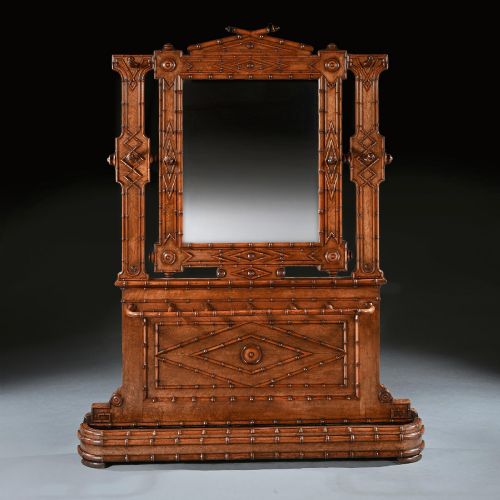
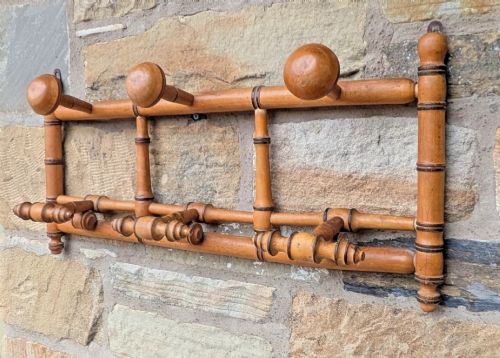
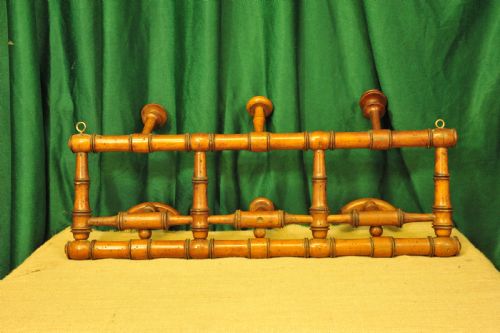
The forms on this page include wall-mounted coat hooks, floor-standing hallstands, umbrella stands, towel rails, and book troughs. French examples often lean towards the Aesthetic Movement and Japonisme, while English versions adopt Georgian Revival or Victorian styles.
Turned wood forms the backbone of these selections, alongside painted pine, cast iron, and brass. Each object demonstrates how makers translated the natural irregularity of bamboo into domestic utility.
Materials and construction
Turned wood, beech, pine, and birdseye maple provide the structural body for the majority of these items, shaped on a lathe to recreate the characteristic nodes and rings of natural cane. Painters then applied simulated finishes or pigments to mimic the varied tones of actual bamboo.
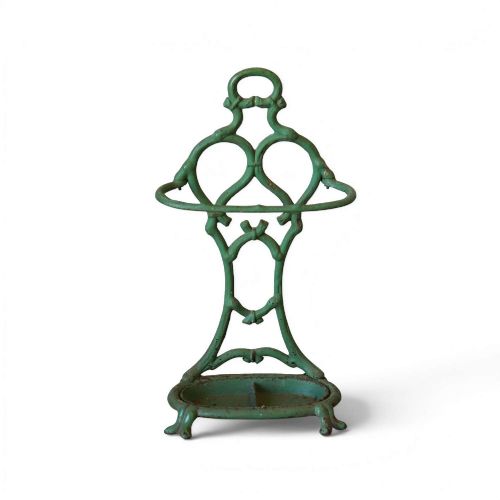
Metal variations utilise cast iron and brass, particularly in umbrella stands and magazine racks, where weight and rigidity matter. These metal pieces often employ a faux bois bamboo design, casting the rigid plant forms directly into durable alloy.
Antique Faux Bamboo Rack Retail Price Guide 2026
Typical asking prices for faux bamboo rack among the pieces listed under this phrase on Sellingantiques today, from the lower quarter to the upper quarter. They describe what is for sale here now, not the wider market.
Victorian anglers rested their prized fishing rods upon miniature faux bamboo supports, proving that even trout appreciated a touch of exotic botanical style.
Assessing quality and finish
Quality rests upon the fidelity of the turning and the execution of the simulated finish. Superior pieces show crisp, well-defined nodes carved into the wood, whereas simpler items rely purely on surface paint applied to plain spindles.
The choice of underlying material also dictates distinction, as birdseye maple and select hardwoods elevate a hallstand above standard painted pine. Original surface patination and intact structural joints complete the measure of a superior item.
The Antique Faux Bamboo Rack Glossary
- Faux bamboo
- Wood or metal worked and painted to imitate the appearance of natural bamboo canes. This technique became widely popular during the nineteenth century under the influence of Asian design.
- Japonisme
- The study and artistic influence of Japanese art and aesthetics on Western works. This style appears frequently in nineteenth-century French furniture.
- Aesthetic Movement
- A late nineteenth-century movement that emphasised visual and aesthetic beauty over narrative or moral themes. Pieces from this period often embrace exotic materials and simulated textures.
- Hallstand
- A piece of hallway furniture combining coat hooks, umbrella wells, and frequently a mirror. These items greeted visitors upon entry to a home.
- Faux bois
- French for false wood, describing objects made to imitate wood or plant stems such as bamboo. It appears in both cast iron and carved timber.
Antique Faux Bamboo Rack: Frequently Asked Questions
What rooms suit an antique faux bamboo rack?
These racks fit naturally in hallways, boot rooms, and entryways where guests deposit coats and umbrellas. Wall-mounted versions save floor space in tighter corridors.
Freestanding umbrella stands and hallstands anchor larger reception areas, offering both storage and decorative character.
How do I care for painted faux bamboo?
Dust the turned surfaces regularly with a soft, dry cloth to prevent grime accumulation in the carved nodes and rings. Avoid harsh chemical cleaners that might degrade the painted or simulated finish.
Maintain moderate room humidity to protect the underlying timber and prevent any paint cracking over time.
Are these racks sturdy enough for daily use?
Most wooden and metal pieces were built for robust domestic service in Victorian and Edwardian homes. Items designed to hold heavy coats or umbrellas generally feature solid joinery or cast metal frames.
Wall-mounted racks require secure installation into wall studs to support heavier garments safely.
How do I distinguish French from English pieces?
French examples frequently exhibit Aesthetic Movement or Japonisme influences, utilising exotic woods like birdseye maple and lighter framing. English pieces often lean toward Victorian utility or Georgian Revival proportions in pine and turned beech.