



Antique Faceted Goblet
An antique faceted goblet brings substantial weight to the hand and sharp brilliance to the table through precise geometric cutting.
Antique Faceted Goblet
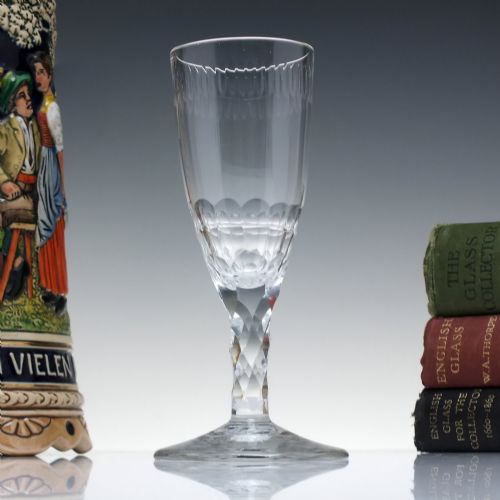
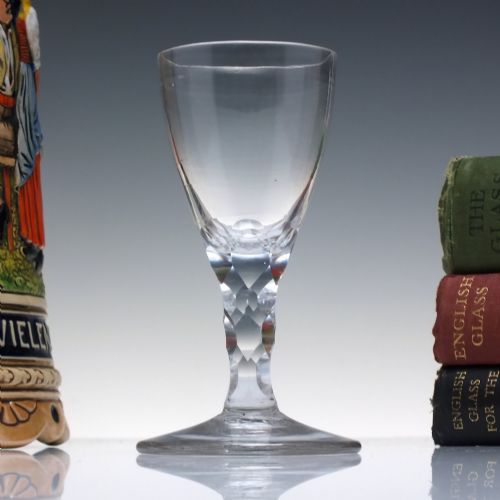
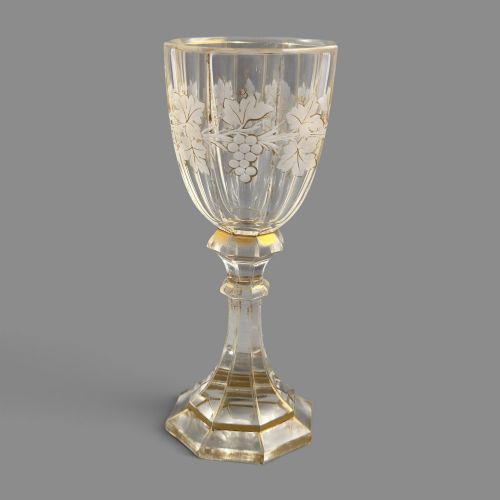
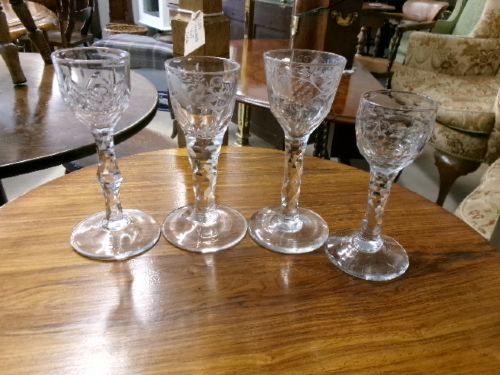
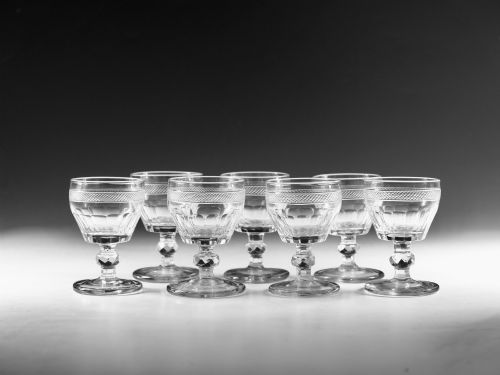
An antique faceted goblet is a heavy drinking vessel shaped for wine, port, sherry, or commemorative use, featuring geometric cuts along the stem or bowl. The examples seen here originate across the eighteenth and nineteenth centuries, spanning Georgian, Victorian, Edwardian, and Bohemian eras.
Most pieces encountered on this page take the form of wine glasses and rummers with stems shaped by planes or facets rather than smooth curves. English and Irish makers dominate the earlier centuries, alongside continental output from Bohemian glasshouses.
How they were made
Makers formed these vessels using lead glass and clear glass, blowing the molten material into a mould or free-blowing the form before applying wheel-cutting techniques. The distinct facets along the stem and bowl required skilled hand-grinding against a stone wheel, followed by polishing to achieve transparency.
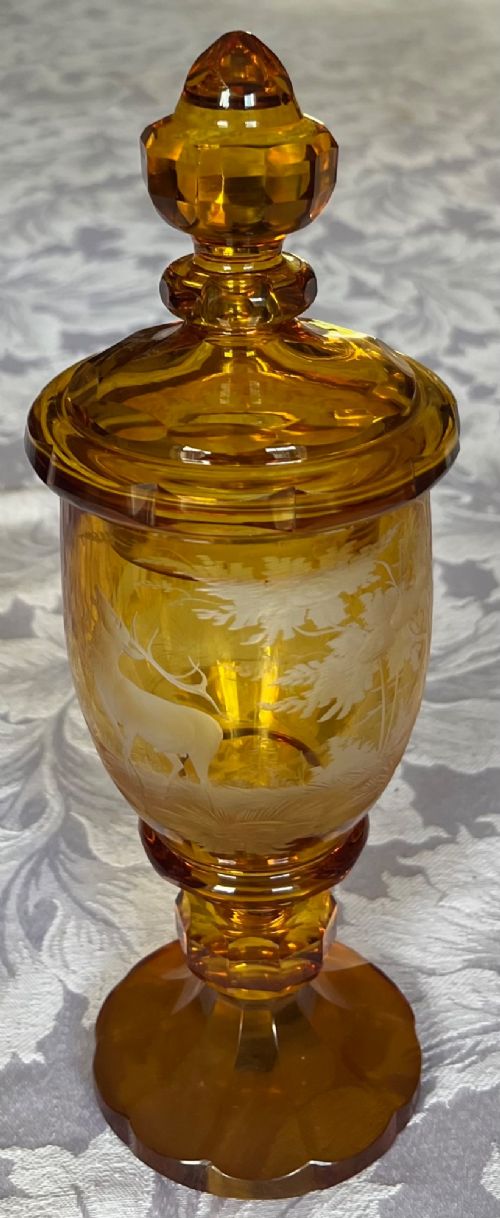
Certain pieces incorporate additional embellishments such as surface gilding and wheel-engraved motifs depicting Jacobite symbols or commemorative subjects. The combination of heavy lead crystal and deep cutting created the characteristic light refraction seen across Georgian and Victorian examples.
Antique Faceted Goblet Retail Price Guide 2026
Typical asking prices for faceted goblet among the pieces listed under this phrase on Sellingantiques today, from the lower quarter to the upper quarter. They describe what is for sale here now, not the wider market.
Listings span the eighteenth, nineteenth, and early twentieth centuries, featuring lead crystal, cut glass, gilding, and coloured glass across various forms.
What varies in quality
The distinction between ordinary and exceptional work lies in the crispness of the cutting and the clarity of the metal. Sharp, clean facet lines reflect light evenly, whereas worn or hastily ground planes appear blurred and muddy.
Proportion and weight also dictate the calibre of a piece, with finer vessels demonstrating balanced walls and substantial lead content that produces a clear, resonant ring when tapped gently.
Moser·James Giles
The Antique Faceted Goblet Glossary
- Facet cut
- A surface decorated by grinding flat planes into the glass at precise angles. This technique maximises light reflection and provides a secure grip on older drinking vessels.
- Lead glass
- A heavy glass composition containing lead oxide that increases density and brilliance. It allows for deeper cutting without fracturing the material.
- Rummer
- A large, wide-bowled drinking glass popular during the eighteenth and nineteenth centuries. These vessels often feature sturdy stems and substantial foot bases.
- Jacobite engraving
- Decorative motifs applied to eighteenth-century glassware in support of the exiled Stuart dynasty. These symbols often include roses, buds, and oak leaves.
Antique Faceted Goblet: Frequently Asked Questions
Can I use these for wine?
Drinking from an antique faceted goblet connects you directly to the dining customs of the Georgian and Victorian periods. Their heavy weight and tactile stems make them robust enough for regular use.
Ensure you handle them by the stem and avoid clinking the rims together during toasts. Modern storage should keep them stable and secure from accidental knocks.
How do I date an old goblet?
Dating relies on observing the form of the bowl, the shape of the foot, and the style of the facet cutting on the stem. Eighteenth-century pieces often display tapered stems with elongated facets, while Victorian examples show heavier proportions and distinct coloured glass.
Tool marks on the underside of the base and the composition of the metal provide further clues. Comparing the piece against documented examples helps narrow down the decade of production.
Why are some stems faceted?
Cutting facets into the stem improved the grip for diners during formal meals, especially when hands might be greasy from food. It also served an aesthetic purpose by catching candle and gas light.
This technique evolved from earlier plain stems and air twist designs, becoming a dominant style for English and Irish drinking vessels in the late eighteenth century.