



Antique Extendable Boardroom Table
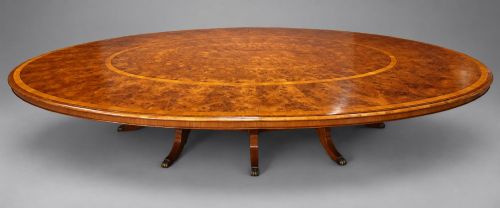
An antique extendable boardroom table provides a grand surface for meetings, built from heavy timbers to seat large parties comfortably.
Antique Extendable Boardroom Table
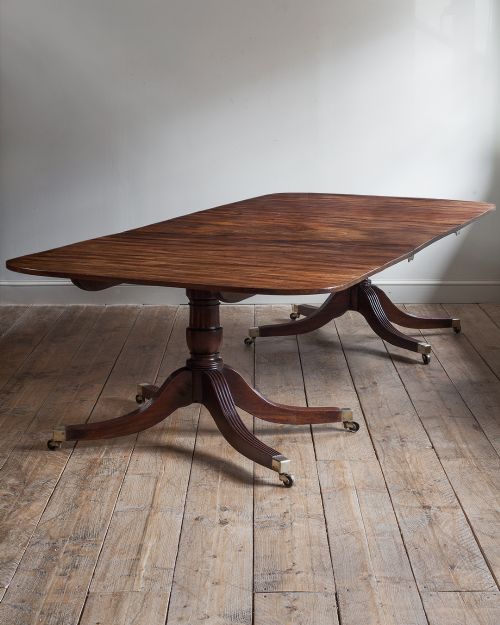
When searching for an antique extendable boardroom table, you encounter large timber tables designed to accommodate many diners or delegates using extra leaves and pillar supports.
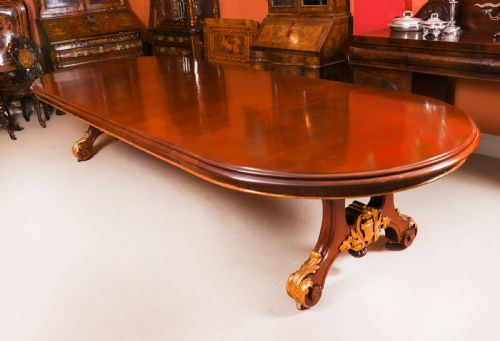
The pieces available on this page span several periods including Regency, Victorian, Georgian, and Edwardian, offering various lengths to seat large gatherings.
Makers such as Gillows of Lancaster, Wylie & Lochead, and Whytock & Reid appear alongside regional examples, demonstrating the craftsmanship of nineteenth-century workshops.
How they were made
Cabinet makers utilised dense hardwoods like mahogany, Cuban mahogany, plum pudding mahogany, and oak to construct these robust dining and meeting tables.
Makers incorporated brass mechanisms, brass castors, and extra leaves to allow the heavy pedestal bases to support extended lengths safely.
Surfaces often received fine figure veneers, inlay work, and gold leaf details to create an impressive appearance for formal rooms.
Antique Extendable Boardroom Table Retail Price Guide 2026
Typical asking prices for extendable boardroom table among the pieces listed under this phrase on Sellingantiques today, from the lower quarter to the upper quarter. They describe what is for sale here now, not the wider market.
Listings feature woods including oak and mahogany alongside periods spanning Georgian, Regency, and Victorian.
What varies in quality
The choice of timber creates a distinct difference, with figured mahogany, Cuban flame mahogany, and plum pudding mahogany sitting at the higher end of the range.
The number of pedestals and the presence of original extra leaves dictate the scale and seating capacity, influencing the overall proportion of the table.
Maker attribution to respected firms like Gillows elevates the standing of a piece compared to anonymous workshop production.
Wylie & Lochead·Whytock & Reid·Gillows
The Antique Extendable Boardroom Table Glossary
- Pedestal base
- A central support column, often with multiple carved legs, used to hold up large tabletops.
- Extra leaf
- A removable timber panel inserted into the centre of the table to increase its overall length.
- Cuban mahogany
- A dense, richly figured tropical hardwood prized by nineteenth-century cabinet makers for luxury furniture.
- Twin pedestal
- A table design supported by two distinct central columns rather than four corner legs.
Antique Extendable Boardroom Table: Frequently Asked Questions
How do these tables extend?
These tables typically utilise a system of pull-out rails or tracks fitted to a multi-pillar base. Additional timber leaves drop into the centre gap to lengthen the surface.
Once extended, brass clips or pins secure the leaves in place to ensure stability across the entire span.
What woods were commonly used?
Makers relied heavily on mahogany, including figured varieties and Cuban flame mahogany, for its strength and rich grain. Oak also appears in specific regional or Gothic revival pieces.
These dense timbers provided the structural integrity required to support long tabletops resting on multiple pedestals.
How many people can they seat?
Seating capacity varies widely depending on the number of pillars and extra leaves included with the table. Many examples accommodate twelve, sixteen, or up to twenty-four guests.
Checking the dimensions and leaf count helps determine the exact seating capability for large dining rooms or boardrooms.
How do I identify the period?
Period identification relies on observing the leg styles, carving details, and timber treatments characteristic of Georgian, Regency, or Victorian design. Regency pieces often feature reeded columns and brass paw castors.
Maker signatures or stamps found on the underside or mechanism can also confirm the exact era of production.