


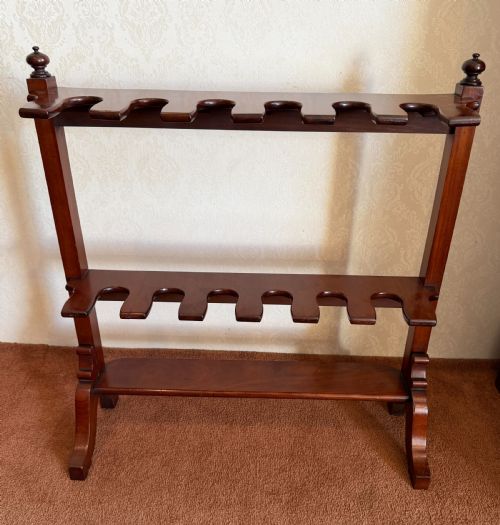


Antique Equestrian Rack
These antique equestrian racks unite utility and sporting heritage, bringing the character of the tack room directly into the home.
Antique Equestrian Rack
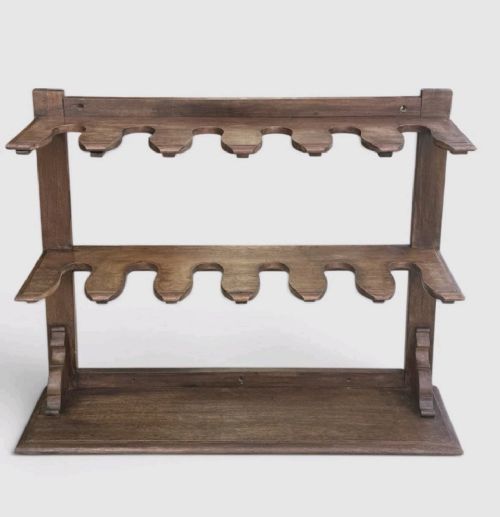
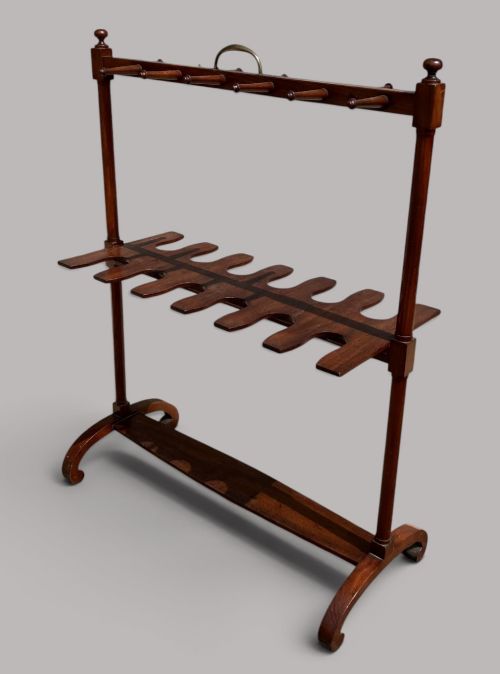
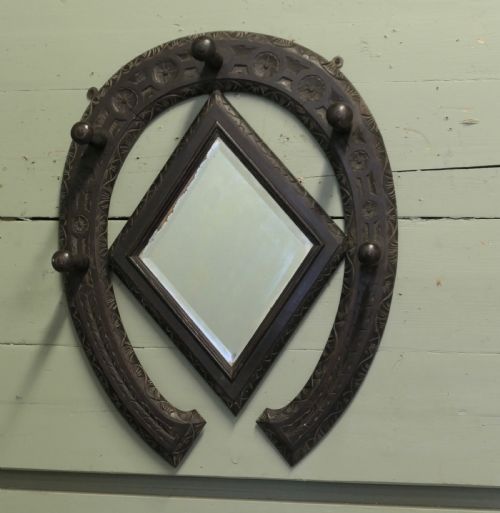
An antique equestrian rack serves as a practical holder for riding gear, encompassing boot stands, whip holders, and tack racks rooted in the nineteenth and early twentieth centuries. Pieces range from Regency country house whip and boot stands to Victorian oak horseshoe hall mirrors and cast iron corner hay racks.
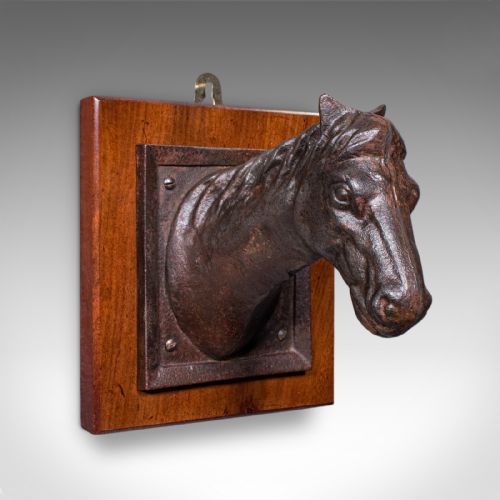
Buyers browsing this selection will frequently encounter mahogany and oak boot racks alongside wall-mounted tack hooks shaped like horseshoes or horse busts. The assortment spans multiple decades, capturing the functional needs of estate stables and country houses through dedicated riding equipment storage.
Forms extend from revolving bootstands to mounted horse bust coat hooks and combination hall stands with integrated hat and coat provisions. Each piece reflects the material culture of traditional equestrian pursuits, adapted for hallway or tack room organisation.
Materials and construction
Timbers such as mahogany, oak, and walnut form the structural backbone of these pieces, providing the dense grain required to support heavy riding boots and crops. Cabinet makers shaped these woods into hand-carved stands, boot trees, and mirror frames with deep bevelled plates.
Metal elements, particularly brass, cast iron, and standard iron, appear extensively for hooks, tack brackets, and horseshoe motifs. These metallic fittings were fastened securely to wooden backplates or cast directly into structural mounts to withstand the weight of damp leather and riding equipment.
Antique Equestrian Rack Retail Price Guide 2026
Typical asking prices for equestrian rack among the pieces listed under this phrase on Sellingantiques today, from the lower quarter to the upper quarter. They describe what is for sale here now, not the wider market.
Even the morning toast ritual joined the stables, with sterling silver equestrian toast racks shaped like miniature gates and horseshoes.
Quality and craftsmanship
Quality rests upon the integrity of the joinery and the depth of hand-carving evident in wooden frames, boot trees, and animal busts. Superior examples display crisp detailing in cast iron or brass fittings and retain original mounting hardware without excessive replacement.
The choice of primary timber also dictates the tier of the piece, with richly figured mahogany and quarter-sawn oak representing finer country house commissions compared to utilitarian workshop items. Well-executed bevelled glass in mirror combinations and stable structural weight separate high-status pieces from simpler domestic variations.
The Antique Equestrian Rack Glossary
- Boot rack
- A wooden or iron stand designed to hold riding boots upside down to preserve their shape and encourage drying. These stands often incorporate integrated compartments for crops and whips.
- Tack rack
- A wall-mounted or freestanding fixture fitted with hooks and brackets for hanging horse harnesses, bridles, and saddles. They frequently utilise horseshoe or crop motifs.
- Hay rack
- An open metal or wooden basket historically used to hold forage for horses. In domestic contexts, antique versions are adapted as wall racks.
- Hall stand
- A composite hallway furniture piece combining mirrors, coat hooks, and umbrella or boot storage. They often incorporate equestrian storage elements.
- Bevelled plate
- A mirror glass edge cut at an obtuse angle to create a decorative tapered border. This technique indicates higher-grade nineteenth-century mirror production.
Antique Equestrian Rack: Frequently Asked Questions
Where were equestrian racks originally used?
These items were primarily housed in estate stables, tack rooms, and country house boot rooms. They provided dedicated storage for riding boots, whips, crops, and horse harness equipment.
Over time, many of these utilitarian pieces transitioned into domestic hallways to serve as distinctive coat and boot storage for daily household use.
How do I distinguish between periods?
Regency and early nineteenth-century pieces often showcase clean mahogany craftsmanship and formal country house proportions. Victorian examples frequently embrace bolder decorative motifs, including horseshoe shapes, cast iron details, and Gothic revival influences.
Later Edwardian and turn-of-the-century items tend towards simpler oak construction or incorporate mounted metal horse busts and crop hooks.
Can I use an antique boot rack today?
These stands remain entirely functional for holding modern footwear, walking umbrellas, and riding gear in contemporary entryways. Their robust wooden and iron construction is built to handle everyday weight.
Care should be taken to protect antique wood finishes from excessive moisture when placing damp boots directly onto historical timber.
What materials are most common?
Solid woods such as mahogany, oak, and walnut dominate the structural frames and backplates of these items. Brass and cast iron are heavily utilised for the functional hooks, boot trees, and decorative motifs.
Glass also appears frequently in pieces that combine boot storage with hall mirrors.