





Antique Equestrian Boots
These antique equestrian boots and associated hallway gear offer a practical connection to historical riding traditions, prized for their sturdy construction and rich patination.
Antique Equestrian Boots
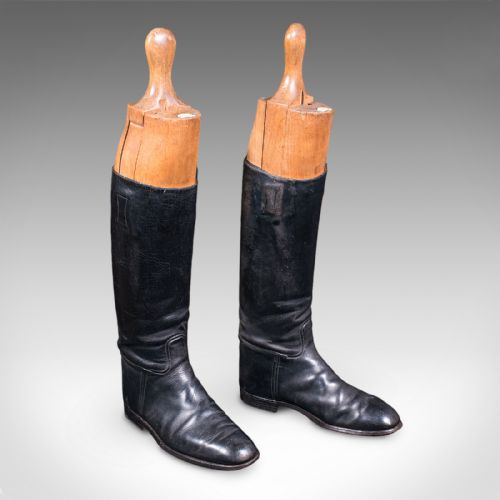
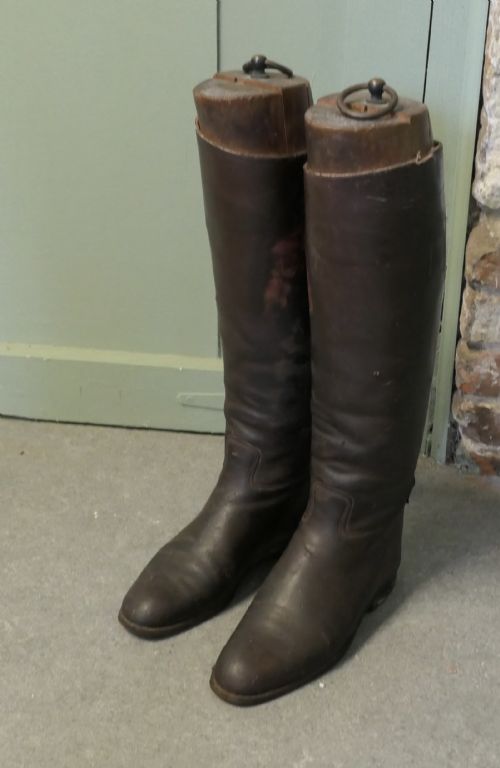
When you search for antique equestrian boots, you encounter a selection of leather footwear alongside the mahogany, oak, and walnut equipment designed to store, polish, and pull them. The items span the Georgian, Regency, and Victorian periods, extending through the Edwardian era and into the early twentieth century.
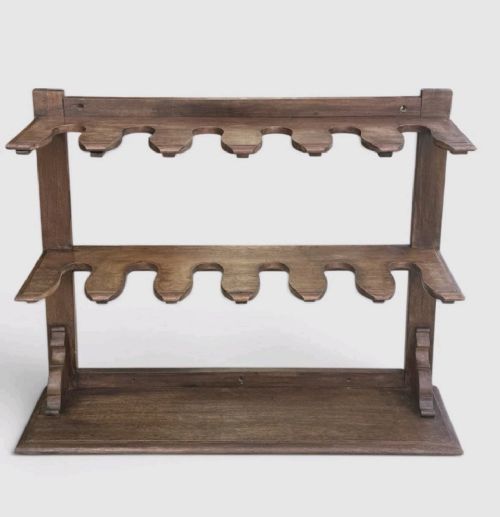
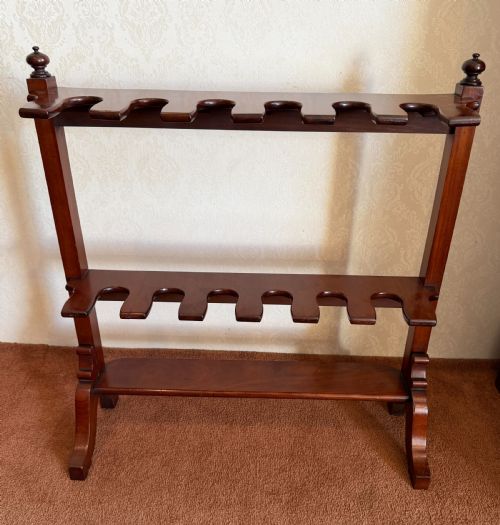
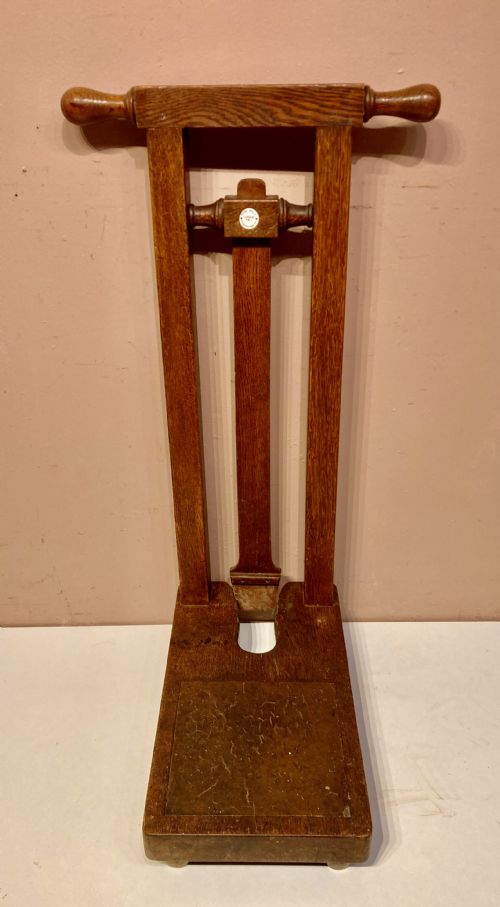
The objects on this page include boot jacks, folding shoe pulls, boot trees, riding boot stands, and whip racks alongside actual leather riding boots and stretchers. Country house hallway furniture and military campaign items feature strongly among these functional accessories.
You are most likely to meet mahogany and oak boot jacks or revolving racks alongside beech boot stretchers and leather riding boots. These pieces reflect the daily domestic and sporting routines of nineteenth and early twentieth century households.
Materials and construction methods
Makers utilised dense hardwoods such as mahogany, oak, walnut, and beech to build sturdy boot racks, stands, and jacks capable of withstanding heavy daily use in entrance halls and stables. Brass mounts, iron fixings, and folding hooks provide functional articulation on campaign pieces and domestic jacks.
Leather forms the primary material for riding boots and boot stretchers, shaped over wooden lasts and combined with metal components. Silver handles and bronze casting appear on smaller pull accessories and novelty paperweights from the Victorian and Edwardian periods.
Antique Equestrian Boots Retail Price Guide 2026
Typical asking prices for equestrian boots among the pieces listed under this phrase on Sellingantiques today, from the lower quarter to the upper quarter. They describe what is for sale here now, not the wider market.
A bronze novelty paperweight depicts a solitary spurred boot waiting on the desk.
Distinctions in quality
Quality also shows in the depth of patination on the timber and leather, as well as the retention of original operating mechanisms on folding boot jacks and revolving stands. Maker attribution, such as signed London bootmaker equipment, elevates the standing of an individual piece.
Maxwell London·Tom Hill
The Antique Equestrian Boots Glossary
- Boot jack
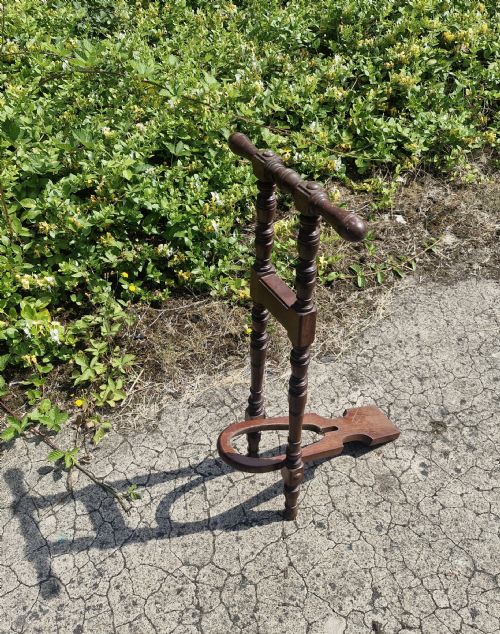
- A V-notched wooden device used for removing riding boots without bending down. It typically rests flat on the floor or incorporates a folding support.
- Boot tree
- A wooden block shaped like a foot and inserted into a riding boot to maintain its form and absorb moisture. Beech and other woods feature in these internal stretchers.
- Boot pull
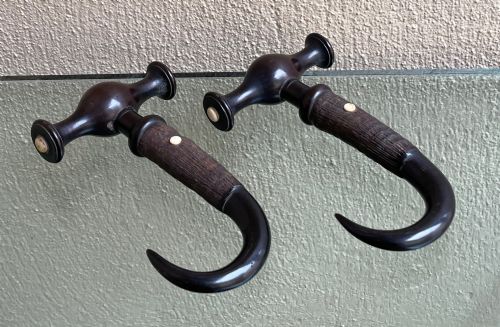
- A tool with a handle and hook utilised to pull tall riding boots onto the foot. Examples range from simple iron hooks to silver-handled Victorian specimens.
- Campaign equipment
- Portable furniture and accessories designed for military officers on active service. These pieces often incorporate folding mechanisms and brass protection corners.
- Hall stand
- A piece of hallway furniture combining storage for hats, coats, whips, and boots. Mahogany and oak versions organise entrance spaces in country houses.
Antique Equestrian Boots: Frequently Asked Questions
How were boot jacks used in the hallway?
Boot jacks sat on the floor near the entrance of a country house or stable yard so riders could step on the base with one foot while trapping the heel of the riding boot in the V-shaped notch to pull it off easily.
This simple leverage protected the leather from strain and saved time after a long day in the saddle.
What is the purpose of a boot tree?
Boot trees were placed inside leather riding boots when not in use to preserve the shape of the calf and prevent the leather from cracking as it dried.
Makers shaped these internal blocks from beech and other woods to fit snugly within the footwear.
How do campaign boot jacks differ from standard ones?
Campaign boot jacks incorporate folding hooks and compact wooden designs intended for easy transport by military officers in the field.
These pieces use durable oak or mahogany combined with brass mounts to withstand active service conditions.
Where were revolving boot stands placed?
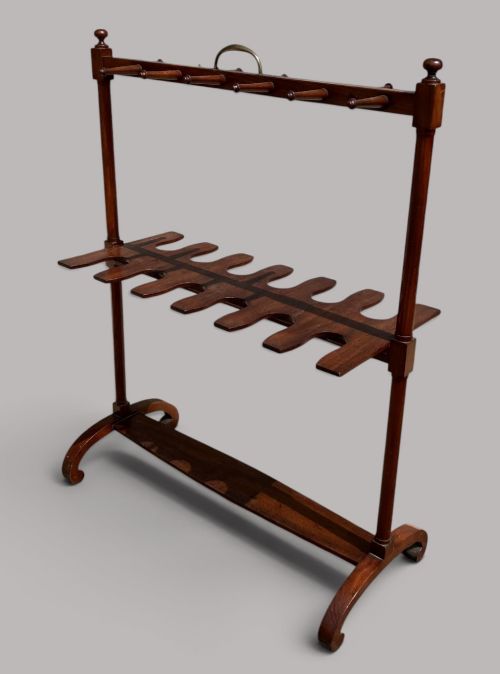
Revolving boot stands stood in hallways or tack rooms to hold multiple pairs of boots and whips within convenient reach.
The rotating design allowed users to access different pairs of riding footwear without moving heavy furniture.