

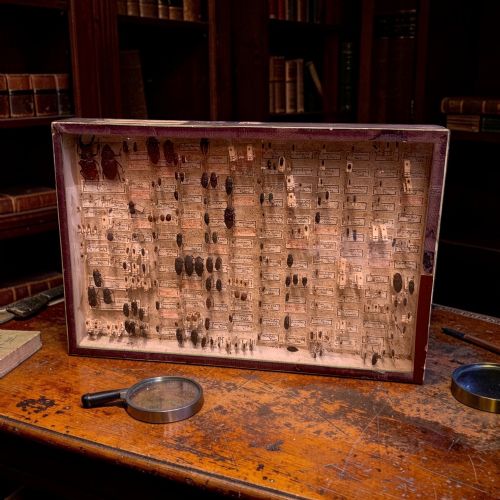


Antique Entomology Display
These antique entomology display pieces are timber cabinets, cases and frames designed to house natural history specimens.
Antique Entomology Display
When you search for antique entomology display, you are looking at specimen cabinets, collectors cabinets, framed insect displays and botanical engravings that house natural history collections. These pieces range from compact five-drawer storage units to large twenty-drawer chests.
The versions you are most likely to meet on this page hail from the Victorian period, alongside Georgian and Edwardian examples. They take the form of tabletop cases, wall displays and multi-drawer chests used for organising butterflies and beetles.
Cabinet forms dominate the selection, built specifically with shallow drawers to protect fragile specimens beneath glass lids. Framed wall displays and botanical engravings with insects also appear to represent the wider field of natural history collection.
How they were made
Cabinet makers utilised dense timbers such as mahogany, walnut and figured pitch pine to build the structural carcasses and multi-drawer interiors. These woods provided the stability needed to prevent warping and protect delicate contents from humidity.
Glass panels were fitted into framed lids and doors to allow clear viewing of the specimens while keeping dust and pests at bay. Brass fittings, paper linings and card components were integrated into the drawer construction for labelling and handling.
Antique Entomology Display Retail Price Guide 2026
Typical asking prices for entomology display among the pieces listed under this phrase on Sellingantiques today, from the lower quarter to the upper quarter. They describe what is for sale here now, not the wider market.
Materials across these listings include solid mahogany, walnut, figured pitch pine, brass hardware, paper, card and glass.
What varies in quality
The timber selection and grain figuring set apart the finest cabinets from standard workshop production. Figured pitch pine and well-chosen mahogany distinguish high-status pieces intended for serious naturalists.
Drawer capacity and mechanical precision dictate the tier of a cabinet, with multi-drawer chests requiring exact carpentry to ensure smooth operation. Maker attribution, such as signed work from known specialists, elevates the standing of an individual piece.
J.T. Crockett·William John Burchall·John Curtis
The Antique Entomology Display Glossary
- Specimen Cabinet
- A multi-drawer chest designed for organising and storing natural history collections. These units feature shallow drawers scaled for insects and botanical items.
- Collectors Cabinet
- A piece of furniture built to house and display private collections of curiosities. They often include glass viewing panels or secure locking doors.
- Specimen Display Case
- A protective enclosure with a glass top or front intended for wall hanging or tabletop exhibition. They isolate individual or grouped specimens for visual study.
- Botanical Engraving
- A printed plate depicting plants alongside insects and natural elements. These works formed part of detailed scientific records during the nineteenth century.
Antique Entomology Display: Frequently Asked Questions
What fits inside an entomology cabinet?
These cabinets house butterfly specimens, beetles, botanical prints and small natural history curiosities.
The shallow drawers are specifically proportioned to hold pinned insects and paper records without damaging delicate wings.
How do I date an antique cabinet?
Dating relies on timber choices, drawer construction techniques and period styling markers like Victorian or Georgian proportions.
Makers' signatures and documented historical labels also provide precise decade attribution for certain pieces.
Were these cabinets made for home display?
Nineteenth-century naturalists used these multi-drawer chests in studies and libraries for both active research and gentlemanly exhibition.
They served as working archives for serious collectors rather than purely decorative household furniture.
How do I clean mahogany cabinet wood?
Maintenance requires dry dusting with a soft cloth to protect polished timber surfaces from moisture damage.
Harsh chemical polishes should be avoided to preserve the natural patina developed over the nineteenth century.