



Antique Eight Arm Light
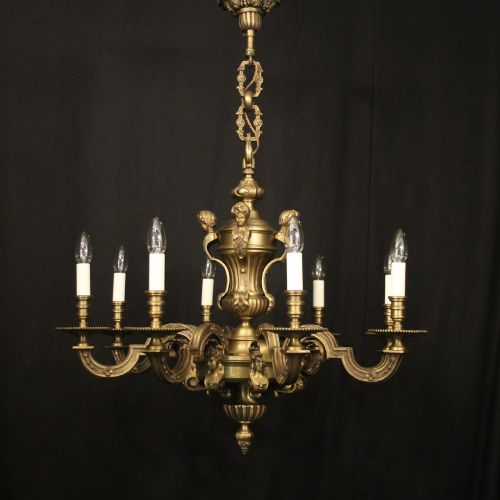
An antique eight arm light fills a room with distributed brilliance, bringing the weight and presence of French chateau and Edwardian interiors to a ceiling.
Antique Eight Arm Light
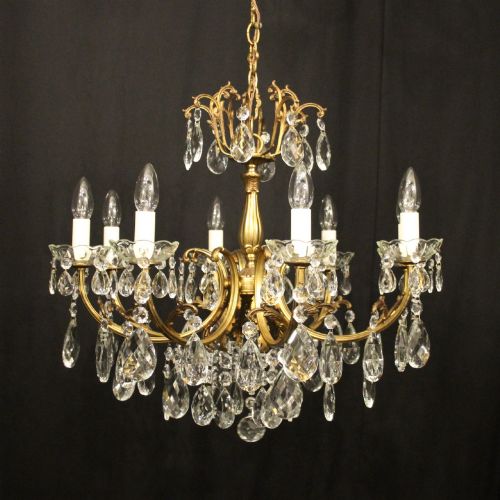
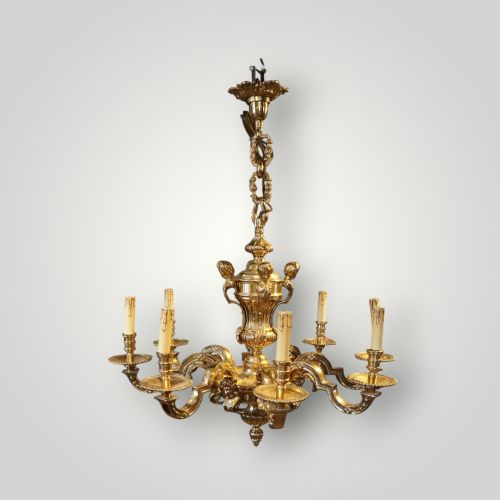
An antique eight arm light typically takes the form of a grand chandelier designed to suspend from a central ceiling point. These fixtures originate primarily from French workshops, alongside Dutch and English makers, spreading across the nineteenth century, the Edwardian era, and into the nineteen-twenties and nineteen-thirties.
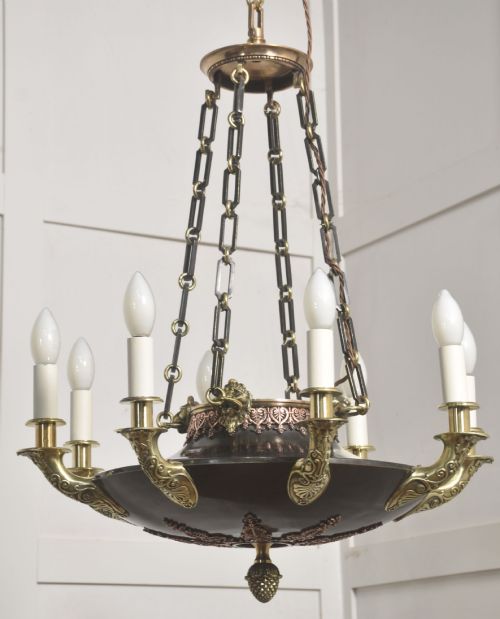
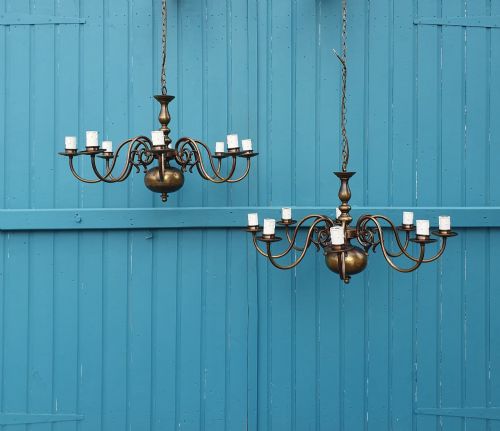
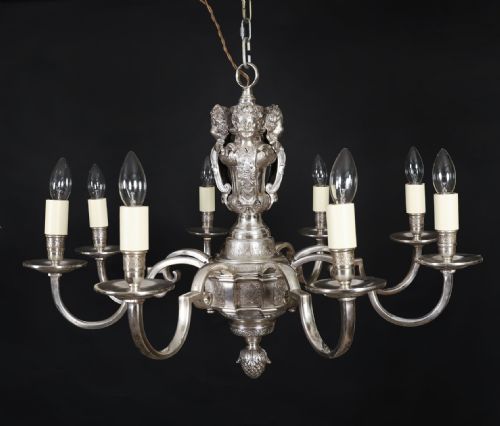
The form relies on eight distinct branches, arms, or branches radiating from a central stem to distribute illumination evenly. Buyers encounter varied stylistic interpretations here, ranging from French Rococo Revival and Empire Revival to Dutch Baroque Revival.
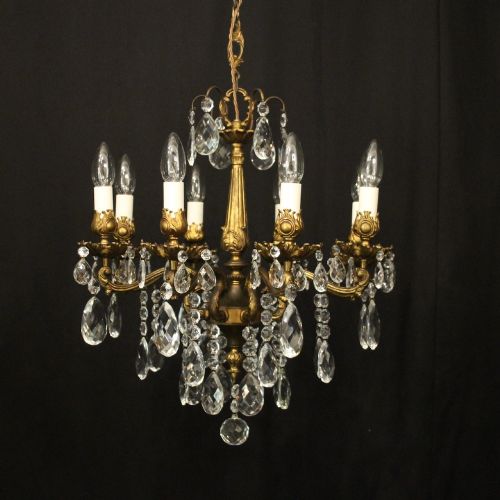
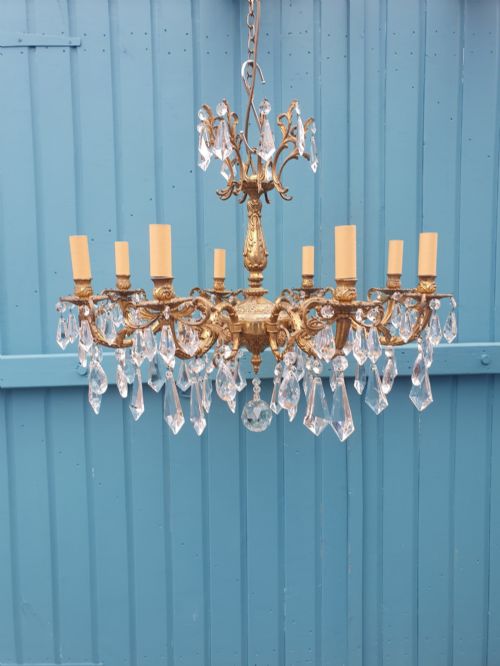
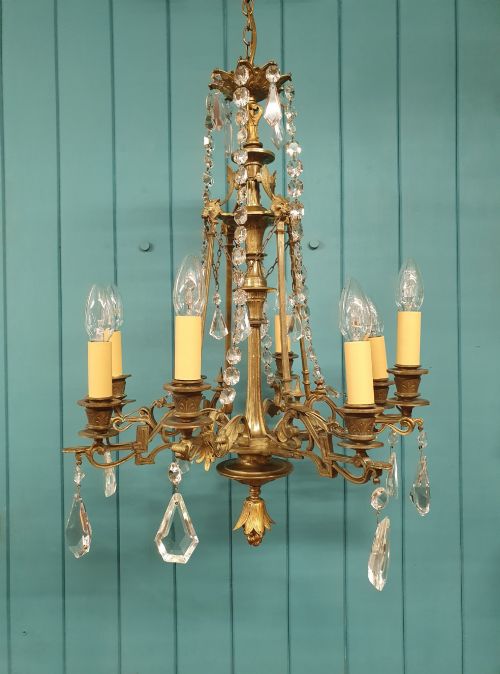
Most examples found on this page lean heavily toward French gilded bronze, brass, or cut glass crystal configurations. They serve as primary overhead focal points for high-ceilinged rooms, combining structural metalwork with light-refracting glass elements.
Materials and construction methods
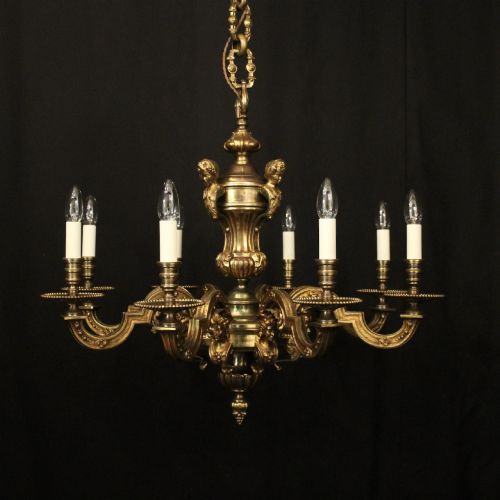
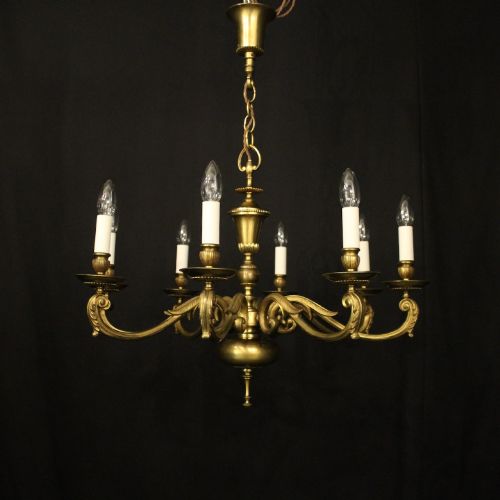
Makers utilised cast and chased bronze, brass, and gilded metals to form the foundational armature and the eight radiating arms. These metal components frequently feature decorative mounts, such as cast acanthus leaves or lion masks, applied to enhance the visual depth of the fixture.
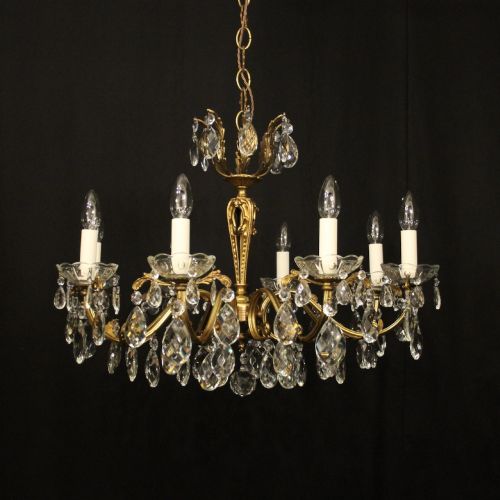
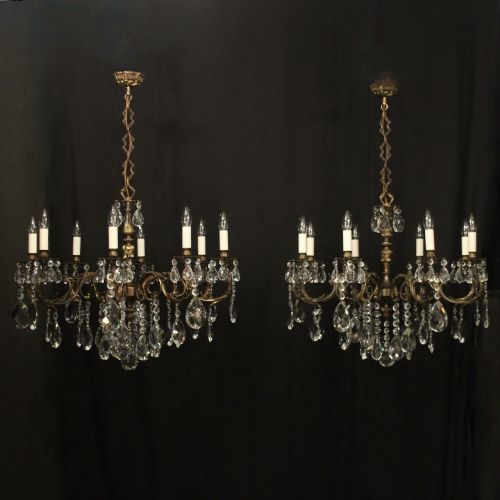
Crystal and cut glass elements dangle from the arms and crown, held together by wire pins to catch and scatter light. Silver plating, gilt finishes, and toleware surfaces appear across the selection, providing distinct reflective qualities depending on the intended period aesthetic.
Antique Eight Arm Light Retail Price Guide 2026
Typical asking prices for eight arm light among the pieces listed under this phrase on Sellingantiques today, from the lower quarter to the upper quarter. They describe what is for sale here now, not the wider market.
Cast lion masks peer out from the metalwork of select early twentieth-century frames, keeping watch over the room below.
Distinctions in quality
Quality rests upon the crispness of the metal casting and the depth of the chasing on the arms and mounts. Finer pieces display sharply defined foliage, clean scrollwork, and tightly fitted joints rather than soft, smoothed contours resulting from worn moulds.
The integration of the crystal and glass components also separates superior examples from ordinary production. Heavy, hand-cut crystal drops that retain their original faceting and clarity elevate a fixture far above one fitted with mass-produced, uniform glass pendants.
The Antique Eight Arm Light Glossary
- Chandelier
- A branched ornamental light fixture suspended from the ceiling. These pieces distribute multiple points of illumination across a room.
- Ormolu
- Gilded bronze used widely in French decorative metalwork. This technique applies a gold amalgam to a bronze base for a lasting metallic lustre.
- Acanthus leaf
- A classical ornament modelled on the foliage of the Mediterranean plant. It appears frequently as a cast motif on chandelier arms and mounts.
- Cut glass
- Glass shaped by cutting facets with a wheel. This process creates sharp edges that refract light intensely.
- Cage chandelier
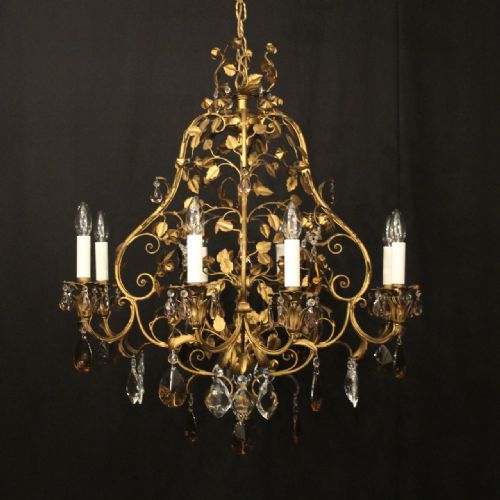
- A structural frame style where metal bands enclose the central stem and support dangling crystal drops. This design originated in eighteenth-century France and persisted into later periods.
Antique Eight Arm Light: Frequently Asked Questions
How do I hang an antique eight arm light?
These chandeliers require secure anchoring into ceiling joists due to their substantial weight in bronze, brass, and crystal. A professional electrician should install a proper ceiling hook and junction box rated for the load.
Height placement depends on room proportions and traffic clearance beneath the lowest crystal drop. Most dining or living spaces accommodate the fixture centrally over a table or open floor area.
What rooms suit an eight arm chandelier?
High ceilings and generous floor space allow an eight arm fixture to distribute its illumination and presence effectively. Dining rooms, entry halls, and principal parlours provide the right scale for the radiating arms.
Smaller rooms risk overwhelming the space, whereas tall vertical volumes let the cut glass and metalwork catch light from multiple angles.
How do I clean cut glass and brass?
Dust the metal and glass components regularly using a soft, dry cloth or feather duster. Avoid harsh chemical polishes that strip original gilt finishes or damage fragile wiring.
For thorough cleaning, remove crystal drops individually and wash them in warm soapy water before drying by hand. Brass and bronze surfaces generally require only gentle wiping to preserve their aged patina.
How do I date an antique chandelier?
Dating relies on examining the construction techniques, metal alloys, and stylistic revival markers present in the frame. Nineteenth-century pieces often display heavier cast bronze work, while nineteen-twenties and thirties examples incorporate simpler brass stampings or nickel plating.
Wiring style, mounting screws, and the cut of the crystal drops offer further clues to the period of manufacture.