


Antique Duet Seat
An antique duet seat offers shared seating for two musicians or window gazers, combining practical timber framing with upholstered comfort.
Antique Duet Seat
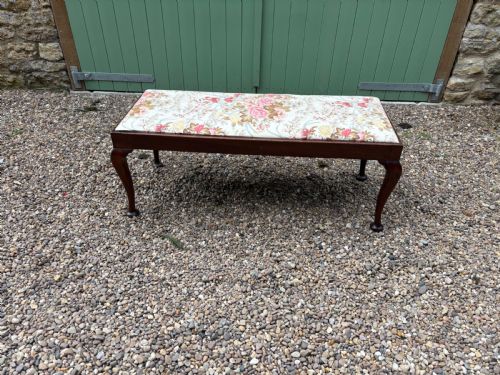
An antique duet seat serves primarily as a long piano stool, music bench, or window seat designed to accommodate two people simultaneously. The form appears frequently in mahogany and walnut across Victorian and Edwardian periods, alongside lighter French stylistic revivals.
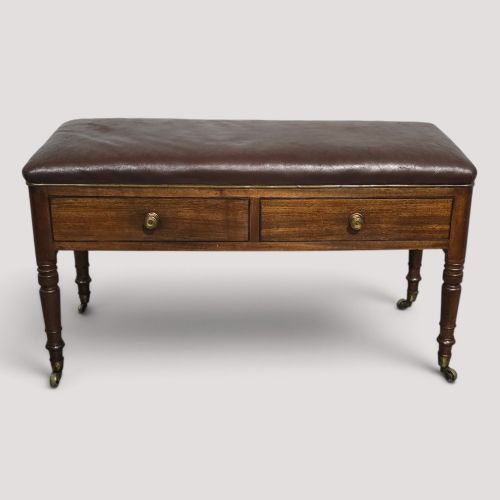
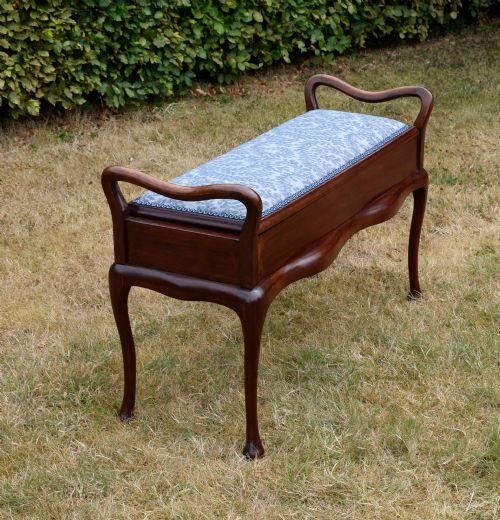
Many examples double as music stools with hinged seats that open to reveal sheet music storage inside the timber frame. Buyers frequently encounter Edwardian mahogany versions featuring inlaid decoration alongside nineteenth-century rosewood and walnut iterations.
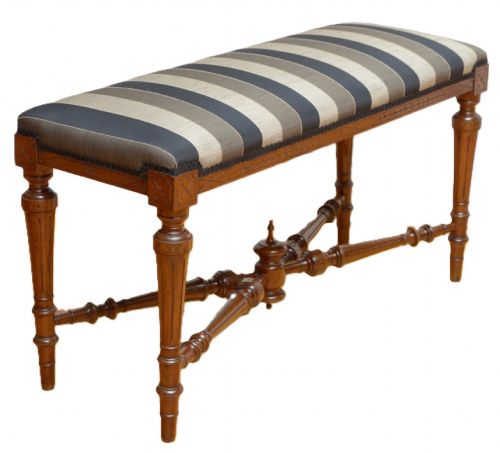
Beyond the music room, these pieces function effectively as window seats or hallway benches due to their long proportions and upholstered tops. The evidence shows forms ranging from simple freestanding mahogany benches to French gilded and painted frames with tapestry covers.
Materials and construction methods
Cabinetmakers built the structural frames using dense timbers such as mahogany, walnut, rosewood, and satinwood, often embellishing the wood with marquetry or delicate string inlay. French examples utilise beech or giltwood to achieve lighter decorative profiles.
Upholstery forms the primary top surface, employing textiles ranging from plain fabric and velvet to woven tapestry. Brass hardware commonly appears on hinges for storage compartments and on castors supporting the legs.
Listings feature mahogany, walnut, rosewood, satinwood, fabric, velvet, brass, and giltwood across Victorian, Edwardian, and nineteenth-century periods.
Distinguishing quality in construction and design
Superior pieces display thoughtful timber selection with figured grain patterns and precise marquetry or inlay work rather than plain surfaces. The execution of carved details on walnut or mahogany frames separates standard utility furniture from finer examples.
The integration of the hinged storage mechanism under the seat reveals the standard of interior joinery. Robust framing and high-grade upholstery fabrics indicate workshop production of higher standing.
Charles Nosotti
The Antique Duet Seat Glossary
- Duet stool
- A long seat designed for two players at a keyboard instrument. It often incorporates a hinged lid for storing scores.
- Window seat
- A long, narrow bench intended to sit beneath a window. These share identical proportions with many musical benches.
- Marquetry
- Decorative veneer patterns formed by fitted pieces of various woods. Artisans applied this technique to cabinet surfaces for visual enrichment.
- Hinged seat
- A movable top attached with metal pivots. This reveals an internal compartment utilised for holding sheet music.
- Inlay
- Contrasting material set into the surface of a timber base. Cabinetmakers used fine wood lines to outline the edges of piano stools.
Antique Duet Seat: Frequently Asked Questions
What is an antique duet seat used for?
These long benches provide seating for two people, traditionally placed before a piano or harpsichord for duet performances.
They also serve well in bedrooms, hallways, or beneath windows as general seating with internal storage.
How do I spot an Edwardian duet stool?
Edwardian examples heavily feature polished mahogany frames often decorated with delicate light wood inlay or stringing.
They generally display lighter proportions and cleaner lines compared to heavier Victorian counterparts.
Do all duet seats have storage?
Many examples feature a hinged seat top that lifts to reveal a shallow box compartment for sheet music.
Open bench forms without internal storage also exist, functioning purely as upholstered window seats.
Which woods were commonly used?
Mahogany and walnut dominate the surviving English and Victorian pieces, providing a sturdy and dark timber frame.
Rosewood, satinwood, and French beech also appear across specific nineteenth-century and continental styles.