



Antique Duchess Mirror
An antique duchess mirror brings a pivoting glass and refined timber surface to the bedroom, offering both deep character and daily utility.
Antique Duchess Mirror
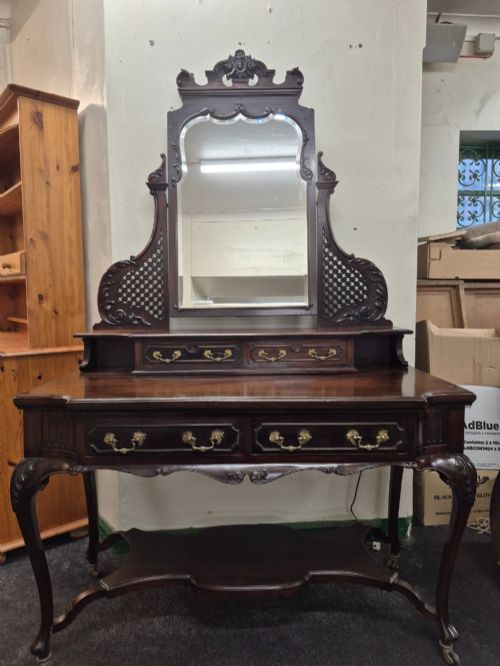
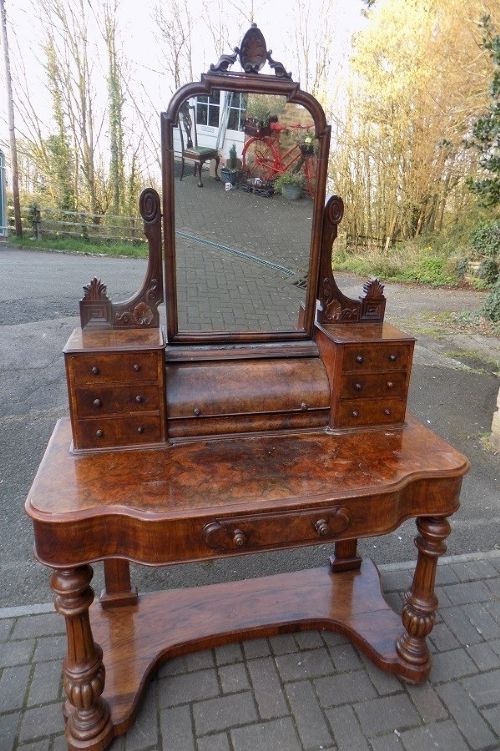
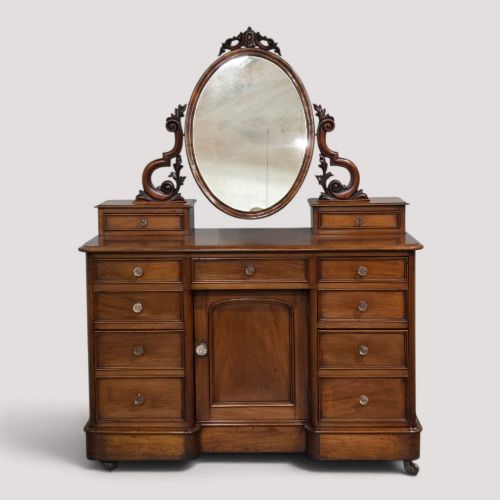
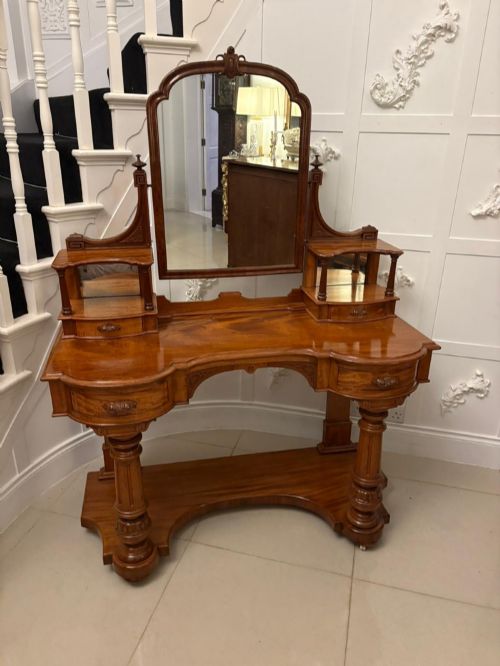
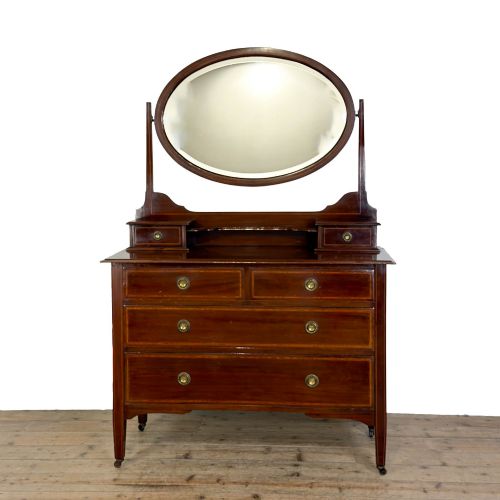
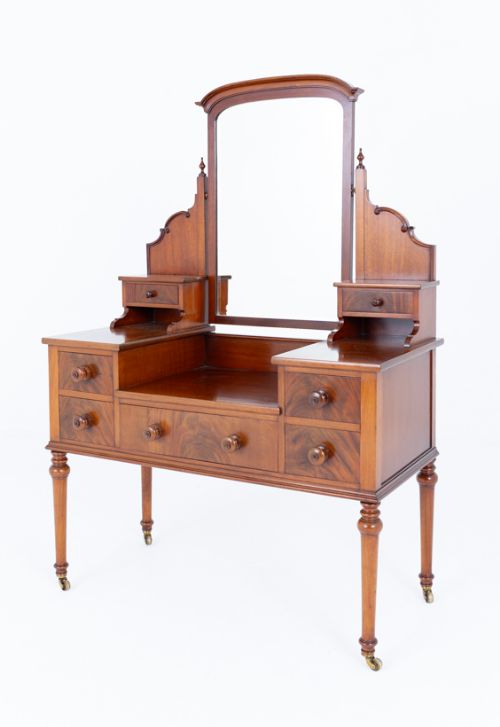
When you search for an antique duchess mirror, you are looking at large Victorian and Edwardian dressing furniture that pairs a central swivelling glass with a tiered table base. The version you are most likely to meet on this page is constructed from rich mahogany or burr walnut, featuring a grand frame supported by scrolling uprights or pedestal drawers.
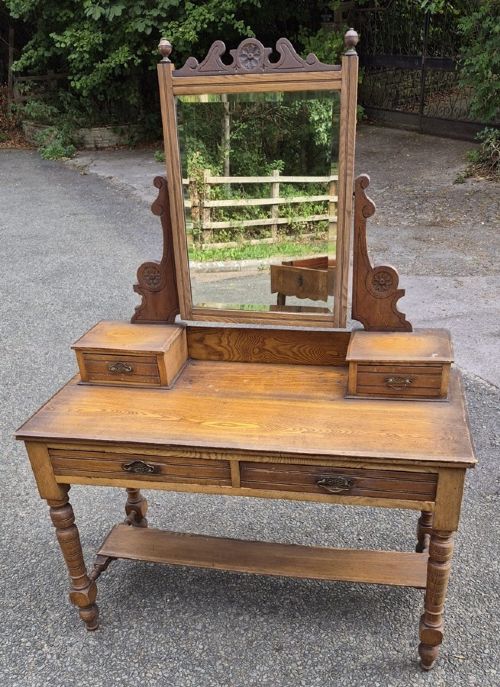
These pieces originate from the nineteenth and early twentieth centuries, spanning periods from 1850 through to the Edwardian era. Alongside formal duchess tables, the listings include related vanity furniture, dressing chests, and occasional toilet mirrors in styles that range from Victorian revival to rustic pine and satinwood.
Materials and Construction
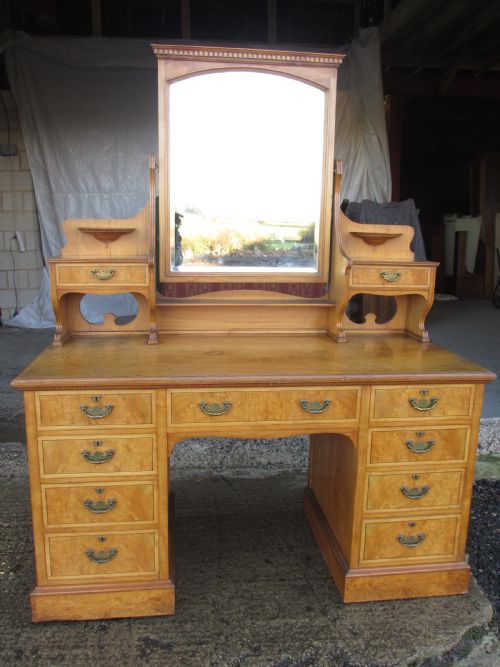
Cabinet makers constructed these dressing tables primarily from solid and veneered timbers such as mahogany, walnut, burr walnut, and satinwood, occasionally utilising pine for secondary carcass work. Rich grains were selected deliberately, especially in burr walnut pieces, to present a decorative figured surface across the main table top and drawer fronts.
The glass frames and mirrors were mounted using brass pivots or adjustable side supports, allowing the user to tilt the plate as needed. Carved details, marquetry inlay, and stencilled decoration were applied to accent the structural framing and the substantial wooden plinths.
Antique Duchess Mirror Retail Price Guide 2026
Typical asking prices for duchess mirror among the pieces listed under this phrase on Sellingantiques today, from the lower quarter to the upper quarter. They describe what is for sale here now, not the wider market.
Listings feature pieces spanning from the 1850s through to Edwardian times, constructed in mahogany, walnut, burr walnut, pine, and satinwood.
Distinctions in Quality
Quality rests primarily in the selection of the timber veneer and the depth of the cabinet work, where heavily figured burr walnut or fine satinwood indicates a higher status piece. The weight and proportion of the carved supports and the integrity of the original mirror glass further separate standard regional examples from grander metropolitan commissions.
Finer pieces display meticulous attention to detail in their drawer construction, brass hardware, and secondary decorative elements like marquetry inlay. Simpler pine or scumble glazed variants offer charm through honest utilitarian build rather than elaborate ornamental display.
John Taylor of Edinburgh
The Antique Duchess Mirror Glossary
- Duchess dressing table
- A large vanity table featuring a large attached mirror, typically supported by small drawers or decorative scrolling uprights. These pieces were designed as prominent bedroom furnishings during the Victorian period.
- Burr walnut
- A highly prized timber veneer taken from the wart-like growths on walnut trees, known for its swirling, highly decorative grain patterns. Cabinet makers utilised it on principal surfaces to create rich visual texture.
- Toilet mirror
- A smaller tabletop glass set into a pivoting frame, often mounted on a small box base containing miniature drawers. They were built to sit atop chests of drawers or dedicated washstands.
- Satinwood
- A lustrous, hard timber native to Ceylon and India, displaying a golden yellow sheen that takes a fine polish. It was favoured for light, elegant bedroom furniture in the later nineteenth century.
Antique Duchess Mirror: Frequently Asked Questions
What is a duchess dressing table?
A duchess dressing table is a grand nineteenth-century vanity unit that incorporates a large, swivelling mirror fixed to a tiered wooden base with drawers. They served as central dressing pieces in Victorian and Edwardian bedrooms.
These units combine the storage of a chest with the grooming surface of a dedicated mirror stand, often accented with burr veneers or carved mahogany.
How do I date an antique dressing table?
Dating relies on observing the prevailing timber choices, hardware, and structural styles associated with specific decades. Mahogany and heavy carving often point to mid-Victorian periods, while satinwood and lighter frames appear more frequently towards the Edwardian era.
Construction methods within the drawers and the presence of original stencilled decoration also help narrow down the manufacturing decade between 1850 and 1910.
Are the mirror glasses usually original?
Mirror plates on nineteenth-century pieces can sometimes show age-related foxing or may have been replaced over the decades due to silver degradation. Examining the silvering behind the glass and the fitting of the backboards helps determine originality.
Original glass frequently displays minor imperfections and lighter areas of oxidation that match the age of the wooden frame.
How do I fit one into a modern bedroom?
These large vanity pieces work well as focal points against a bedroom wall, providing both display space and practical surface area. Their warm mahogany and walnut tones pair effectively with neutral walls and contemporary lighting.
The detachable nature of many mirror frames allows for easier placement and transport within domestic spaces.