







Antique Drinks Holder
These antique drinks holder pieces range from Georgian cellarets to Edwardian tantaluses, keeping your bottles and glasses secure.
Antique Drinks Holder
An antique drinks holder provides a designated vessel or stand for serving and storing bottles and glasses during the eighteenth, nineteenth, and twentieth centuries. These objects appear in forms such as tantaluses, cellarets, wine coasters, liqueur stands, and novelty cocktail stick sets.
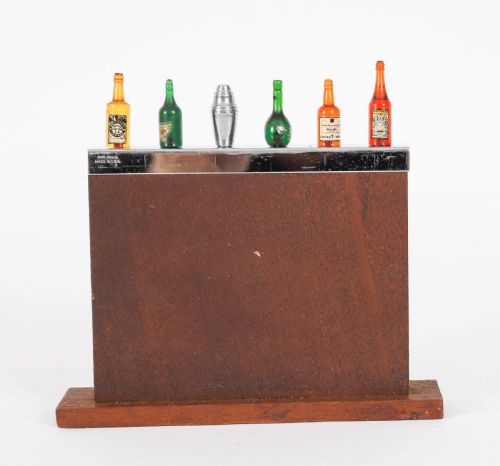
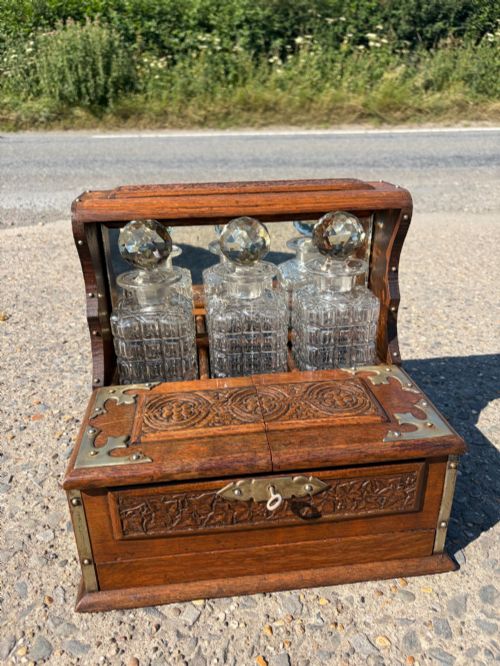
The most common version met on this page is the oak tantalus, typically housing two or three cut crystal decanters secured beneath a locking mechanism. Other frequent survivals include silver-plated wine coasters and novelty barware from the Art Deco period.
Originating largely from English workshops, these pieces reflect changing social habits around entertaining and hospitality across the Victorian, Edwardian, and Regency eras. Collectors encounter diverse materials spanning fine hardwoods, brass, and cut glass tailored to period interiors.
Materials and construction
Cabinetmakers constructed the main bodies using solid and veneered timbers including oak, mahogany, satinwood, and blonde oak, often incorporating brass binding or ormolu mounts for structural strength and decoration. Woodworking techniques involved precise joinery, satinwood inlay, and leather casing.
Metal components utilise silver plate, old Sheffield plate, chrome, and brass, paired with hand-cut crystal and glass bottles. Novelty items integrate moulded plastic and painted metal to achieve specific figural designs.
Distinctions in quality
The finest examples demonstrate superior metalwork, such as heavy silver plating over robust base metals or finely chased ormolu mounts on mahogany cellarets. Cabinetwork quality shows in the selection of figured wood grains and the precise integration of locking mechanisms for tantaluses.
Glassware quality separates standard utilitarian pieces from exceptional ones, marked by deep hand-cutting on crystal decanters that match the exact contours of their housing. Intricate detailing on novelty items, such as figural cocktail stick sets, distinguishes master production from simpler output.
Sudre
The Antique Drinks Holder Glossary
- Tantalus
- A locking drink container that keeps decanters secure within a wooden frame while displaying the contents. The mechanism prevents guests from accessing the spirits without a key.
- Cellaret
- A freestanding cabinet or box designed to hold wine bottles near the dining table. Georgian and Regency examples often feature lead linings for cooling bottles with ice.
- Wine coaster
- A small circular tray with a raised gallery, often fitted with a wooden base and a silver-plated rim. These protected mahogany dining tables from condensation and allowed bottles to pass smoothly.
- Old Sheffield plate
- A composite material made by fusing a thin sheet of silver to a thicker copper core. This technique predates modern electroplating and appears on eighteenth and nineteenth-century pieces.
- Compendium
- A multi-functional box combining a drinks holder with games equipment such as cards and dice. These portable sets served travellers and country house guests.
Antique Drinks Holder: Frequently Asked Questions
What is a tantalus?
A tantalus is a locking drinks holder designed to secure expensive spirits away from servants or guests during the Victorian and Edwardian periods. A metal bar locks across the stoppers of the decanters, allowing the contents to be seen but not reached without the matching key.
Most examples house two or three cut crystal decanters within an oak, mahogany, or satinwood frame. They became status symbols in country houses and middle-class parlours alike.
How do I date an oak drinks holder?
Dating relies on the style of the woodwork, hardware, and locking mechanism combined with the design of the glass bottles. Victorian and Edwardian tantaluses often feature robust oak framing with brass handles and operational locks.
Earlier pieces from the Regency period lean towards mahogany and ormolu, while 1940s items introduce materials like chrome and plastic. Examining the cut of the glass provides further clues to the manufacturing era.
How were wine coasters used?
Wine coasters sat on the dining table after the meal was cleared, holding bottles of port or madeira. Guests slid the coasters across the polished mahogany surface from person to person.
The raised rims prevented bottles from sliding off, while baize-lined or wooden bases protected the dining table from moisture rings. Silver-plated and Sheffield plate versions were especially popular for this task.
What is the difference between a cellaret and a tantalus?
A cellaret is a larger storage piece, often standing on the floor or on legs, designed to hold multiple wine bottles inside a cabinet. They date back to the Georgian and Regency periods and frequently included lead-lined interiors for ice.
A tantalus is a later Victorian invention meant for tabletop display, specifically holding decanters under lock and key. Tantaluses focus on visible display rather than bulk storage.