

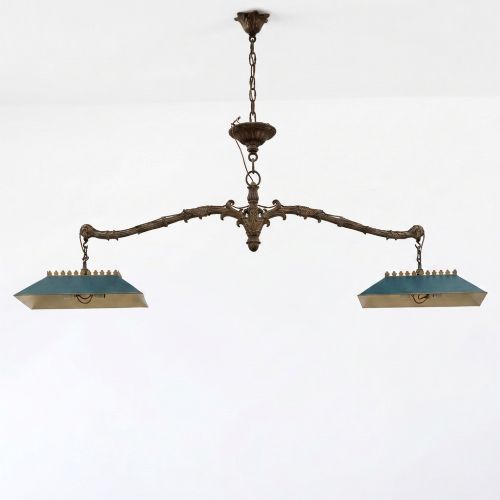


Antique Double Pendant Light
An antique double pendant light brings genuine period character and layered illumination to a room, drawing the eye upwards with classic metal and glass forms.
Antique Double Pendant Light
When you search for an antique double pendant light, you are looking at ceiling-hung fixtures designed to suspend two distinct light sources or multi-tiered groupings from a single drop. These pieces span several decades and centuries, appearing in forms such as early twentieth-century prismatic Holophane pendants, two-light downlighters, and larger double-tiered chandeliers.
The versions most commonly met on this page originate from the nineteenth century, the Edwardian era, and the nineteen-twenties, thirties, and forties. They draw upon styles ranging from French Chateau and Gothic Revival to Industrial and Florentine.
Materials and construction methods
These fixtures are constructed using durable metals such as brass, bronze, gilt bronze, and cast bronze, often paired with glass globes, crystal elements, or prismatic components. The combination of heavy metal framing and glass provides both structural rigidity and light diffusion.
Makers utilised casting and gilding techniques to achieve ornate finishes, particularly evident in pieces styled after French and Italian decorative traditions. Industrial and utilitarian variants rely on robust metalwork and specialised glass, such as prismatic Holophane shades designed to maximise light output.
Antique Double Pendant Light Retail Price Guide 2026
Typical asking prices for double pendant light among the pieces listed under this phrase on Sellingantiques today, from the lower quarter to the upper quarter. They describe what is for sale here now, not the wider market.
Listings feature items spanning the nineteenth century through the nineteen-forties, constructed in brass, bronze, crystal, and glass across various European styles.
Assessing the quality of the work
Quality in these hanging lights is found in the weight and purity of the metalwork, whether it is cast bronze or solid brass, and the clarity of the glass or crystal components. Finer examples display crisp casting detail and harmonious proportions between the suspension and the light sources.
The sophistication of the stylistic execution also separates standard production from superior pieces, visible in the hand-finished details of gilt metal and the complexity of multi-tiered frames. Fixtures that retain their original glass elements and integrated metal fittings demonstrate higher integrity.
The Antique Double Pendant Light Glossary
- Pendant light
- A single light fixture suspended from the ceiling by a cord, chain, or metal rod. These pieces direct illumination downwards into a specific area of a room.
- Double tiered
- A chandelier or pendant design featuring two distinct horizontal levels of light sources or arms arranged vertically. This configuration increases the overall illumination and visual weight of the fixture.
- Prismatic glass
- Glass moulded with geometric ribs or prisms designed to refract and diffuse light evenly while reducing glare. It is commonly found in industrial and commercial pendant lighting from the early twentieth century.
- Gilt bronze
- Bronze metal that has been coated with a thin layer of gold or gold-coloured leaf. This technique provides a durable metallic finish that resists tarnishing.
Antique Double Pendant Light: Frequently Asked Questions
Where should an antique pendant light be hung?
These fixtures suit spaces with sufficient ceiling clearance, such as over a dining table, in an entryway, or centred within a principal room.
Because they hang downward on chains or rods, their placement requires careful measurement to ensure safe clearance below while allowing the light to anchor the room's layout.
How do I date an antique pendant light?
Dating relies on examining the materials, manufacturing techniques, and stylistic markers present in the metal and glass. Pieces from the Edwardian era often feature brass and glass globes, while nineteen-twenties and thirties examples may incorporate prismatic glass or French bronze.
Hardware construction, such as screw types and wiring channels, also provides physical evidence of the decade of manufacture.
Can these lights be wired for modern use?
Most antique hanging fixtures can be adapted to meet current electrical standards by a qualified professional. Rewiring allows historic frames to safely accommodate contemporary bulbs and switching.
It is standard practice to retain the original metal sockets and body while updating the internal wiring and ceiling canopy.