

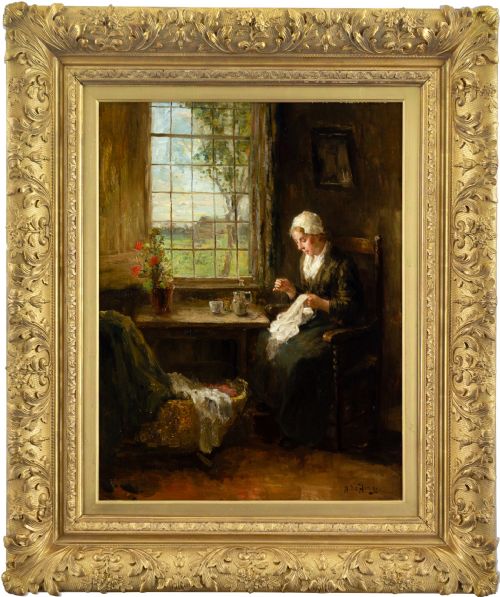


Antique Domestic Portrait
These antique domestic portrait works capture quiet rooms and daily life, offering a glimpse into past interiors that collectors prize.
Antique Domestic Portrait
An antique domestic portrait captures scenes of home life, family gatherings, and everyday indoor routines rather than formal aristocratic likenesses. When you search for an antique domestic portrait, you encounter works spanning the Georgian, Victorian, and later periods up to the early twentieth century. The examples on this page encompass oil paintings, oil on board, watercolours, and reverse glass prints.
Subjects range from quiet hours and mothers with their children to interior scenes featuring animals, shaving rituals, and tea pouring. The styles vary from genre painting and impressionist execution to naive folk art and academic compositions. These pieces document how earlier generations lived, dressed, and furnished their living spaces.
Materials and construction
Canvas and wooden boards serve as the primary supports for the oil paintings, while paper provides the base for watercolours and reverse glass prints utilise glass panels. Artists applied oil paint and watercolour pigments, sometimes incorporating gesso and gold leaf detailing within the frames.
The methods rely on traditional brushwork, layering techniques, and reverse painting applied to glass. Surviving pieces retain their period framing, which protects the fragile painted surfaces and paper components.
Antique Domestic Portrait Retail Price Guide 2026
Typical asking prices for domestic portrait among the pieces listed under this phrase on Sellingantiques today, from the lower quarter to the upper quarter. They describe what is for sale here now, not the wider market.
Distinctions in quality
Quality rests upon the skill of the brushwork, the expressiveness of the figures, and the convincing rendering of interior light and shadow. Superior works display confident handling of anatomy and domestic objects, whereas simpler pieces rely on naive charm.
The handling of the narrative and the psychological interaction between figures separates standard decorative works from accomplished genre art. Preservation of the original paint layer and the character of the associated period frame also influence the overall standing of a piece.
Bernard De Hoog·William Henry Knight·Rolinda Sharples·Ralph Hedley·Pierre-Louis Bouchard
The Antique Domestic Portrait Glossary
- Genre painting
- Depiction of aspects of everyday life by depicting ordinary people engaged in common activities. These works provide valuable historical records of domestic interiors and social customs.
- Reverse glass print
- An image executed directly onto the back of a pane of glass and viewed from the front. This delicate technique produces a characteristic glossy finish.
- Oil on board
- A painting executed on a stiff wooden or paperboard panel rather than stretched canvas. This support was common for smaller nineteenth-century studies.
- Impressionist
- A style involving relatively small, thin, yet visible brush strokes and an open composition. It emphasises accurate depiction of light in its changing qualities.
- Gesso
- A paint mixture consisting of a neutral binder mixed with chalk or pigment, used to prepare wood surfaces or create raised details on frames. It forms a smooth base before gilding.
Antique Domestic Portrait: Frequently Asked Questions
What is an antique domestic portrait?
An antique domestic portrait is a work of art depicting people within indoor home environments, capturing everyday activities and family scenes rather than official formal poses.
These pieces reflect the social history and domestic arrangements of periods ranging from the Georgian era through the nineteenth century and into the early twentieth century.
Where were these paintings displayed?
These artworks hung primarily in private homes, adorning the walls of parlours, drawing rooms, and studies. They were meant for personal enjoyment within residential settings rather than public galleries.
The domestic scale of the paintings suited moderate-sized rooms, complementing contemporary furniture and interior decoration.
How do I date a domestic portrait?
Dating relies on stylistic clues, including the clothing worn by the subjects, the furniture depicted in the background, and the medium used. Details such as reverse glass printing or specific academic and impressionist techniques also point to particular decades.
Signatures, inscriptions on the reverse, and the construction methods of the accompanying frames provide further chronological evidence.
How should I care for these works?
Protect the paintings from direct sunlight and maintain stable indoor humidity levels to prevent the canvas, wood, or paper from warping and the paint from cracking. Avoid using chemical cleaners on the painted surfaces or the glass.
Dust gently with a soft, dry brush and consult a professional conservator if the surface requires deeper cleaning or stabilisation.