


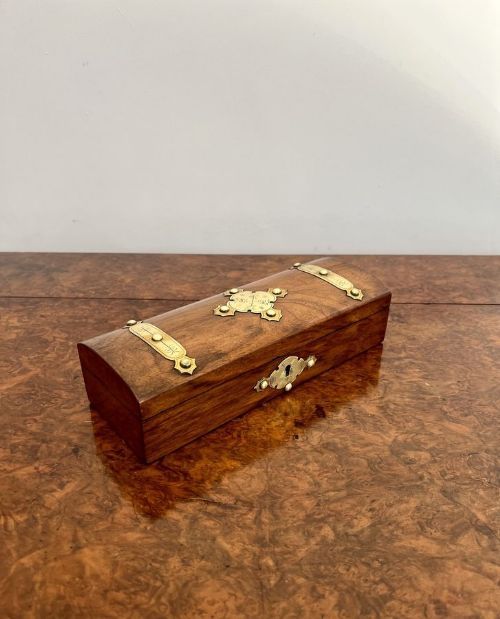


Antique Domed Trinket Box
An antique domed trinket box brings tactile warmth and small-scale craftsmanship to a desk, holding precious keepsakes beneath curved wooden lids.
Antique Domed Trinket Box
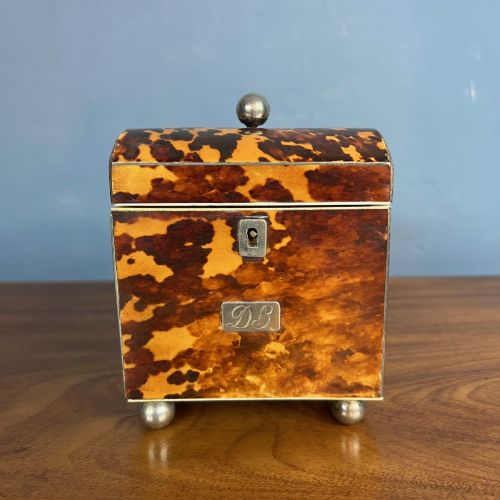
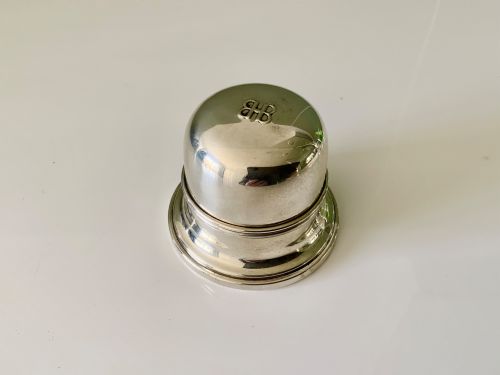
An antique domed trinket box encompasses small lidded containers designed for personal valuables, desktop stationery, and precious keepsakes. The selection spans compact personal receptacles to larger desk accessories, unified by their distinctive curved upper profiles.
The specimens met most frequently on this page date from the Victorian era, alongside Georgian, Regency, and late nineteenth-century examples. Common formats include glove boxes, tea caddies, stationery boxes, and caskets with arched or domed lids.
Makers utilised various timber foundations including burr walnut, mahogany, rosewood, and boxwood, often enhanced by decorative finishes such as hand-painting or pokerwork. These pieces served functional roles in period interiors while doubling as decorative objects for boudoirs and parlours.
How they were made
Cabinet makers constructed these boxes using solid timbers and decorative veneers such as burr walnut and amboyna, shaped over curved lids to create the characteristic dome silhouette. Internal compartments were lined and fitted to hold specific items like gloves, tea leaves, or letters.
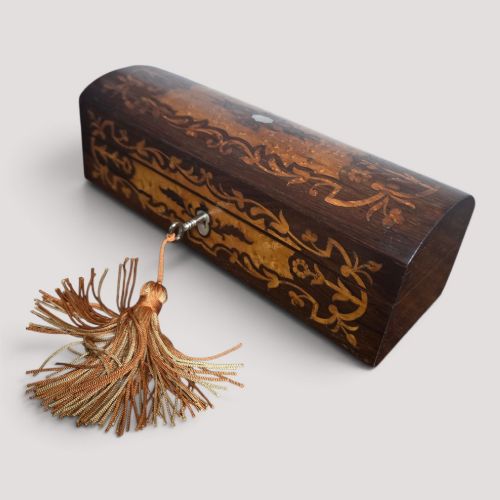
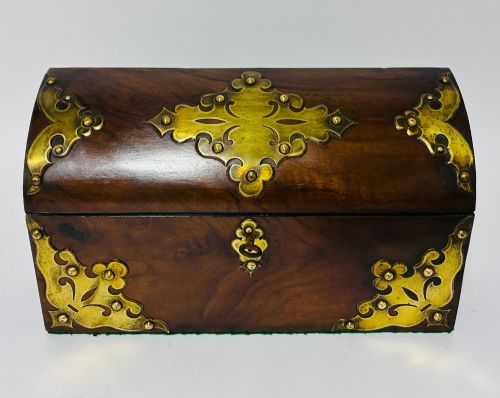
Metal mounts in brass provided structural reinforcement and visual contrast to the polished wood grains. Surface decoration frequently involved marquetry inlay, hand-painted motifs, and pokerwork engraving executed by skilled artisans.
Antique Domed Trinket Box Retail Price Guide 2026
Typical asking prices for domed trinket box among the pieces listed under this phrase on Sellingantiques today, from the lower quarter to the upper quarter. They describe what is for sale here now, not the wider market.
Some nineteenth-century boxes include secret internal compartments designed to conceal love letters from prying family members.
What varies in quality
The grade of timber veneer dictates much of the visual impact, with tightly figured burr walnut and amboyna sitting at the upper end of refinement. Superior execution shows in the precision of brass binding, corner mounts, and flush-fitting joinery across the curved lid.
Decorative embellishments set apart finer examples, whether through complex marquetry inlay, original hand-painted folk art scenes, or specialised metalwork. The integration of fitted internal trays and original working locks further distinguishes standard production from exceptional pieces.
The Antique Domed Trinket Box Glossary
- Burr walnut
- A figured timber harvested from walnut tree growths that produces intricate, swirling grain patterns. It was highly favoured by nineteenth-century cabinet makers for luxury boxes.
- Marquetry
- The art of applying small pieces of veneer to a structure to form decorative patterns and pictures. Craftsmen used contrasting woods to create geometric or floral motifs on box lids.
- Pokerwork
- A method of decorating wood by burning designs into the surface with heated metal tools. This technique appears on specific Arts and Crafts period stationery boxes.
- Tea caddy
- A container originally built to store loose tea leaves securely under lock and key. Many surviving examples feature internal compartments and domed lids.
- Stationery box
- A desk accessory engineered to organise writing paper, envelopes, and correspondence. These pieces often incorporate tiered wooden dividers beneath their curved tops.
Antique Domed Trinket Box: Frequently Asked Questions
What were domed boxes used for?
These lidded containers served multiple domestic purposes depending on their internal capacity and fitted compartments. Smaller versions held jewellery, trinkets, and snuff, while larger formats accommodated writing paper, gloves, or tea.
Placed on dressing tables, desks, and sideboards, they kept valuable personal items secure and dust-free in period households.
How do I date an antique box?
Dating relies on combining timber choices, construction techniques, and stylistic clues visible in the hardware and decoration. Georgian and Regency pieces tend to show simpler geometric lines, whereas Victorian examples frequently employ heavy burr walnut veneers and elaborate brass mounts.
Design movements like Art Nouveau and Arts and Crafts introduce specific painted motifs or pokerwork that narrow the production window.
Are brass mounts original?
Original brass binding and corner brackets typically show consistent patination, minor wear, and matching fixing screws appropriate to the period. Makers used brass not only for decoration but to protect vulnerable wood edges on frequently handled travel and desktop boxes.
Replacements often appear too bright or show mismatched screw heads that disrupt the historical integrity of the piece.
How should I clean the wood?
Maintenance requires gentle dusting with a soft, dry cloth to protect fragile timber veneers and aged polished surfaces. Avoid modern silicone sprays or excessive moisture, which can damage delicate marquetry inlay and painted finishes.
Occasional application of appropriate wax polish helps nourish historic wood without altering the natural patina developed over decades.