



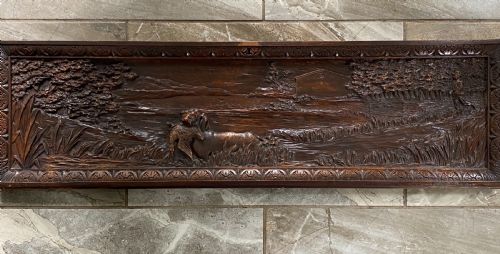
Antique Dog Panel
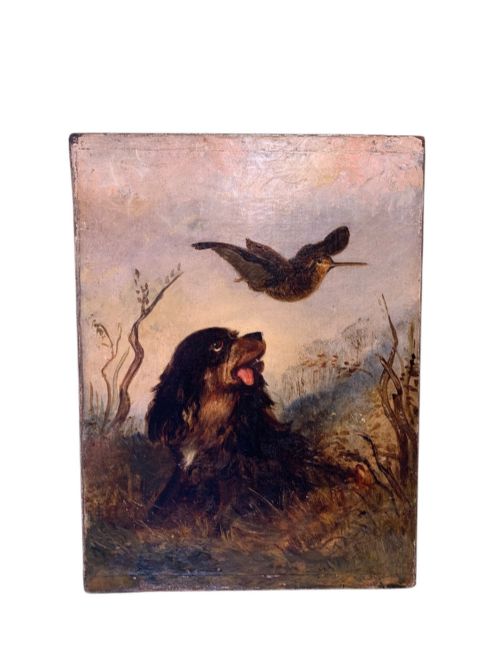
An antique dog panel brings character to a room, offering fine studies of hounds and spaniels worked in wool, carved walnut or oil on panel.
Antique Dog Panel
When you search for an antique dog panel, you encounter a diverse group of works ranging from carved architectural timber to needlework and oil paintings. The examples gathered here span the nineteenth century, taking forms such as framed textile art, fire screens, overdoors and wall plaques.
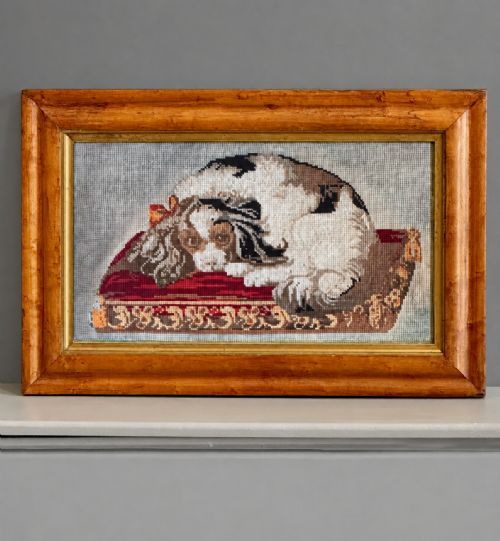
The most common formats on this page include nineteenth century needlework Berlin work studies, carved walnut Black Forest hunting panels, and traditional oil paintings on panel depicting spaniels, collies and pugs. These pieces reflect Victorian sporting art, the English Naive school and Arts and Crafts sensibilities.
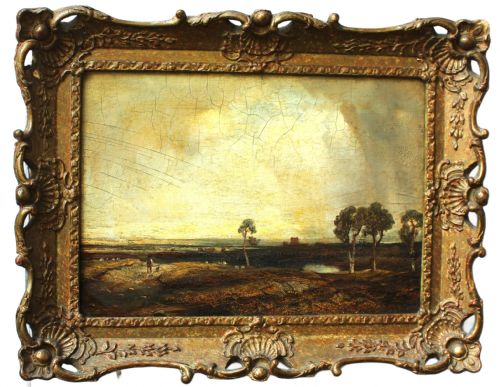
Makers and artists vary widely, from amateur needleworkers creating Berlin work to named manufacturers like the Iida Takashimaya Company producing Japanese silk textiles, alongside circle of John Constable landscapes and attributed reliefs.
Materials and construction
The materials recorded in these listings rely heavily on natural supports and mediums, including oil paint applied to wooden panels, carved walnut and golden oak.
Textile panels employ wool and silk stitched onto canvas, frequently preserved behind glass within original frames such as burr maple.
Carved wooden elements utilise heavy timber for architectural placement, while relief plaques incorporate turquoise glazed components.
A cocker spaniel shares wall space with a pug in a quiet nod to historical canine companionship.
Distinctions in quality
Quality in these panels rests on the precision of the carving or the fineness of the brushwork and stitching. A well-executed oil on panel or detailed Berlin work needlework displays accurate anatomical proportions in the animal and careful handling of expression.
The choice of framing and mounting plays a role, with original burr maple frames or substantial carved walnut surrounds enhancing the physical integrity of the piece. Lower quality works may show heavy restoration or simplified, naive execution that lacks depth.
Reginald Robert Tomlinson·Iida Takashimaya Company·John Constable
The Antique Dog Panel Glossary
- Berlin work
- A type of nineteenth century needlework embroidered in coloured wool on canvas, following a charted grid. It produced richly hued depictions of animals and domestic scenes.
- Black Forest carving
- Elaborate wood carving originating from the mountainous region of Central Europe, typically executed in walnut and featuring naturalistic animal subjects.
- Oil on panel
- A painting executed directly onto a wooden board rather than canvas. This solid support was common for small-scale historical works.
- Needlework
- General term for textile art produced with a needle and thread. It encompasses canvas work and embroidered panels.
- Overdoor
- A decorative architectural panel positioned directly above a doorway. These often featured substantial carved wood reliefs.
- Naïve school
- Art produced by self-taught or untrained painters. These works prioritise direct expression and charm over strict academic perspective.
Antique Dog Panel: Frequently Asked Questions
What periods do these panels date from?
The pieces listed across this selection date primarily from the nineteenth century and the Edwardian era, with specific examples stretching from eighteen hundred into the early twentieth century.
This broad span includes Victorian sporting art, Arts and Crafts movements, and nineteenth century naive works, each reflecting the aesthetic preferences of their respective decades.
How were carved wooden panels used?
Carved wooden panels, such as Black Forest hunting panels, were frequently integrated into interior architecture as overdoors or decorative wall fixtures.
Their heavy walnut construction allowed them to serve as permanent structural ornaments within country houses and grand domestic spaces.
What is Berlin work?
Berlin work is a style of nineteenth century needlework created by stitching coloured wool onto a canvas backing using a printed grid pattern.
This technique allowed makers to produce highly detailed portraits of pets, such as King Charles spaniels, often mounted behind glass within original frames.
How do I care for an antique textile panel?
Textile panels and needlework require protection from direct sunlight to prevent the wool or silk threads from fading over time.
Keeping them behind glass within their original frames helps shield the fabric from airborne dust and moisture.