




Antique Diamond Timepiece
An antique diamond timepiece is a delicate piece of wearable engineering designed to catch the light while keeping the hour.
Antique Diamond Timepiece
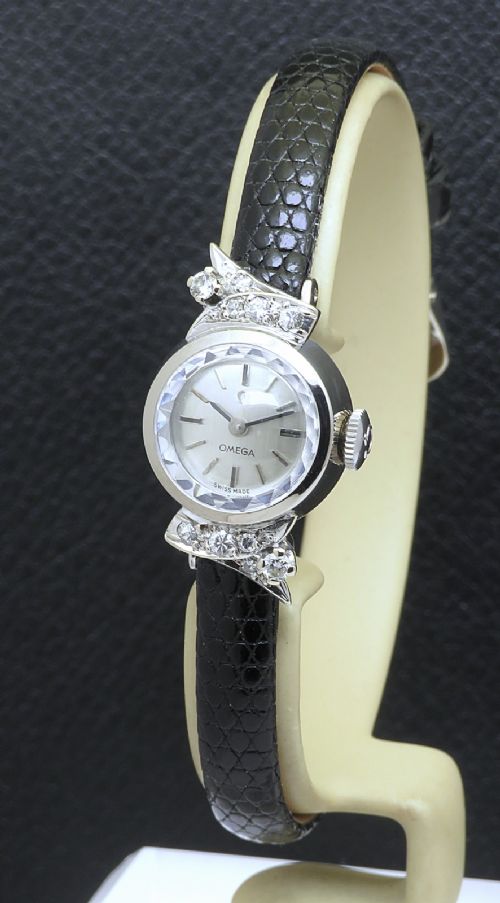
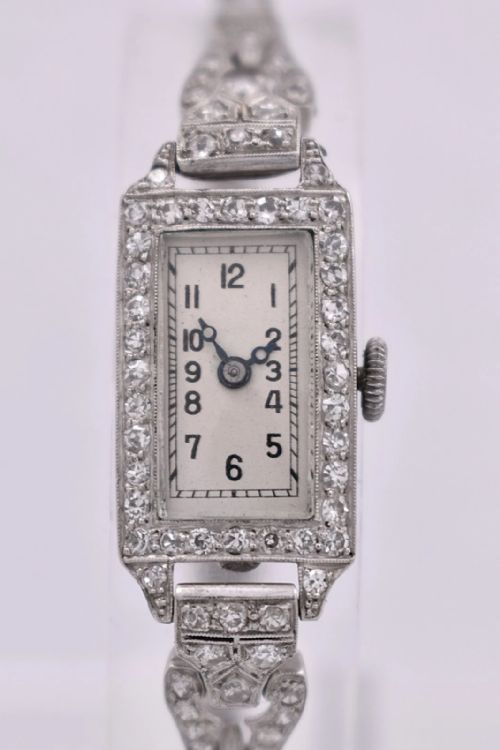
When you search for an antique diamond timepiece, you are looking at ladies' cocktail watches, wristwatches, and pocket watches spanning from the nineteenth century through the art deco and mid-century periods. The most common version you will meet on this page is the platinum or white gold cocktail watch from the nineteen-thirties, built to sit small and bright upon the wrist.
These items bring together jewellery and horology, functioning primarily as evening wear adornments where the dial is often concealed beneath a panel of stones or set discreetly amidst brilliant-cut diamonds. Alongside the cocktail watch forms, the selections here stretch from late Victorian pocket watches to mid-century wristwatches in eighteen-carat and fourteen-carat white gold.
The aesthetic shifts noticeably from the geometric lines typical of nineteen-twenties and thirties art deco designs to the cleaner, simpler contours of the nineteen-sixties mid-century modern pieces. Whatever the decade, each example relies on precious metals and diamonds to transform a standard utility object into an item of formal dress.
How they were made
Makers constructed these timepieces using heavy white metals, predominantly platinum and various grades of white gold such as fourteen-carat and eighteen-carat, which provided a secure, neutral setting for diamonds without competing with their brilliance. Mesh bracelets, leather straps, and fabric elements were paired with these metallic housings to secure the watch to the wearer.
The internal mechanics required Swiss jewelled lever movements and minute repeater chronograph mechanisms, fitted into compact cases alongside glass dials. Jeweliers then paved or set the platinum and gold bezels and straps with diamonds, combining micro-mechanical engineering with fine gemstone setting.
Listings span four distinct periods: the nineteenth century, nineteen-twenty, nineteen-thirty, and nineteen-sixty.
What varies in quality
The distinction between tiers rests upon the integration of the movement with the metalwork and the weight and cut of the diamonds used across the piece. Finer examples display heavier platinum or gold content, such as mesh bracelets and substantial diamond carat totals, executed by established makers rather than mass workshops.
Quality also shows in the precision of the case construction and the sophistication of the internal movement, moving from standard jewelled levers up to complex chronograph mechanisms housed within solid gold housings. The crispness of the art deco geometry or the clean execution of mid-century styling further separates standard production from superior output.
Bucherer·Asprey·Vertex·Movado·Invicta
The Antique Diamond Timepiece Glossary
- Art Deco
- A design style from the nineteen-twenties and thirties characterised by geometric shapes, stylised motifs, and sleek lines. It dominates the appearance of many early twentieth-century cocktail watches.
- Cocktail Watch
- A small ladies' wristwatch designed for evening wear where the dial is often secondary to the gemstone decoration. These pieces function as much as bracelets as they do timekeepers.
- Jewelled Lever
- A type of escapement mechanism incorporating small precious stones, usually rubies or garnets, to reduce friction on the pallet jewels. This improves the accuracy and longevity of the movement.
- Minute Repeater
- A complication in a watch that chimes the hours, quarters, and minutes when activated by a slide or pusher. It represents a high level of horological craftsmanship.
- Platinum
- A dense, ductile, and malleable silver-white precious metal prized for its strength and ability to hold diamonds securely without discolouring. It was the favoured metal for luxury mounts in the interwar period.
Antique Diamond Timepiece: Frequently Asked Questions
What is a cocktail watch?
A cocktail watch is a small ladies' wristwatch created primarily for formal evening wear during the twentieth century. These pieces treat timekeeping as a secondary function to decorative gemstone setting.
They often feature hinged covers or concealed dials surrounded by diamonds, turning a functional accessory into a piece of fine jewellery intended for social occasions.
How do I wear an antique watch?
Wearing an antique watch requires an understanding of its delicate nature, particularly older cocktail watches with delicate mesh bracelets or fabric straps. They suit formal or evening attire where their jewellery aspect can be fully appreciated.
Because many vintage movements lack modern shock resistance and water sealing, owners typically reserve them for careful, occasional wear rather than daily use.
How do I tell art deco from mid-century?
Art deco pieces from the nineteen-twenties and thirties rely on rigid geometric patterns, stepped cases, and intricate millegrain work around the diamond settings. They present a complex, highly ornamented surface.
Mid-century modern designs from the nineteen-fifties and sixties strip away this heavy ornamentation in favour of cleaner, more minimal lines, simpler dials, and smoother integration of the case and strap.
What metals were used?
Makers of these timepieces relied heavily on platinum throughout the art deco period because its strength allowed for minimal metal visibility around diamonds. White gold in fourteen-carat and eighteen-carat variants also appeared frequently, especially in later mid-century designs.
Accompanying elements included leather and fabric for straps, alongside glass crystals protecting the watch face.