


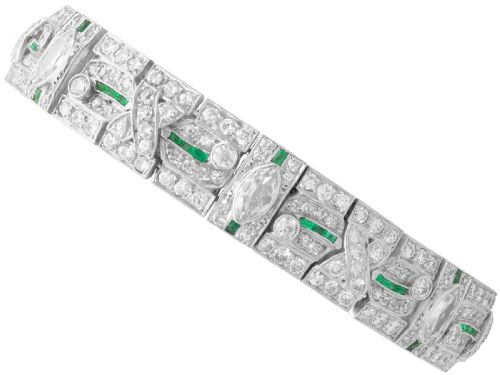


Antique Diamond Cuff
An antique diamond cuff brings together the precision of platinum settings and the unmistakable weight of gold to anchor a historic wrist.
Antique Diamond Cuff
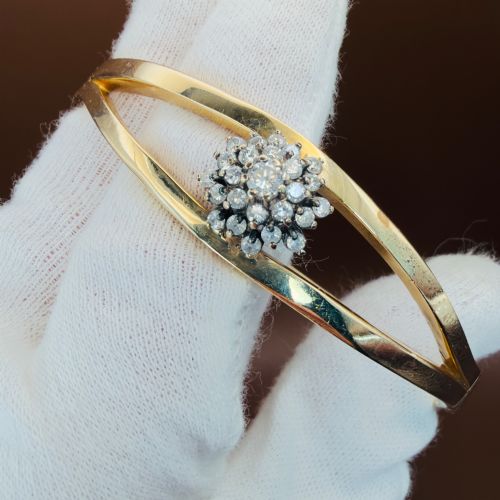
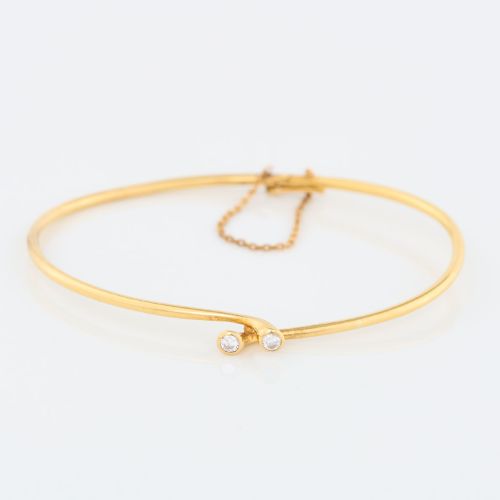
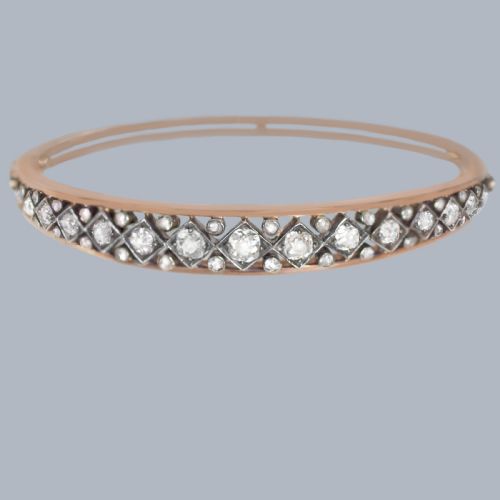
When you search for an antique diamond cuff, you find wristwear spanning the Victorian era through the 1950s, though rigid bangles and articulated platinum link bracelets form the vast majority of what meets the eye here.
The materials range from early 15ct and 18ct yellow and rose gold to later platinum mountings, frequently accented by rubies, sapphires, emeralds, pearls, and enamel alongside the central diamonds.
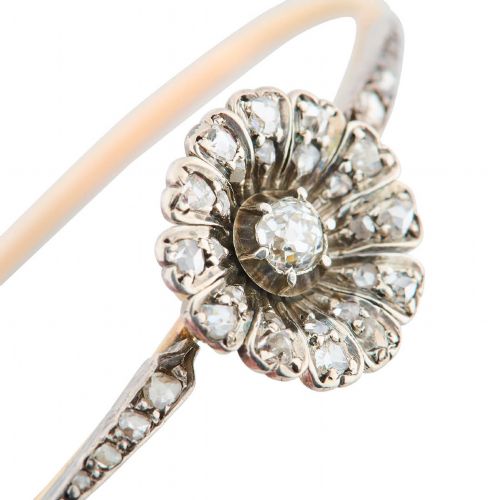
Designs shift from flower motifs and star settings in the nineteenth century to geometric Art Deco lines and Mid-Century forms.
How they were made
Goldsmiths utilised 15ct and 18ct yellow, rose, and white gold alongside platinum, often combining silver-topped gold in earlier Victorian pieces to enhance the whiteness of old mine and rose cut stones.
Gemstones were secured using claw, bezel, and flush settings by hand, integrating calibrated sapphires, emeralds, and rubies into complex geometric platinum lattices during the Art Deco period.
Among the rigid wristwear, a solitary mythological chimera bangle stands guard alongside floral motifs and geometric lines.
What varies in quality
Quality rests in the architectural integrity of the metalwork, where heavier platinum link bracelets and substantial gold bangles show superior joint articulation and stone security compared to lighter mounts.
The calibre of the stones dictates the upper tier, distinguishing uniform brilliant cuts and substantial old mine cuts from simpler rose cut diamonds and smaller accent gems.
Ilias Lalaounis
The Antique Diamond Cuff Glossary
- Old mine cut
- An early diamond cut characterised by a cushion shape, high crown, and large culet. These stones were shaped by hand under candlelight.
- Rose cut
- A flat-based diamond style featuring a domed crown with triangular facets arranged in a symmetrical pattern. This cut has been used since the sixteenth century.
- Art Deco
- A design style spanning the 1920s and 1930s defined by geometric precision, symmetry, and platinum settings. It favours strong architectural lines over floral curves.
- Belle Epoque
- A period of ornate jewellery design spanning the late nineteenth and early twentieth centuries. It utilises delicate platinum work to create lace-like motifs.
Antique Diamond Cuff: Frequently Asked Questions
How do I care for an antique diamond bracelet?
Protect the metal and gems by storing the piece flat in a lined box away from other jewellery to prevent scratching. Avoid wearing it during heavy physical tasks.
Clean the piece gently using warm water and a soft brush, taking care with pieces containing pearls or closed-back settings where moisture can become trapped.
Can I wear an antique diamond bangle daily?
Rigid bangles and sturdier platinum bracelets tolerate regular wear well, provided you check the clasp security periodically. Softer gold alloys and delicate hinge mechanisms require a more mindful approach.
Pieces featuring pearls or delicate enamel work suit special occasions better than daily tasks to prevent accidental impact damage.
How do I date a diamond bangle?
Examine the metal combinations and construction styles, such as silver-topped gold pointing to Victorian origins, while platinum combined with geometric symmetry indicates the 1920s or 1930s.
Clasp types, hallmarks, and specific gemstone cuts like old mine or rose cuts also narrow down the manufacturing decade.