


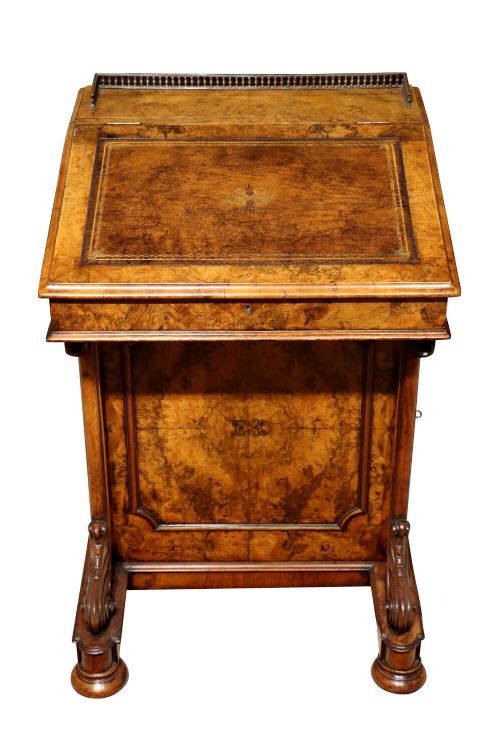


Antique Davenport Table
An antique davenport table is a compact writing desk designed for small spaces, offering clever storage drawers and a sloping top that draws collectors in.
Antique Davenport Table
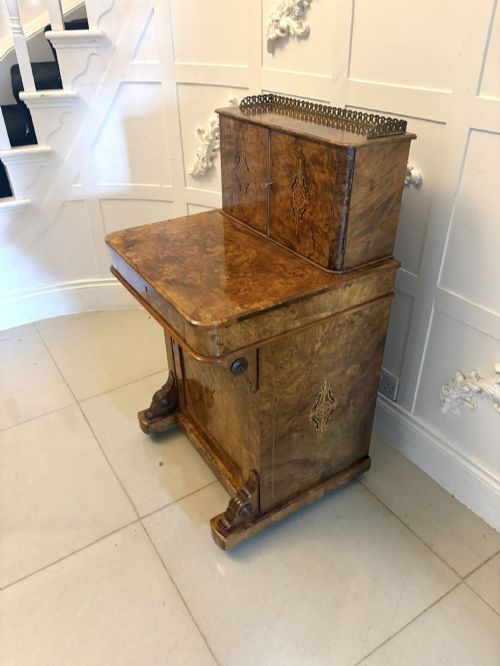
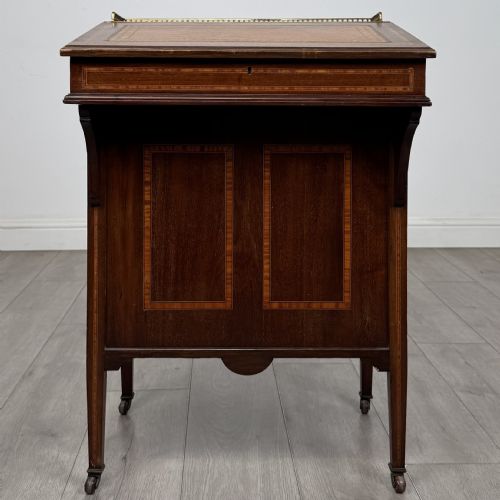
An antique davenport table functions primarily as a compact writing desk, combining a sloping writing surface with built-in drawers accessed from the side. You will most frequently meet Victorian examples in burr walnut or mahogany, often featuring stationery compartments and internal satinwood fittings.
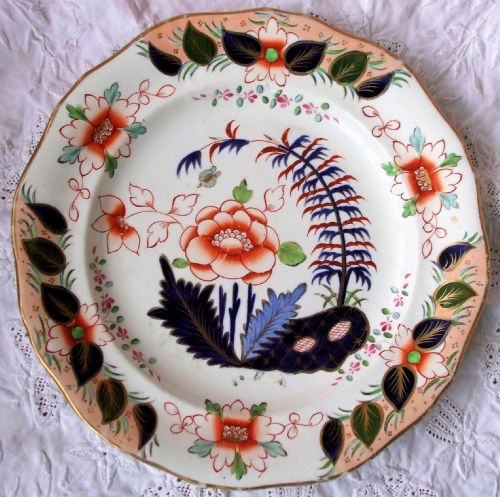
The form developed during the nineteenth century, encompassing Regency ladies' desks, mid-Victorian pop-up variants, and later Arts and Crafts oak versions. While the name also connects to ceramic plates and clocks by makers sharing the surname, the furniture remains the primary focus of this search phrase.
How they were made
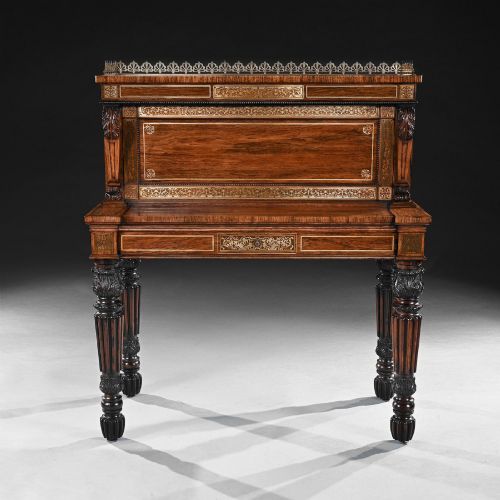
Cabinet makers utilised dense hardwoods including mahogany, burr walnut, rosewood, and pollard oak, often selecting veneers to display rich natural grain patterns. Brass mounts, leather inserts, and internal satinwood stringing added functional detail and visual contrast to the writing surfaces.
Construction techniques involved housing drawers within the pedestal base, incorporating sliding tops, and building pop-up stationery cabinets accessed from the rear. Carved supports, lyre bases, and intricate inlay work demonstrate the joinery standards of nineteenth-century workshops.
Antique Davenport Table Retail Price Guide 2026
Typical asking prices for davenport table among the pieces listed under this phrase on Sellingantiques today, from the lower quarter to the upper quarter. They describe what is for sale here now, not the wider market.
Listings feature Victorian and Regency pieces in burr walnut, mahogany, and oak, alongside related ironstone plates and clocks.
What varies in quality
The grade of timber selected for the outer veneers dictates visual impact, with burr walnut and figured mahogany showing higher ambition than plain oak or standard woods. Exhibition pieces incorporate complex pop-up mechanisms, clever interior compartments, and meticulous marquetry or brass inlay.
Proportion and stability separate standard utility items from finer workshop output, particularly in how drawers fit within the pedestal and how smoothly sliding tops operate. The presence of secondary timbers inside the drawers and the crispness of any carved detailing reveal the original maker's skill.
John Davenport of Longport·Gillows Oxford Street Workshop·Thomas Turner
The Antique Davenport Table Glossary
- Davenport
- A compact pedestal desk with a sloping, hinged writing surface and side drawers. The form originated in the early nineteenth century for domestic correspondence.
- Burr walnut
- A highly figured timber taken from the wart-like growths on walnut trees. Cabinet makers prized its swirling grain patterns for veneering premium surfaces.
- Secretaire
- A piece of furniture containing a writing drawer or fold-down desk flap. These often conceal pigeonholes and small drawers for stationery.
- Pedestal base
- The supporting structure beneath a desk, containing banks of drawers. In davenports, these drawers typically open to one side rather than the front.
Antique Davenport Table: Frequently Asked Questions
What is an antique davenport table?
An antique davenport table is a small nineteenth-century writing desk featuring a sloping lid and side-opening drawers. It was originally designed for ladies to write letters in small drawing rooms.
These pieces combine a compact footprint with surprisingly clever internal storage, often incorporating stationery compartments hidden beneath a sliding or pop-up top.
How do you use a davenport desk?
You sit beside the pedestal base and open the sloping lid, which is usually lined with leather, to write letters or sort papers. Side drawers swing or pull out to hold inkwells, stamps, and correspondence.
Many examples include a stationery box on top that opens by sliding or popping up, keeping writing supplies close at hand without cluttering the main surface.
What woods were used for davenports?
Cabinet makers built davenports using dense hardwoods such as mahogany, rosewood, pollard oak, and walnut. Burr walnut veneers were especially popular during the Victorian period for their decorative grain.
Secondary woods like satinwood often appear inside the small internal drawers and pigeonholes to provide a contrasting, lighter interior colour.