



Antique Cut Glass Candleholders
Antique cut glass candleholders bring brilliant prism light to a room, spanning Victorian and Edwardian periods in cut crystal, ruby glass, and brass.
Antique Cut Glass Candleholders
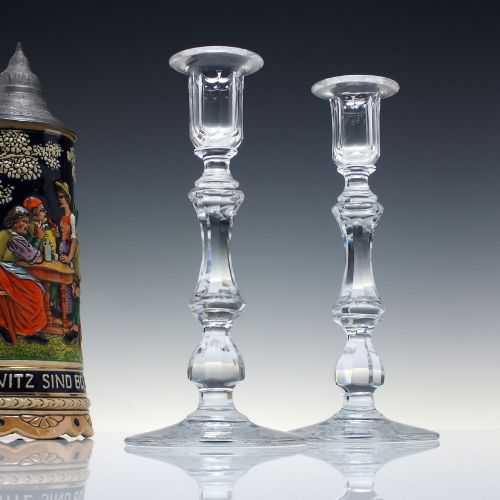
These antique cut glass candleholders encompass table lustres, candelabras, and candlesticks originating from the nineteenth century into the Edwardian era. Pieces frequently appear in pairs, designed to sit upon mantels and tables with hanging glass drops that catch the flame light.
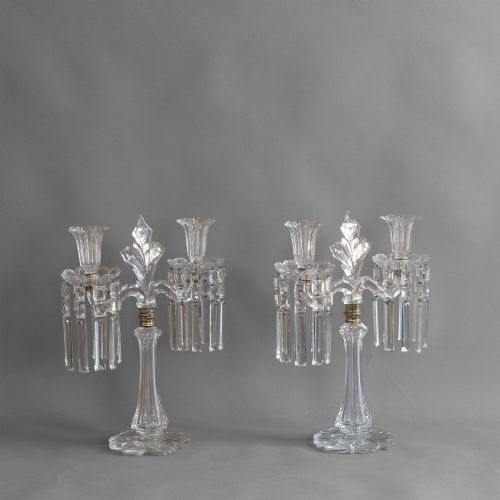
Forms range from simple single candle holders to elaborate six-armed candelabras and mantel lustres styled after Louis XVI designs. The majority of items date from the Victorian period through to around nineteen ten.
Materials and construction
Makers utilised heavy lead crystal and coloured flash glass, applying deep wheel cutting to create faceted surfaces that refract light. Glass bodies were frequently combined with brass components and secured with threaded fittings.
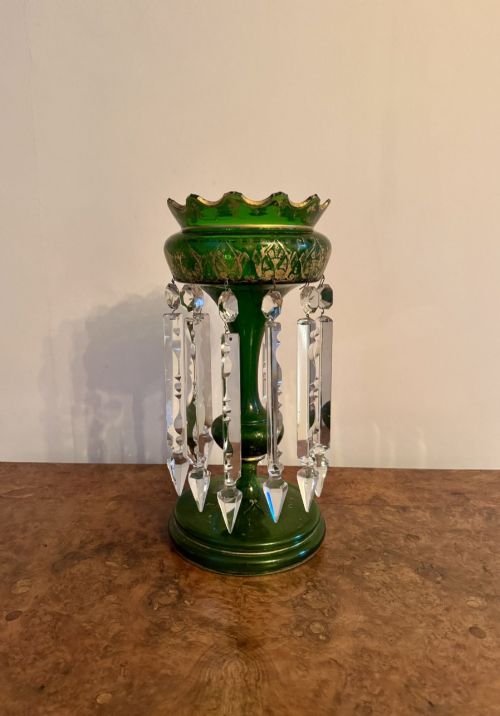
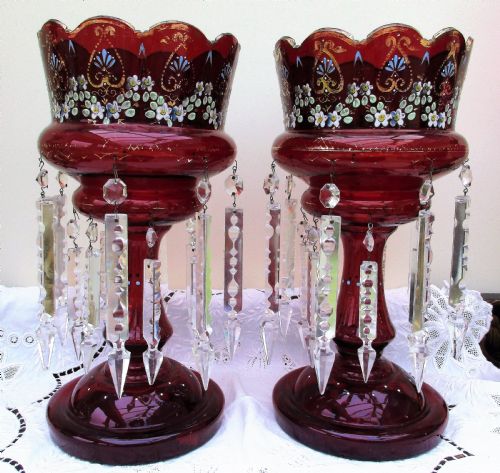
Hanging glass prisms, known as drops or spear points, were suspended from rims using wire loops to complete the lustre assemblies. Coloured pieces often employed layered flash glass techniques where a thin coloured layer was cut through to reveal clear glass beneath.
Antique Cut Glass Candleholders Retail Price Guide 2026
Typical asking prices for cut glass candleholders among the pieces listed under this phrase on Sellingantiques today, from the lower quarter to the upper quarter. They describe what is for sale here now, not the wider market.
Victorian mantel lustres were designed to flicker and shimmer in dim gaslight, effectively acting as nineteenth-century mood lighting.
Assessing quality in cut glass
Quality rests upon the crispness of the glass cutting and the clarity of the crystal or the depth of the coloured flash glass. Sharp, well-defined facets reflect light cleanly, whereas softer edges indicate hurried finishing.
The completeness and matching nature of the hanging crystal drops influence the integrity of a pair. Heavier brass mounts and secure construction distinguish more ambitious candelabras and mantel lustres from simpler domestic examples.
The Antique Cut Glass Candleholders Glossary
- Lustre
- A ornamental glass vase or candlestick fitted with hanging glass prisms designed to catch and reflect light. These pieces were popular decorative objects on nineteenth century mantelpieces.
- Flash glass
- Glass composed of a thin layer of coloured glass fused over a colourless or contrasting glass base. Cutting through the top layer creates pattern and depth.
- Candelabra
- A branched candlestick holding multiple candles on separate arms. Larger examples often incorporate central spires and extensive crystal drops.
- Lead crystal
- Glass containing metallic lead oxide to increase weight, brilliance, and refractive index. This material allows for deeper and sharper facet cutting.
Antique Cut Glass Candleholders: Frequently Asked Questions
What is a mantel lustre?
A mantel lustre is an ornamental glass vessel fitted with hanging glass drops, placed traditionally upon a fireplace mantelpiece.
These pieces combine the function of a candle holder with decorative crystal prisms that sparkle in ambient room light.
How do I date these candleholders?
Dating relies on stylistic clues, glass colours such as ruby or cranberry, and manufacturing techniques recorded across the Victorian and Edwardian periods.
Objects from the nineteenth century often feature hand-cut facets and heavy lead crystal construction characteristic of that era.
Were these made in pairs?
Many surviving cut glass candleholders and lustres were manufactured and kept as symmetrical pairs for placement on mantelpieces or side tables.
Matching pairs generally command greater interest from collectors than single surviving examples.
What is flash glass?
Flash glass consists of a clear or contrasting glass body coated with a thin layer of coloured glass.
When artisans cut patterns through this outer coloured layer, the clear glass underneath is exposed to create a striking two-tone effect.