
Antique Curio Case
An antique curio case brings together glass and polished timber to display small treasures with traditional elegance.
Antique Curio Case
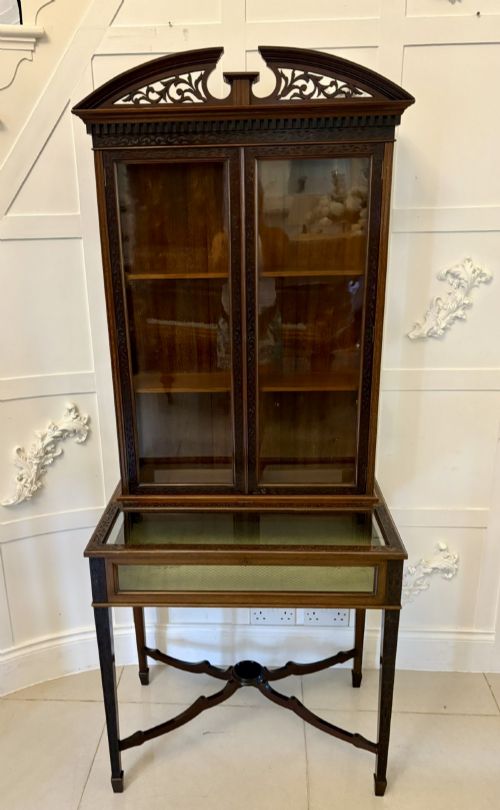
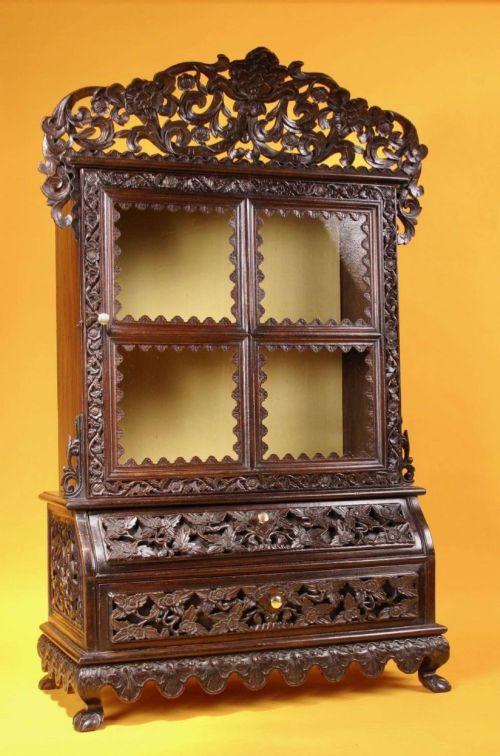
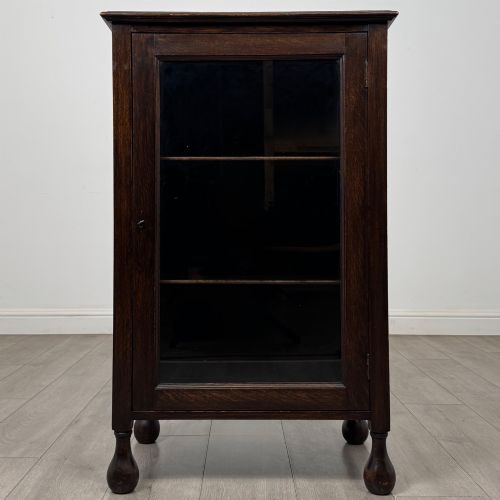
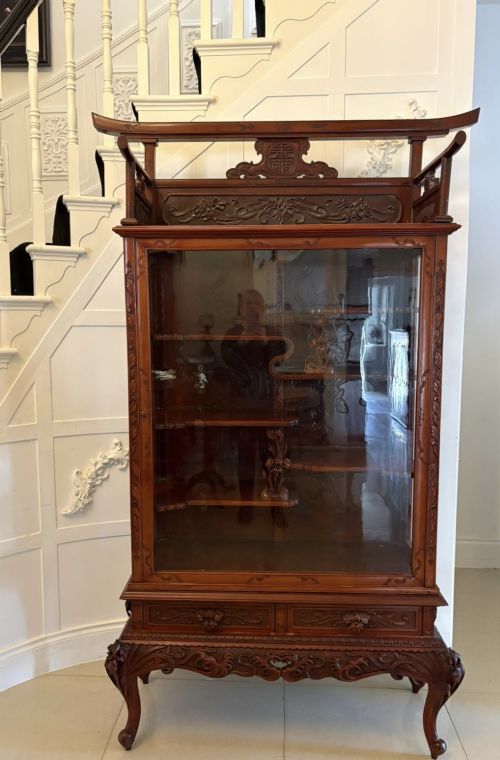
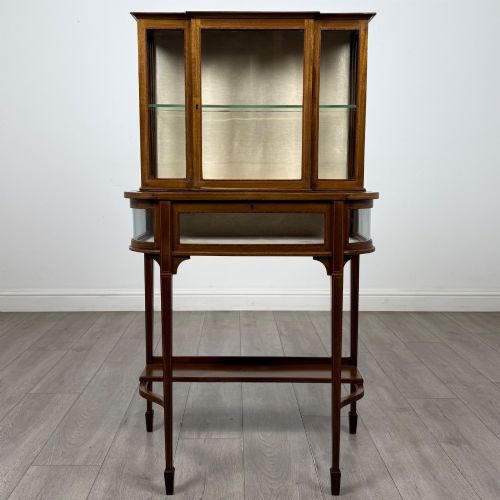
An antique curio case encompasses a variety of display forms, from tall vitrines and side cabinets to compact bijouterie tables and miniature cases designed for tabletop use. The pieces found here date predominantly from the Victorian and Edwardian eras, stretching back through the nineteenth century into earlier Georgian examples.
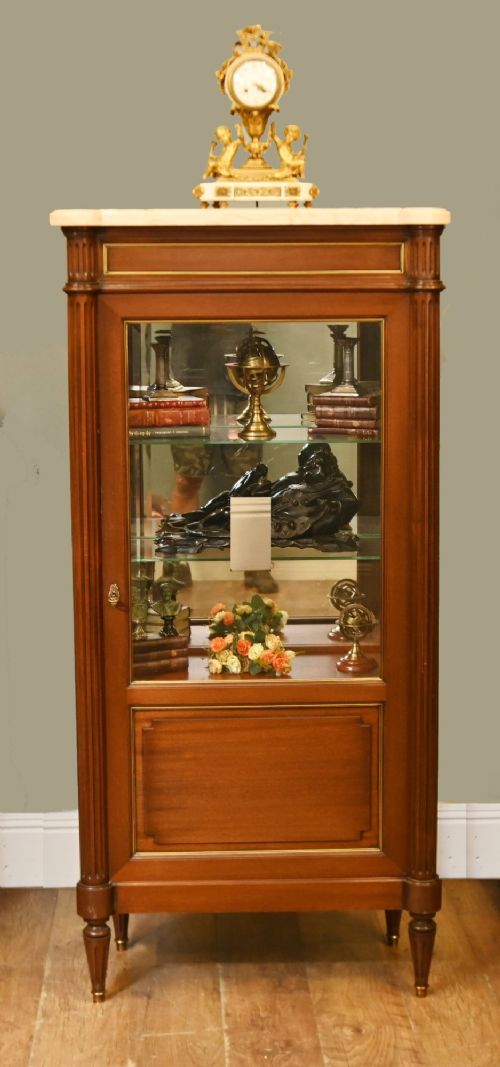
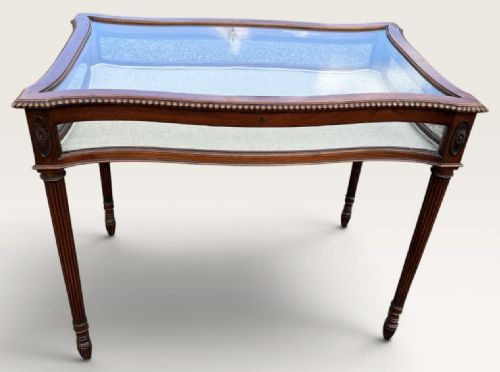
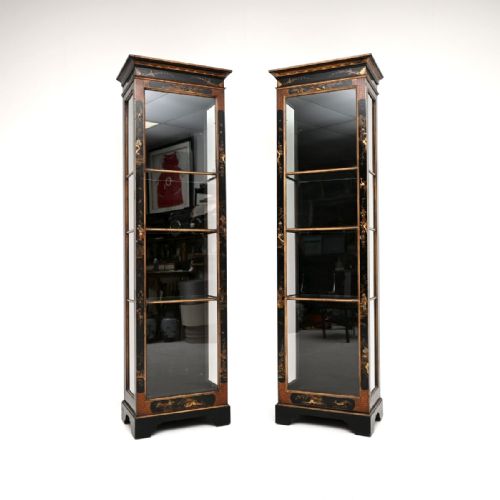
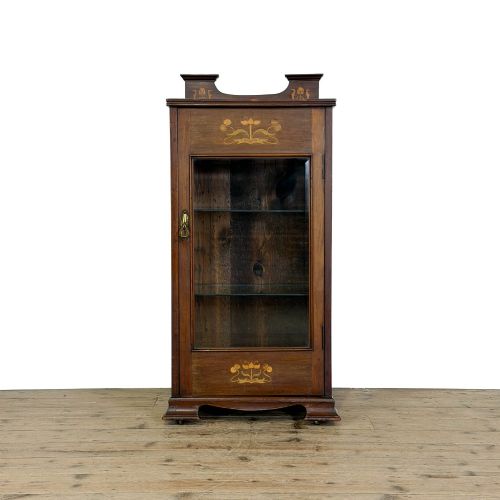
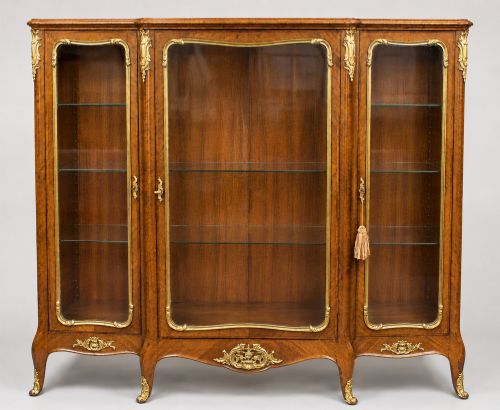
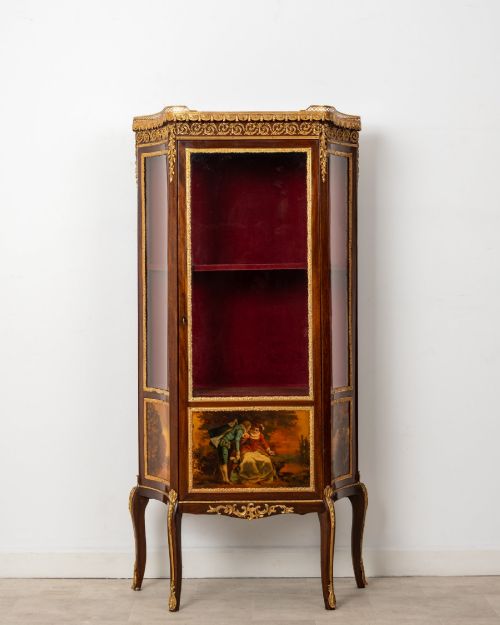
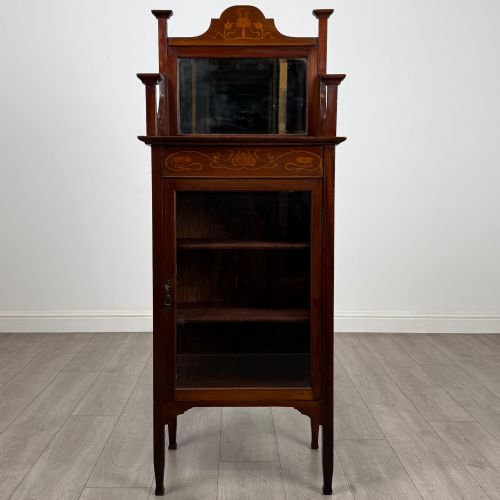
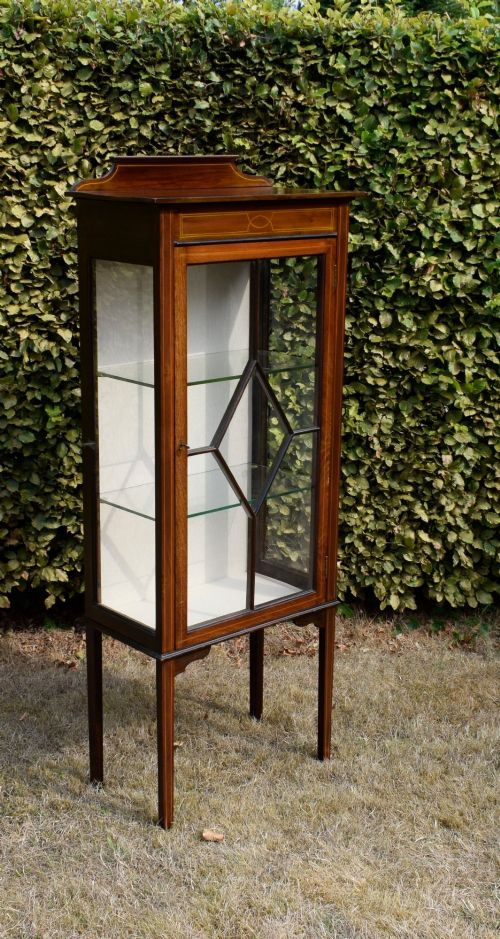
Buyers most frequently encounter Edwardian mahogany display cabinets alongside French vitrines and glazed table cases. These pieces serve to protect and exhibit collectibles, medals, ceramics, and jewellery behind glass panels that invite close inspection from every angle.
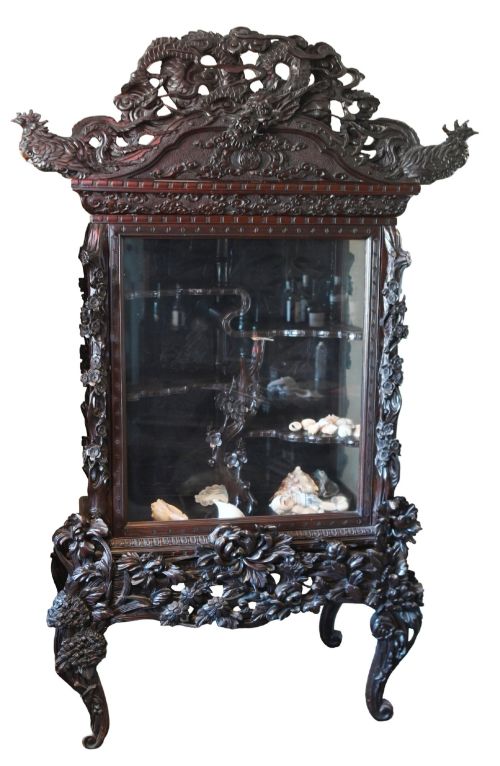
Origins range across English workshops and French ateliers, occasionally extending to Japanese lacquered pieces or Dutch marquetry works. The selection reflects diverse historical revivals, including Louis XV, Louis XVI, and Chippendale styles, alongside simpler architectural forms.
Materials and technique
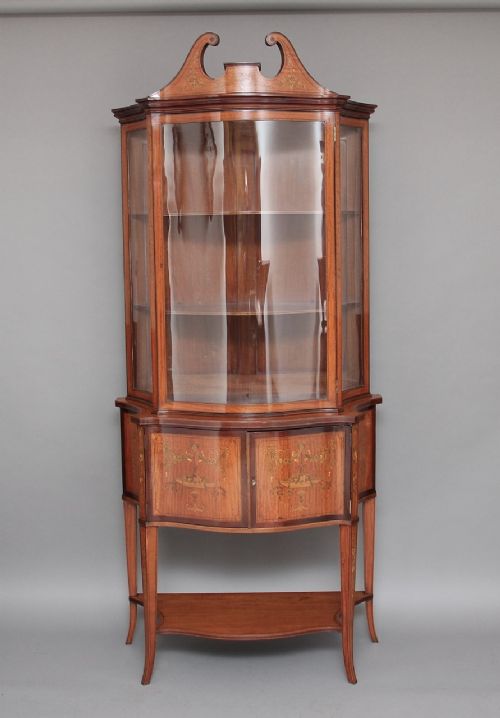
Cabinetmakers utilised dense timbers such as mahogany, kingwood, and walnut as structural foundations, often applying intricate marquetry, satinwood inlay, or Vernis Martin painted panels to the exterior surfaces. French pieces frequently incorporate heavy cast or chased ormolu mounts and gilt bronze details that frame the glazed doors and corners.
Glazing is central to the construction, utilising clear glass panes held by slim timber bars or metal framework to maximise interior light. Marble tops appear on many nineteenth-century French vitrines and cabinets, providing a durable and cool contrasting surface above the wooden carcase.
A sedan vitrine brings the elegance of an enclosed street chair indoors to display your curiosities.
Judging execution
Quality reveals itself in the precision of the cabinetwork, from the tight fit of the glazed doors to the smoothness of internal shelf adjustments and drawers. Finer examples display meticulously chased ormolu mounts, carefully selected timber veneers, and hand-painted decorative panels rather than mechanical shortcuts.
The sophistication of the stylistic execution distinguishes standard production pieces from masterworks. Cabinets attributed to notable makers exhibit superior proportions, heavier metal mounts, and refined marquetry that elevate the entire object.
François Linke·William Neale
The Antique Curio Case Glossary
- Bijouterie table
- A glass-topped display table specifically designed for showing jewellery, medals, and small decorative items at tabletop height. These pieces often feature fabric-lined interiors to cushion the objects displayed.
- Vitrine
- A glazed cabinet intended primarily for the display of porcelain, glassware, and curiosities. The term originates from the French word for glass.
- Ormolu
- Gilt bronze mounted as decorative ornament on furniture and cabinets. It requires skilled casting and gold-mercury amalgamation techniques to achieve its characteristic golden lustre.
- Vernis Martin
- A simulated Japanese lacquer technique developed in eighteenth-century France and emulated later. It involves applying multiple layers of translucent varnish over painted scenes.
Antique Curio Case: Frequently Asked Questions
What is a bijouterie table?
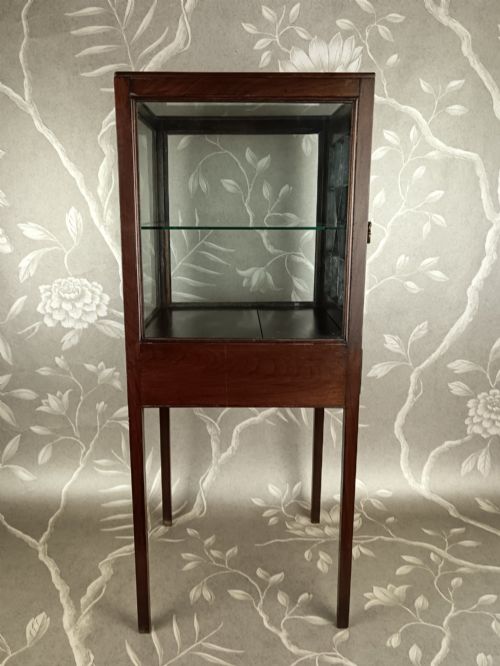
A bijouterie table is a low display case with a glazed top, built to hold small personal items, coins, and jewellery where they can be viewed from above.
These tables often stand on slender legs and feature hinged lids lined with velvet or fabric.
How do I clean the glass and wood?
Dust timber surfaces gently with a dry, soft cloth and avoid chemical polishes that build up residue over time. Glass panels require a mild cleaner applied to a cloth rather than sprayed directly, protecting the surrounding wood and mounts.
Regular gentle maintenance preserves both the polish of the timber and the clarity of the display.
Where should I place a vitrine?
Position a vitrine away from direct sunlight to prevent the fading of interior fabrics, painted panels, and timber veneers. Stable room temperatures protect antique glue joints and prevent the wood from warping.
Placing the cabinet against a secure interior wall ensures stability, especially for taller pieces containing delicate glassware.
Are the shelves adjustable?
Many display cabinets and vitrines feature adjustable glass or wooden shelves supported by rack-and-pinion systems or traditional wooden notches. This adaptability allows collectors to exhibit objects of varying heights within the same case.
Checking the interior fittings reveals whether the original support mechanisms remain intact.