

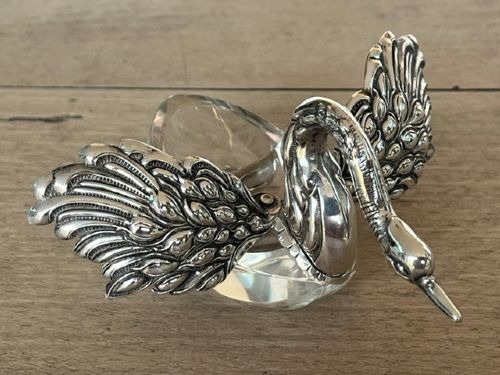


Antique Crystal Condiment Pot
These antique crystal condiment pot pieces bring table service alive with cut glass and silver mounts.
Antique Crystal Condiment Pot
When you search for an antique crystal condiment pot, you are looking at functional tableware designed to hold salt, pepper, preserves, and sauces on the dining table. The pieces found here span the Victorian, Edwardian, and Regency periods, alongside mid-century examples from nineteen sixty. Forms range from single preserve jars and salt cellars to complete cruet and condiment sets with multiple bottles.
You are most likely to meet silver-mounted cut glass and lead crystal vessels paired with sterling silver or silver plate. These items include distinct objects such as divided swan salt cellars with movable wings, pepper pots, and preserve jars complete with spoons. Traditional European and Art Deco styles also appear among the offerings.
How they were made
The glass elements are formed from lead crystal and cut glass, shaped into vessels designed to catch the light on the dining table. Metal components utilise sterling silver and silver plate, providing mounts, tops, and spoons that secure the glass bodies.
Maker marks and hallmarks on the metal portions indicate standard silversmithing practices of the nineteenth and twentieth centuries. The combination of heavy cut glass and fitted silver hardware required precise metalworking to match the contours of each pot.
Antique Crystal Condiment Pot Retail Price Guide 2026
Typical asking prices for crystal condiment pot among the pieces listed under this phrase on Sellingantiques today, from the lower quarter to the upper quarter. They describe what is for sale here now, not the wider market.
Listings feature items from the Victorian, Edwardian, and Regency eras alongside mid-century pieces.
What varies in quality
Quality in an antique crystal condiment pot rests upon the depth and crispness of the glass cutting, which dictates how sharply the facets catch the light. Thicker lead crystal and heavier metal mounts indicate a more substantial piece intended for fine dining.
The presence of crisp hallmarks on the silver or sterling silver components points to a higher grade of manufacture. Matched sets with original spoons and uncompromised metal fittings stand apart from piecemeal combinations.
Asprey And Co
The Antique Crystal Condiment Pot Glossary
- Cut glass
- Glass decorated by grinding facets or patterns into the surface with a wheel. This technique creates sharp geometric designs that reflect light across the room.
- Sterling silver
- An alloy containing ninety-two point five percent silver and seven point five percent other metals. It provides durable metal mounts and tops for nineteenth-century tableware.
- Cruet set
- A matched collection of glass bottles or jars held in a metal stand for oils, vinegars, and sauces. These sets sit at the centre of the dining table.
- Silver plate
- A base metal coated with a thin layer of pure silver. This method offered an accessible alternative to solid silver for Edwardian and Victorian dining wares.
- Lead crystal
- Glass containing a high proportion of lead oxide, which increases weight and brilliance. It forms the heavy, clear body of many preserve jars and salt cellars.
Antique Crystal Condiment Pot: Frequently Asked Questions
What is a cruet set?
A cruet set consists of multiple glass bottles or jars housed in a metal frame, used for holding condiments at the dining table.
These collections often feature matching silver-mounted pieces designed for easy service during formal meals.
How were salt cellars used?
Salt cellars held loose salt before the invention of modern shakers, allowing diners to pinch salt onto their food.
They sat beside each place setting or at intervals along the centre of the table.
How do I clean crystal?
Crystal vessels require gentle hand washing in warm water with mild detergent to preserve the polished surface.
Harsh abrasives and sudden temperature changes must be avoided to protect the cut glass facets.
How do I date silver mounts?
Silver mounts often display hallmarks that record the assay office, date letter, and maker's mark.
Comparing these stamps against official registry records reveals the precise year of manufacture for the metal elements.