


Antique Country Tavern Table
An antique country tavern table brings honest utility and centuries of social history straight into your home.
Antique Country Tavern Table
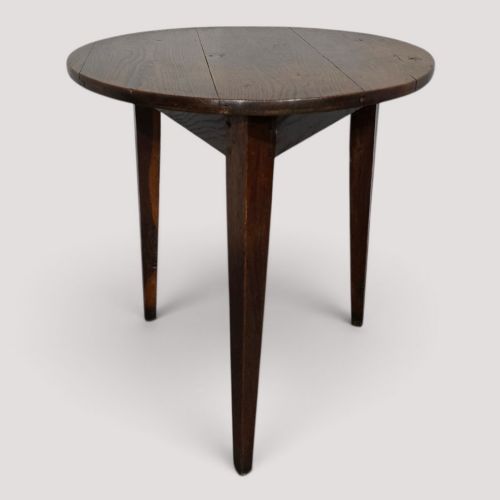
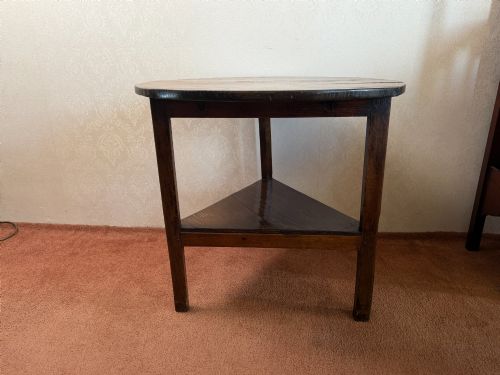
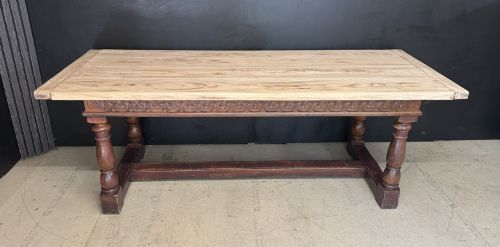
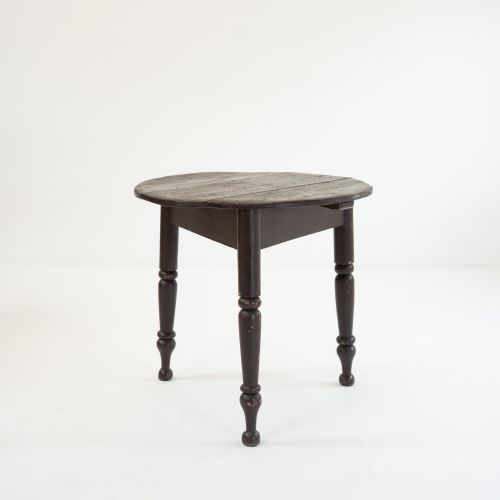
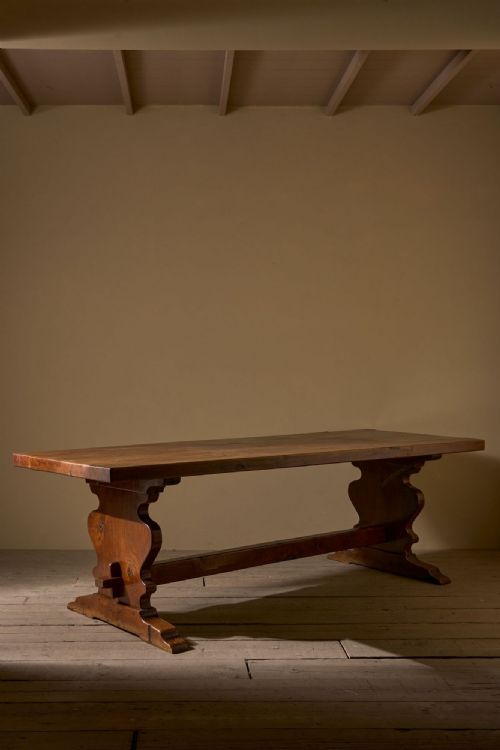
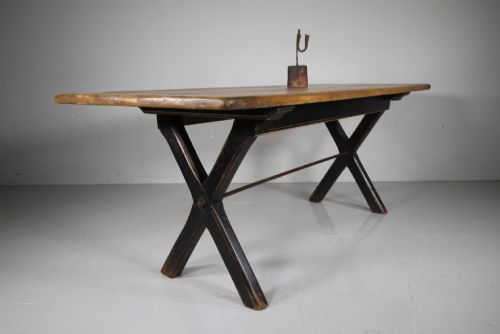
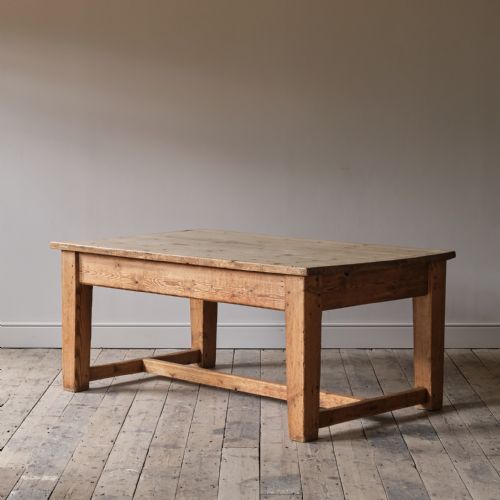
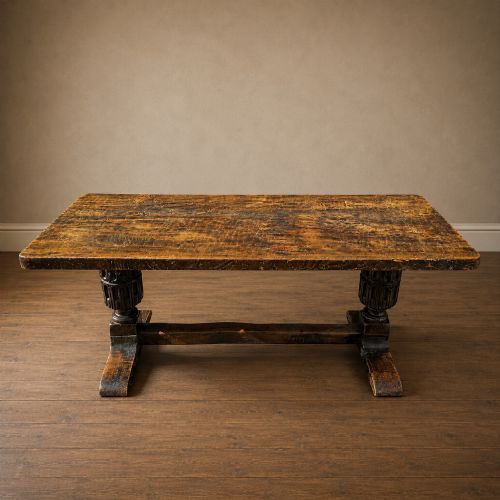
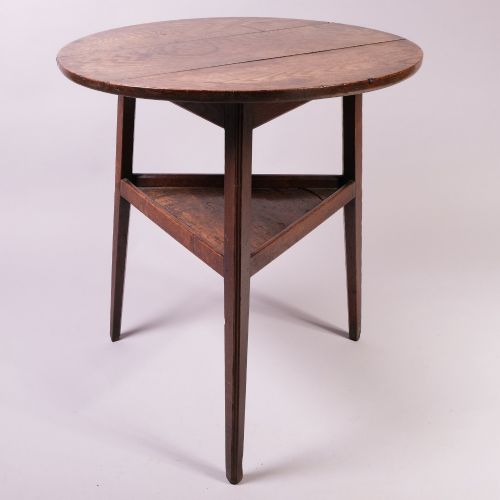
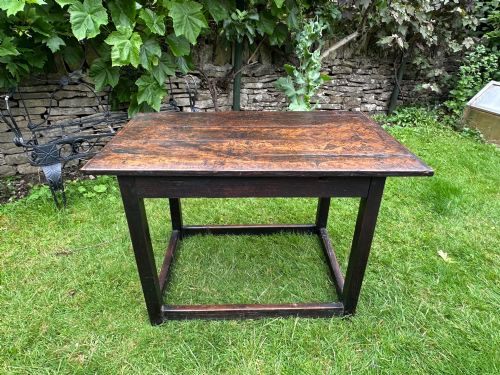
When you search for an antique country tavern table, you encounter robust domestic timber pieces built for heavy daily use in public houses and farmhouses. The selection spans sturdy cricket tables with three legs, long refectory formats, and compact side tables originating from the seventeenth century onwards.
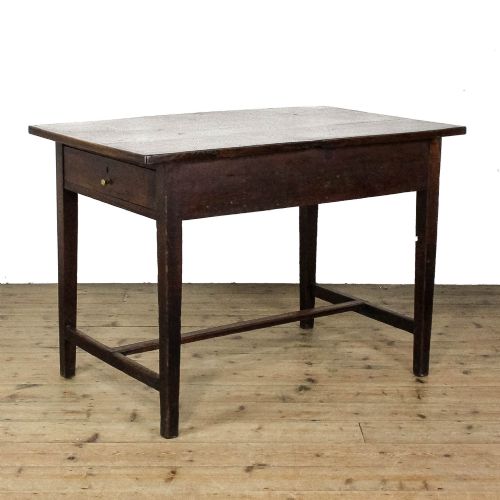
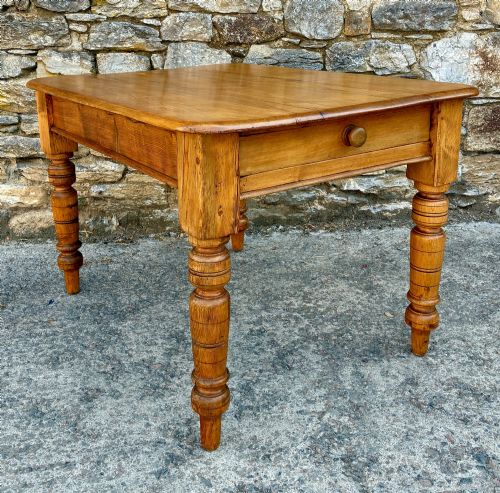
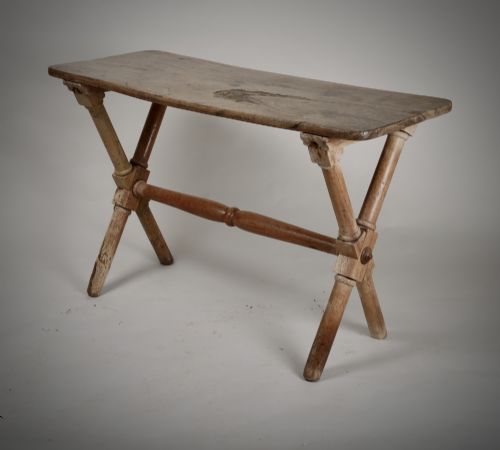
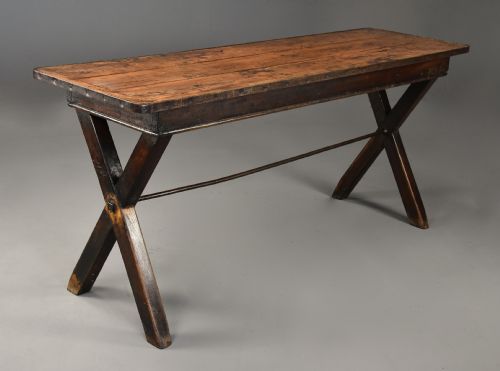
You are most likely to meet nineteenth-century oak and pine examples on this page, often featuring thick plank tops and straightforward trestle or X-frame bases. Regional variations appear frequently, particularly English, Welsh, and French provincial styles constructed for practical work and dining.
The assortment also includes specialised forms such as gate-leg and coaching designs alongside painted pine versions that retain remnants of their original colour. These pieces range from intimate three-legged tripods to expansive dining surfaces capable of seating large gatherings.
Materials and construction
Carpenters utilised native hardwoods like oak, elm, and ash for structural strength, alongside softer pine for secondary elements and table bases. Timber was selected for durability, resulting in thick single-plank tops and sturdy jointed frames held together with wooden pegs.
Surfaces often show evidence of manual conversion, with hand-sawn boards and turned baluster posts reflecting traditional local joinery methods. Many pine and softwood examples received coats of lead-based or oil paint, which now survives in layers with distinct patination.
Many three-legged cricket tables were deliberately built with uneven leg lengths to remain steady on rough farmhouse floors.
Factors determining quality
The superiority of a piece rests on the integrity of its timber and the depth of its surface patina. Tables retaining original board tops and untouched structural joints command greater regard than those with extensive timber replacement.
Proportion and surface wear dictate the visual success of the piece, where natural use over centuries creates a smooth, tactile quality to the wood. Original painted surfaces that survive without modern stripping elevate the character and authenticity of the furniture.
The Antique Country Tavern Table Glossary
- Cricket table
- A small three-legged round table, typically constructed from oak or ash, designed to stand firm on uneven flagstone floors.
- Plank top
- A table surface constructed from solid boards joined edge to edge, often featuring cleated ends to prevent warping.
- Patina
- The deep, lustrous surface sheen developed over centuries through handling, waxing, and exposure to light.
- Trestle
- A structural support consisting of a horizontal beam fixed to two splayed legs, providing stability for long dining surfaces.
- Gate-leg table
- A drop-leaf table featuring hinged legs that swing out like gates to support the raised flaps.
Antique Country Tavern Table: Frequently Asked Questions
What is an antique country tavern table?
These are utilitarian wooden tables made for communal drinking, eating, and gathering in rural inns and farmhouses.
Built for heavy everyday demands, they prioritize sturdy construction over delicate ornamentation, utilising regional timbers like oak, elm, and pine.
How do I care for a wooden tavern table?
Maintain the dry timber by applying natural beeswax sparingly and buffing it gently with a soft cloth.
Keep the table away from direct heat sources and sudden humidity shifts to prevent the historic wood from splitting or warping.
How can I tell the period of a table?
Examine the tool marks on the underside and the method of joining the legs to the top, which reveal hand-working techniques.
Early pieces from the seventeenth and eighteenth centuries often feature pegged mortise and tenon joints and hand-rived boards rather than modern fixings.
Can I use a tavern table for daily dining?
These pieces were originally designed for rigorous daily use, making them exceptionally well-suited for modern family kitchens and dining rooms.
Their robust construction easily accommodates contemporary seating and heavy daily wear without losing stability.