

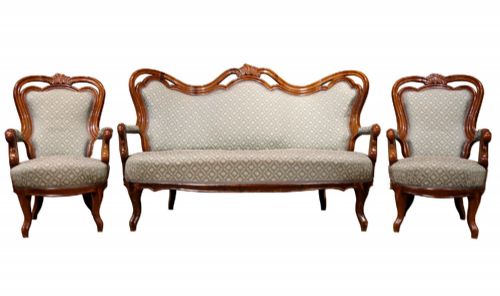


Antique Continental Armchair
An antique continental armchair brings substantial presence and varied historical carving to a room, which is why collectors seek them.
Antique Continental Armchair
When you search for an antique continental armchair, you encounter seating originating from European workshops across multiple centuries. The selection spans distinct forms including salon suites, elbow chairs, and large scale pairs.
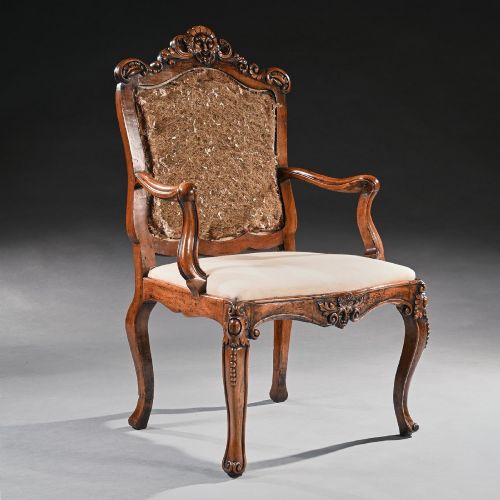
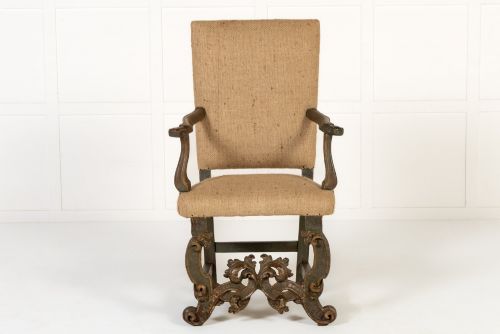
You are most likely to meet walnut armchairs from the seventeenth and eighteenth centuries, often bearing Italian Baroque or Rococo Revival styling. Pieces range from open armframed designs to caquetoire forms and upholstered variations.
The inventory also includes nineteenth century iterations alongside vintage pieces showing Biedermeier taste from the nineteen thirties. These chairs served formal and domestic interiors across the continent before reaching the current market.
How they were made
Cabinetmakers constructed these frames primarily from solid walnut, shaping the timber to support elaborate carving and structural joinery. Workshops applied gold leaf and silver gilt finishes directly onto the wood to achieve high decorative contrast.
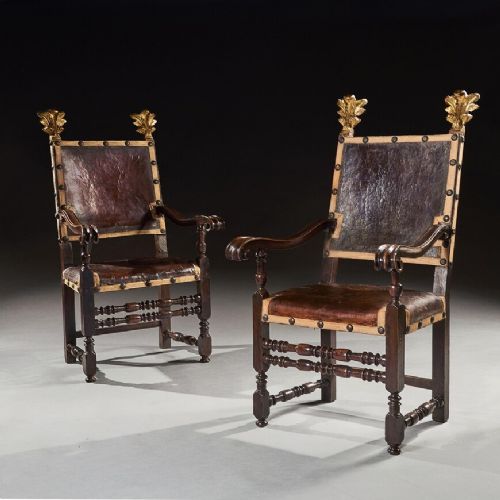
Upholstery techniques involved traditional materials like leather, fabric, hessian, and textiles stretched across the seat and back foundations. Brass tacks frequently secured these coverings to the wooden framework.
Antique Continental Armchair Retail Price Guide 2026
Typical asking prices for continental armchair among the pieces listed under this phrase on Sellingantiques today, from the lower quarter to the upper quarter. They describe what is for sale here now, not the wider market.
The listings on this site span walnut, fabric, leather, gold leaf, brass, hessian, wood, and textile materials.
What varies in quality
The distinction between standard examples and superior pieces rests upon the crispness of the hand carving and the integrity of the original gilt surfaces. Walnut frames with deep relief work and well-preserved parcel-gilt details indicate superior workshop output.
Completeness alters the character of the seating, particularly when matching pairs or three-piece salon suites survive intact rather than as single items. The quality of the surviving leather or textile upholstery also contributes to the overall distinction of the piece.
The Antique Continental Armchair Glossary
- Caquetoire
- A light conversation chair with a high narrow back and trapezoidal seat, originating in the sixteenth century. This form allowed seated people to talk easily in company.
- Parcel-gilt
- A decorative treatment where specific carved areas receive a gold leaf application while the underlying wood remains visible. This technique highlights particular motifs on walnut frames.
- Salon suite
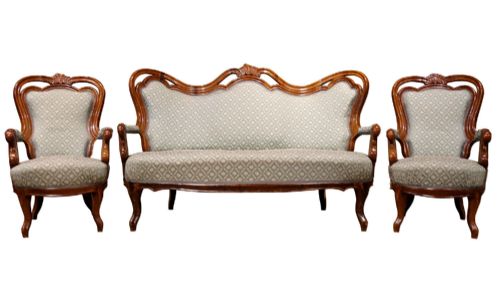
- A matching set of seating furniture designed for a formal drawing room, frequently comprising a settee and matching armchairs. These matched groups provided unified seating arrangements for guests.
- Biedermeier taste
- A utilitarian and simplified design style focused on clean lines and polished wood grains rather than heavy ornamentation. This aesthetic emerged during the nineteenth century.
- Rococo Revival
- A decorative movement drawing upon eighteenth-century asymmetrical curves, shell motifs, and scrolling foliage. Makers utilised these flowing lines extensively on nineteenth-century seating.
Antique Continental Armchair: Frequently Asked Questions
What is an antique continental armchair?
An antique continental armchair is a historic wooden seat produced in European workshops outside Britain, featuring styles from the seventeenth century through to the twentieth century.
These pieces utilise materials such as walnut, leather, and gilt finishes, encompassing various forms from single open armchairs to complete salon suites.
How were these armchairs used historically?
These armchairs functioned as primary seating in formal parlours, halls, and sitting rooms across European residences, indicating the social standing of the owner.
Large scale pairs and salon suites accommodated guests during formal gatherings, while smaller elbow chairs served for daily domestic activities.
How do I live with an antique continental armchair?
Living with these chairs involves placing them in rooms where their walnut frames and gilt decoration can be appreciated without direct exposure to harsh sunlight.
Pairing historic seating with modern interiors creates a striking contrast, while regular care preserves the leather, fabric, and wooden surfaces.
How can I tell the periods apart?
Distinguishing periods relies on observing stylistic markers, such as heavy carved scrolls on seventeenth-century Italian Baroque pieces compared to the lighter lines of nineteenth-century revival work.
Materials and construction methods also indicate the era of manufacture, with earlier pieces showing distinct hand-tooled joinery and later examples reflecting nineteenth-century or nineteen-thirties tastes.