
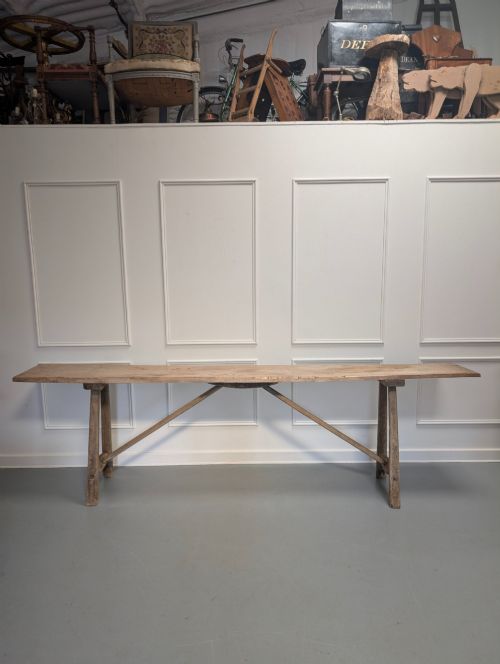
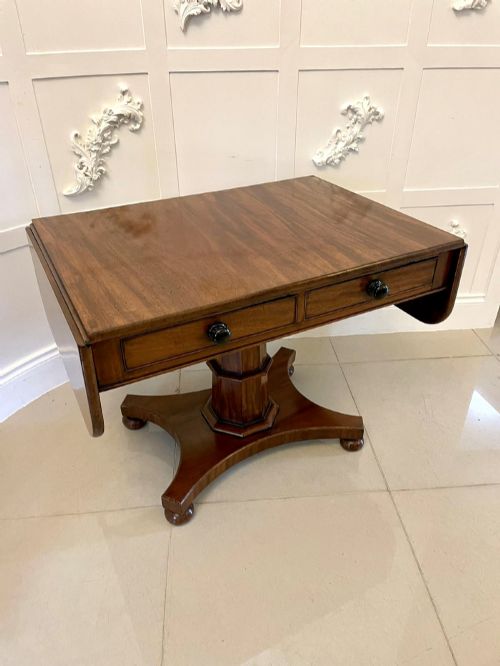
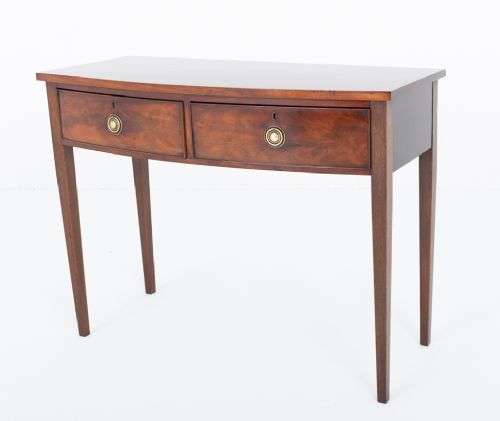
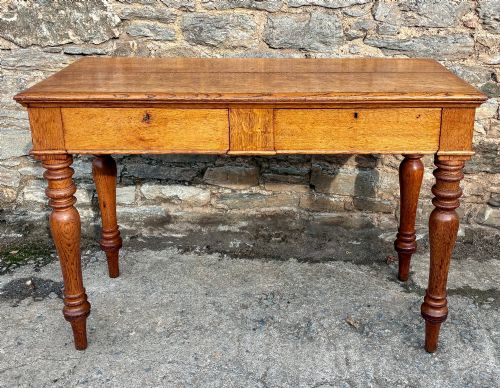
Antique Console
An antique console brings architectural elegance to a hallway or drawing room, offering a narrow surface designed to stand against a wall.
Antique Console
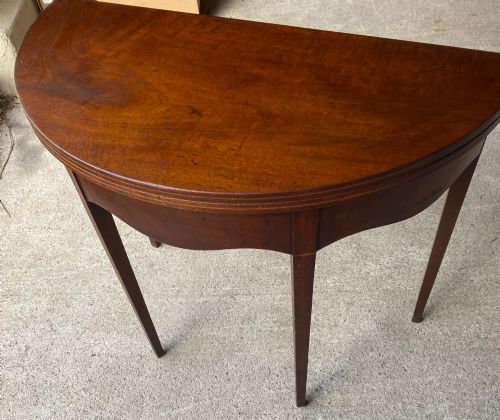
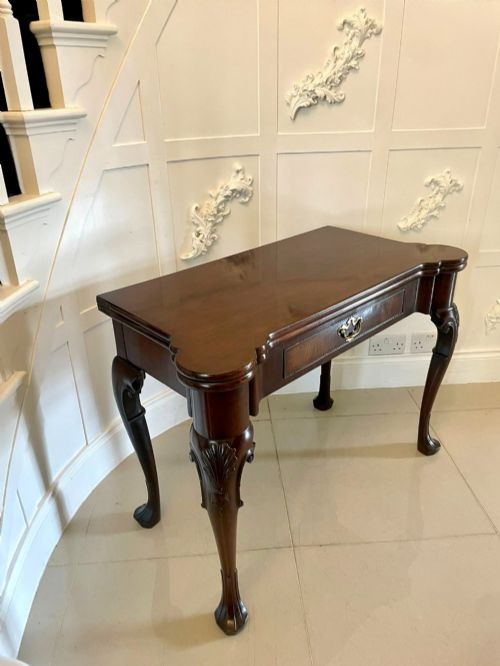
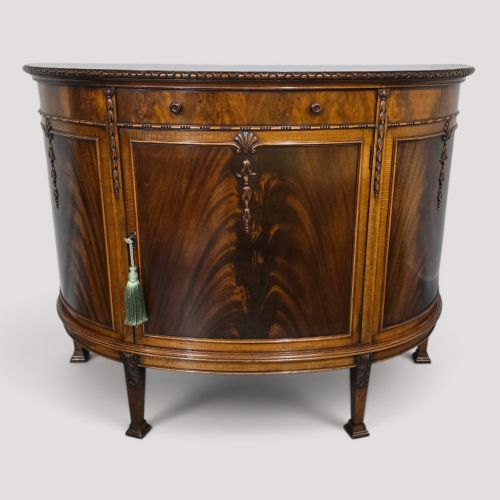
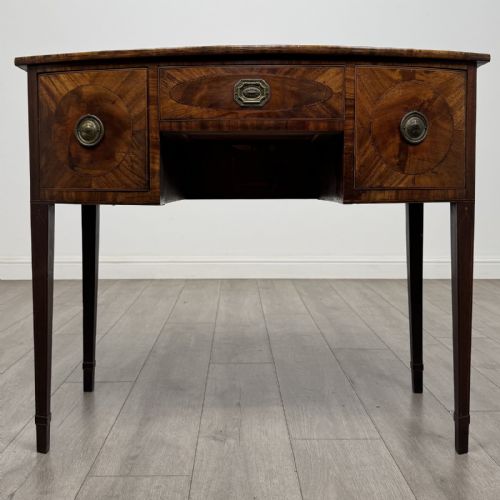
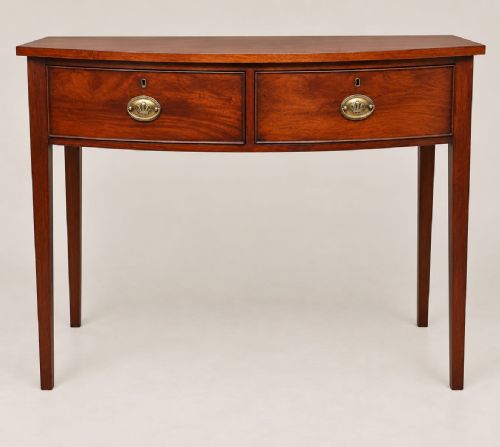
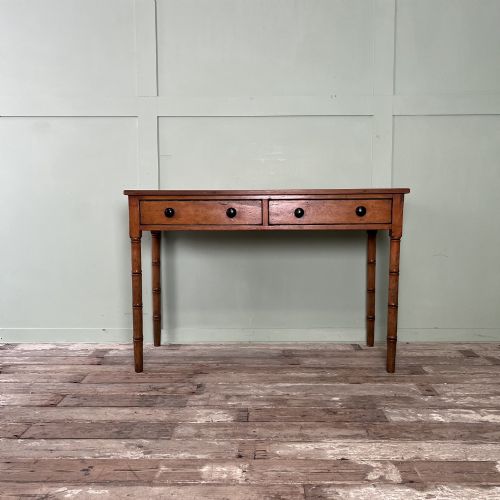
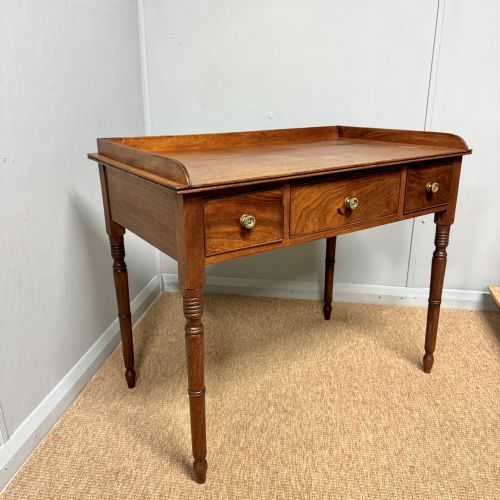
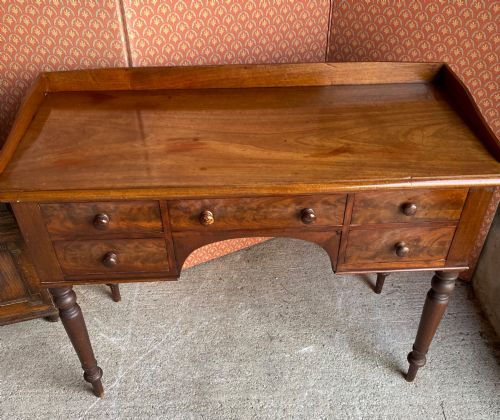
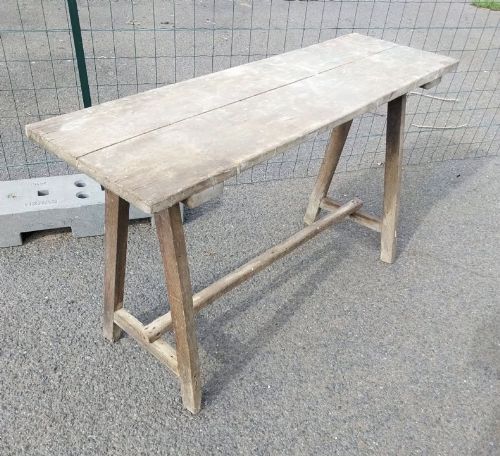
Most examples hail from the eighteenth and nineteenth centuries, taking the shape of console tables, side tables, or foldover card tables. Variations include demi-lune shapes, bow fronts, and tables equipped with drawers or galleries.
Origins range widely from English Georgian and Regency workshops to French and Italian makers utilising native and exotic timbers. Buyers select these forms to anchor an entryway, support a mirror, or serve as a slim desk.
Timbers and Construction Methods
Cabinetmakers constructed these tables using a foundation of hardwoods like oak, mahogany, and walnut, often applying decorative veneers such as burr walnut, rosewood, and satinwood across the top surfaces. Crossbanding and marquetry inlay provide ornamental contrast on formal pieces from the Georgian and Victorian periods.
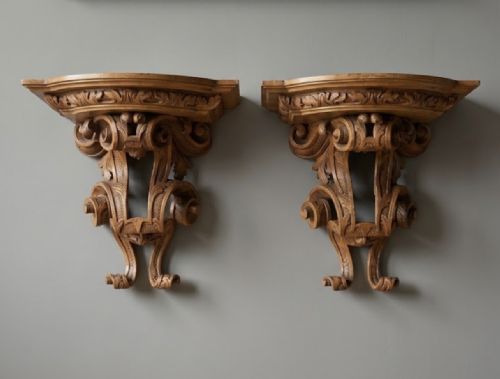
Giltwood consoles rely on carved wooden frames coated in gold leaf, frequently paired with heavy stone surfaces like rouge marble. Joinery involves traditional methods including mortise and tenon joints for frames and dovetails for drawer construction.
Listings for antique console tables span the seventeenth, eighteenth, nineteenth, and early twentieth centuries, featuring oak, mahogany, walnut, rosewood, and giltwood.
Distinctions in Execution and Materials
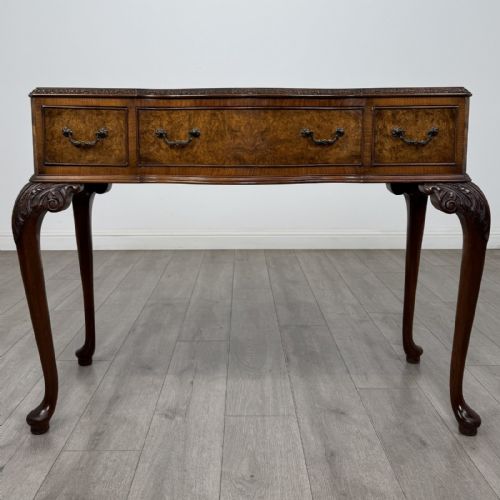
Quality rests upon the selection of timber figures, such as highly figured burr walnut or rich flame mahogany, matched symmetrically across the top boards. Superior examples display crisp hand-carved details, whether in the acanthus leaves on cabriole legs or the gilt ornamentation of a pier table.
The integration of secondary timbers and the precision of the joinery separate standard utility pieces from exhibition-grade examples. Original hardware, intact marble slabs, and finely executed crossbanding elevate the standing of a console within its period.
The Antique Console Glossary
- Console table
- A table designed to be fixed or placed flat against a wall, frequently supported by brackets or ornamental legs rather than four independent vertical posts.
- Crossbanding
- A strip of veneer applied to the border of a tabletop with the grain running perpendicular to the centre panel, creating a distinct framed effect.
- Lowboy
- A small oak or walnut dressing table or side table featuring one or more rows of drawers beneath a flat top, common in the eighteenth century.
- Demi-lune
- A half-moon shape characteristic of tabletops and sideboards designed to fit snugly against flat walls in compact spaces.
- Giltwood
- Timber carved and coated with a thin layer of gold leaf or metallic powder to simulate solid gold enrichment.
Antique Console: Frequently Asked Questions
Where should I place an antique console?
These tables suit narrow circulation spaces like hallways, entrance passages, and landings where floor depth is restricted. They also anchor the space beneath a wall mirror in a drawing room or dining room.
Because they stand flat against a wall, they provide a surface for lamps and decorative objects without obstructing movement through the room.
How do I identify a Georgian console?
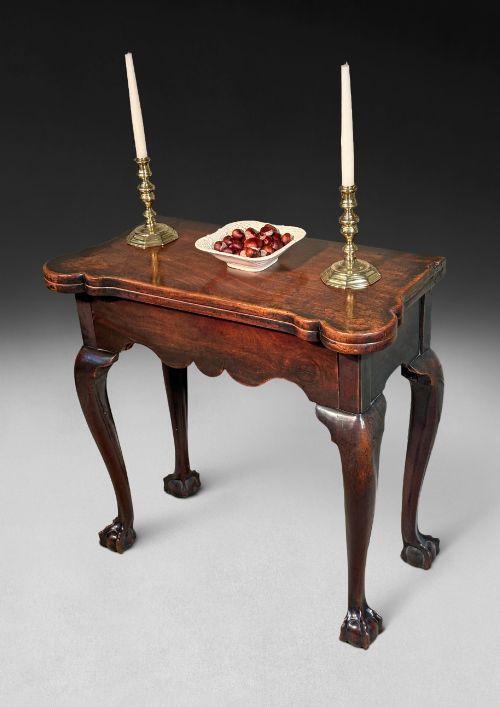
Georgian pieces typically employ solid mahogany, oak, or walnut, featuring architectural proportions and restrained carving such as ball-and-claw feet or tapered legs. The joinery relies on hand-cut dovetails and pegged frames.
Many examples from this era function as side tables, tea tables with foldover tops, or lowboys rather than dedicated wall-fixed consoles.
What is the difference between a side table and a console?
Traditional console tables were frequently attached directly to the wall or supported by decorative console brackets beneath the top. Side tables stand independently on four legs and serve a broader range of utility functions.
In modern usage, the terms often overlap for antique pieces placed against walls.
Can I use an antique console as a desk?
Certain forms like writing tables, bureau desks, or side tables equipped with drawers accommodate occasional correspondence and laptop use. Ensure the kneehole height and depth match your chair requirements before daily use.
Shallower console tables work best for display rather than extended writing tasks.