



Antique Commercial Storage Unit
An antique commercial storage unit provides robust organisation and utility, bringing practical period character into domestic and workspace interiors.
Antique Commercial Storage Unit
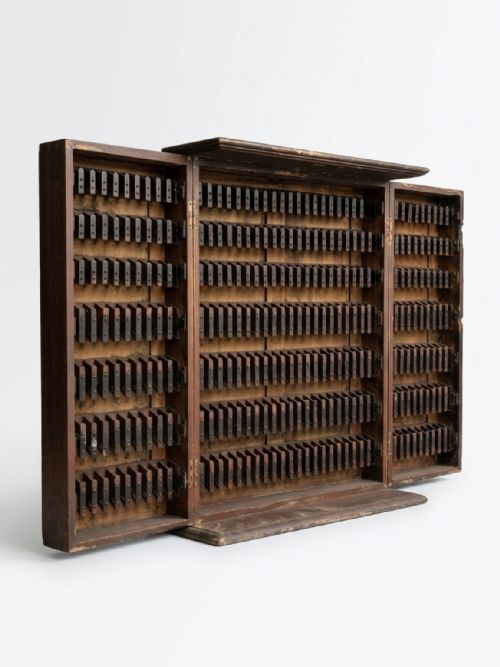
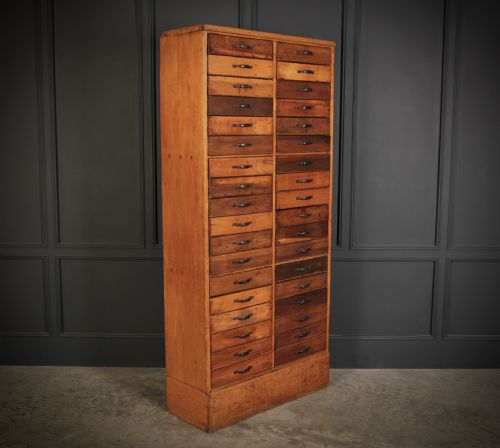
An antique commercial storage unit comprises heavy-duty functional furnishings originally built for trade, office, and institutional use during the nineteenth and early twentieth centuries. These pieces encompass specialised forms such as haberdashery cabinets, filing cabinets, shop fittings, and ticket cupboards.
Buyers on this page most frequently encounter oak and pine items from the Edwardian era and the 1920s, alongside nineteenth-century pieces. These storage items range from countertop needle drawer cabinets to large fruitwood chests of drawers and double tambour front office units.
How they were made
Constructed primarily from durable timbers such as oak, pine, mahogany, and fruitwood, these storage units utilise sturdy joinery designed to withstand daily commercial wear. Many examples incorporate metal and iron hardware, brass pulls, and glass elements.
Specialised mechanisms define several pieces, notably tambour fronts that slide on tracks and patented letter filing systems like Amberg's patent cabinet. Surfaces range from naturally finished hardwood to originally painted white finishes on pine shop fittings.
Railway ticket cupboards once held the cardboard travel pasteboards that passengers handed anxiously to inspectors before the age of digital passes.
What varies in quality
The sophistication of the internal configuration also distinguishes the tier of a piece, with modular filing systems and multi-drawer drapery counters commanding greater interest than standard utility cupboards. Surviving original paint finishes or rich fruitwood and oak grain further separate standard utilitarian boxes from superior trade furniture.
The Antique Commercial Storage Unit Glossary
- Tambour front
- A flexible door composed of narrow wooden slats glued to a canvas backing, allowing it to slide smoothly around a curved track to enclose shelving or files.
- Haberdashery cabinet
- A multi-drawer storage unit originally utilised in retail shops to sort and display small sewing goods, ribbons, and textiles, typically featuring glass fronts or numerous shallow drawers.
- Chemist shop fitting
- Specialised cabinetry designed for pharmacies, comprising banks of small drawers and shelving intended to store medicinal ingredients and apothecary jars securely.
- Bank of drawers
- A large, multi-unit chest featuring numerous individual compartments arranged in tiers, built for intensive administrative or trade sorting purposes.
Antique Commercial Storage Unit: Frequently Asked Questions
Where do antique commercial storage units work best at home?
These pieces excel in home offices, kitchens, and hallways where robust organisation is required. Their numerous drawers and compartments easily accommodate everyday items while adding distinct period character to contemporary or traditional rooms.
The taller filing cabinets and haberdashery chests offer vertical storage solutions that maximise floor space. Meanwhile, countertop needle cabinets and smaller drawer units sit comfortably on sideboards or desks.
How do I care for wooden trade cabinets?
Maintain the timber surfaces with a traditional beeswax polish applied sparingly to nourish the grain. Avoid placing these pieces in direct sunlight or near heat sources to prevent the wood from warping and to protect original finishes.
Keep the metal runners on tambour doors clean and lightly lubricated if necessary to ensure smooth sliding action. Check brass fittings periodically to ensure they remain secure.
What is the difference between an office filing cabinet and a haberdashery cabinet?
Office filing cabinets focus on document storage, frequently featuring vertical document drawers or specialised mechanisms like tambour fronts. They were engineered for administrative efficiency in professional environments.
Haberdashery cabinets are designed for retail display and sorting smaller items, typically featuring many shallow drawers with glass fronts or pulls suited for textiles. They emphasise visibility and accessible categorization for shop customers and staff.
How can I identify an Edwardian commercial storage unit?
Edwardian commercial units often feature clean lines in quarter-sawn oak, reflecting the transition away from ornate Victorian styling towards practical utility. They frequently incorporate brass label holders and straightforward panel construction.
Maker's marks, patent stamps, and specific hardware types like Amberg's systems help narrow down the exact manufacturing period. The presence of light oak and restrained mouldings further points toward the early twentieth century.