



Antique Colonial Bench Seat
An antique colonial bench seat brings historic trade routes into a room, offering sturdy seating shaped by cross-cultural design.
Antique Colonial Bench Seat
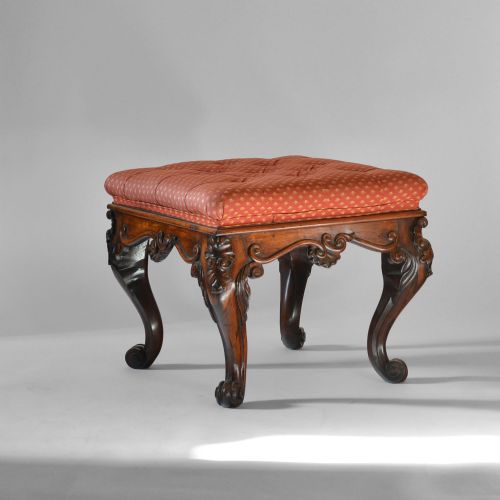
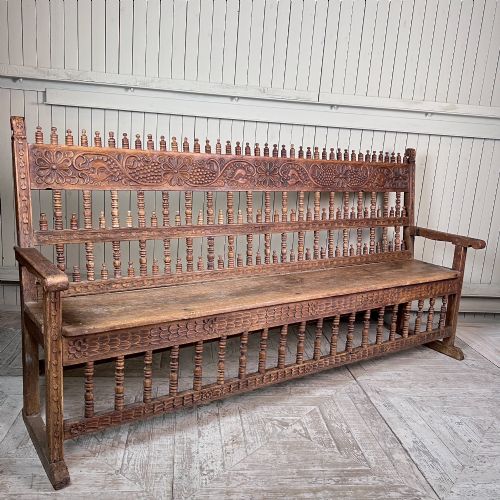
An antique colonial bench seat unites European furniture forms with the rich timbers and carving traditions of distant territories. When you search for an antique colonial bench seat, you encounter forms ranging from low stools to large veranda seating and box settles.
The pieces on this page span the eighteenth, nineteenth, and early twentieth centuries, reflecting the varied regions of the British, Spanish, and Dutch empires. Makers adapted familiar domestic seating to tropical climates and local materials.
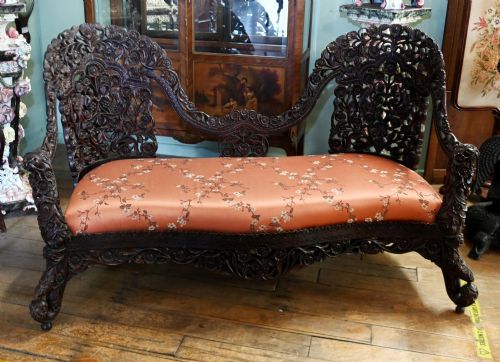
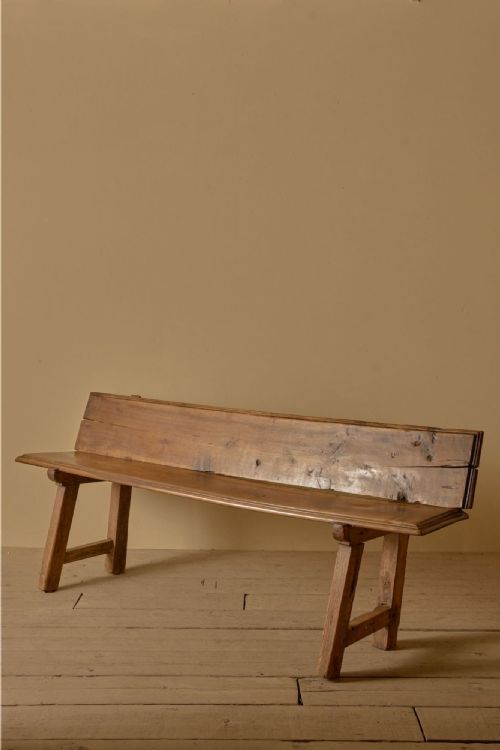
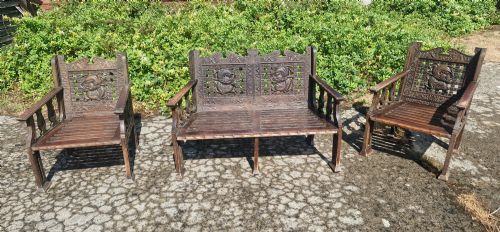
You are most likely to meet nineteenth-century examples in teak and rosewood, often featuring carved details or woven elements. These range from simple hall benches to ornate veranda seats originating from Ceylon, India, and South Africa.
How these benches were made
Cabinetmakers utilised dense tropical hardwoods such as teak, rosewood, and stinkwood to withstand humid climates and heavy daily use. These timbers provided a stable foundation for intricate hand-carved decoration and deep mouldings.
Many examples incorporate woven rattan, cane, or fabric to provide breathable seating surfaces suited to warmer regions. Artisans also applied specialised techniques like bone inlay and brass decoration to accent the timber frames.
Antique Colonial Bench Seat Retail Price Guide 2026
Typical asking prices for colonial bench seat among the pieces listed under this phrase on Sellingantiques today, from the lower quarter to the upper quarter. They describe what is for sale here now, not the wider market.
Regional styles span Anglo-Indian, Spanish Colonial, Cape Dutch, and Victorian colonial traditions.
What varies in quality
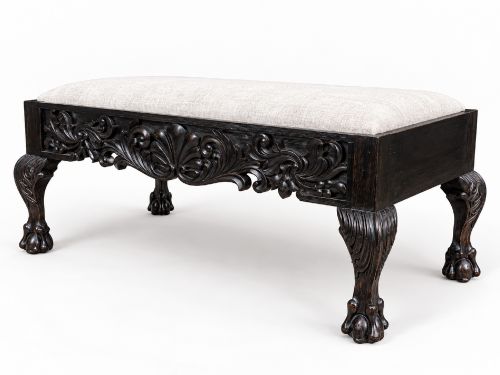
The standard of a piece rests heavily on the depth and crispness of the hand-carved details, particularly on scroll backs, aprons, and figural elements. Sharp, well-defined carving indicates skilled craftsmanship that retains its visual impact.
The choice and preservation of timber also separate standard work from exceptional examples. Dense grain, rich natural colour in woods like rosewood and stinkwood, and intact structural joinery define the upper tier of these regional pieces.
The Antique Colonial Bench Seat Glossary
- Anglo-Indian
- Pertaining to furniture made in India during the British period, combining British forms with Indian carving styles. These pieces frequently utilise native hardwoods.
- Stinkwood
- A prized South African hardwood known for its deep colour and distinct aroma when worked. It was frequently utilised for fine regional furniture.
- Box settle
- A high-backed bench featuring a built-in storage compartment beneath the seat. This form provided both seating and enclosed space in domestic interiors.
- Cane
- Strips of rattan woven into an open mesh pattern for seat panels. This technique allowed for airflow in warmer climates.
- Porcupine sofa
- A distinct form of nineteenth-century seating associated with regional production. It showcases characteristic decorative elements or spindle work.
Antique Colonial Bench Seat: Frequently Asked Questions
Where were colonial benches used?
These benches served in grand colonial homes, verandas, and administrative offices across various overseas territories. They were built to furnish domestic spaces in warm climates.
Over time, many of these pieces travelled back to Britain and Europe, finding places in country houses and town residences.
How do I care for tropical hardwood?
Maintain stable indoor humidity levels to prevent the dense timbers like teak and rosewood from drying out or splitting. Avoid placing the furniture near direct heat sources.
Dust the carved surfaces regularly with a dry cloth and apply appropriate natural waxes sparingly when the wood appears dry.
Are these benches comfortable?
Many colonial benches were designed for verandas and hallways, featuring firm wooden seats or breathable woven rattan panels. Their comfort often relies on added cushions.
Upholstered variants and window seats offer softer seating suited to long periods of relaxation in modern reception rooms.
How do I identify the wood?
Examine the grain pattern, weight, and natural colour of the exposed timber across the frame. Teak often shows a golden-brown tone, while rosewood displays darker contrasting streaks.
South African stinkwood has a characteristic dense grain and deep lustrous finish that helps distinguish it from Asian hardwoods.