
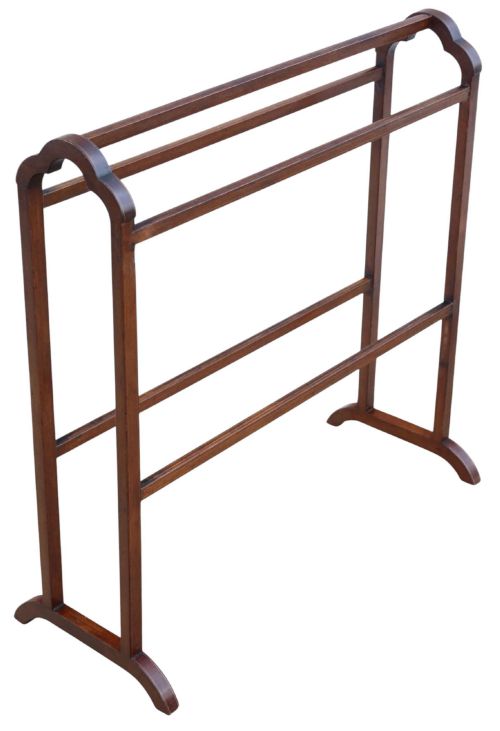
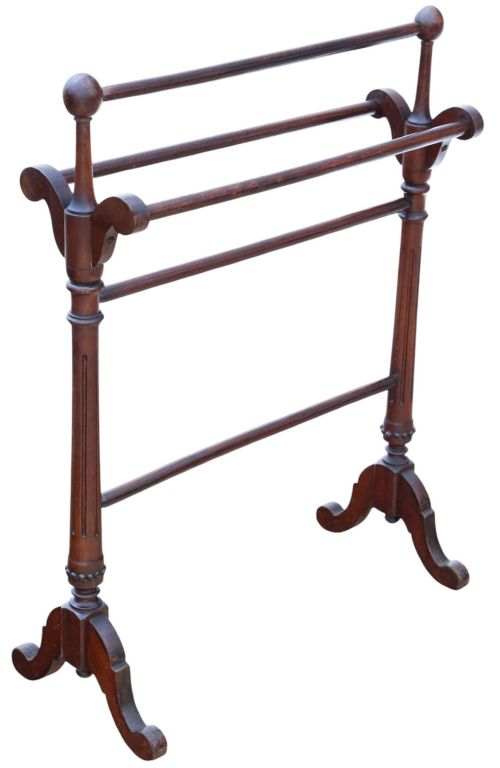
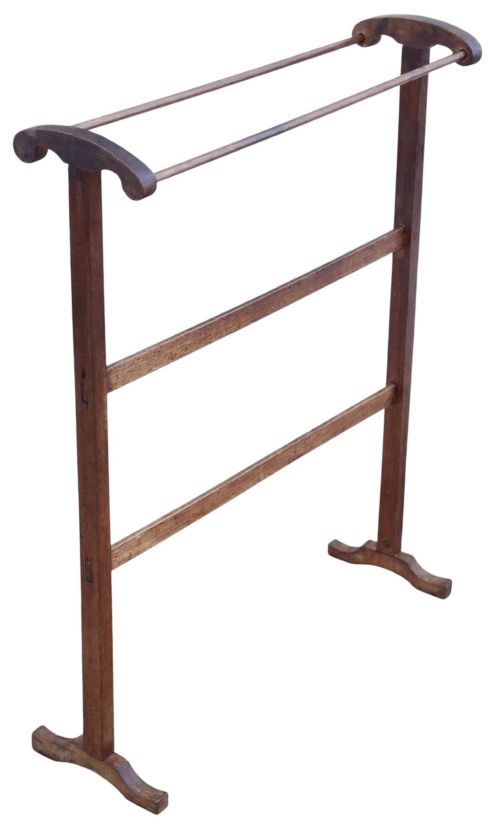
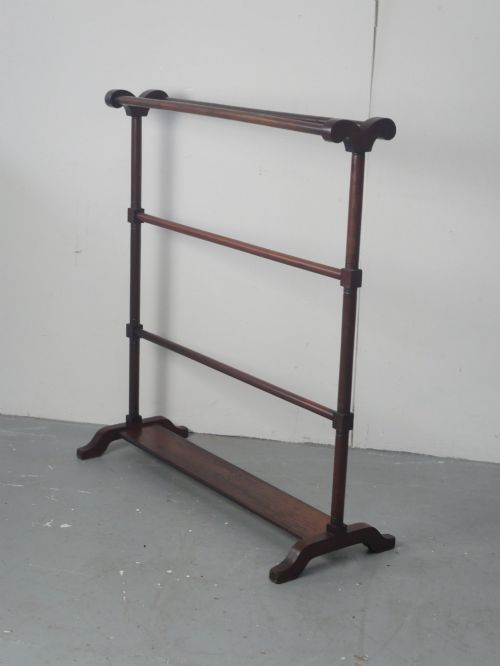

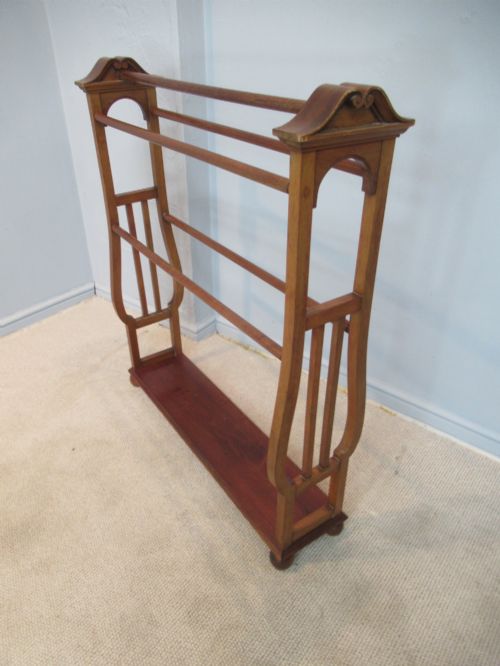
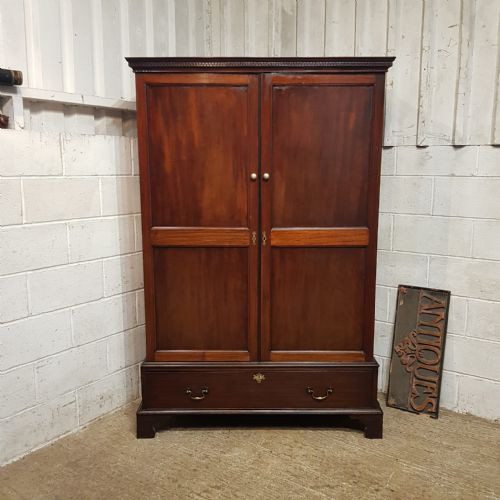
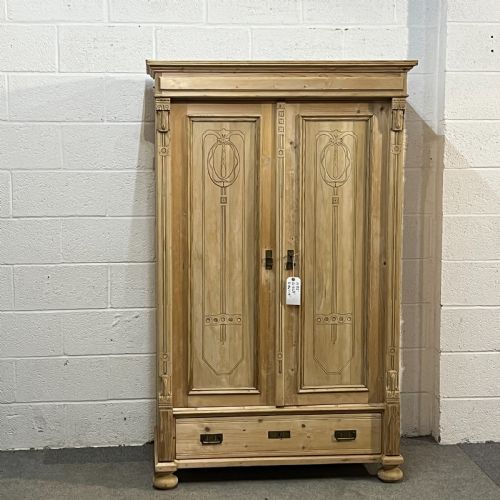
Antique Clothes Stand
An antique clothes stand brings practical grace to daily habits through period timber and honest utility.
Antique Clothes Stand
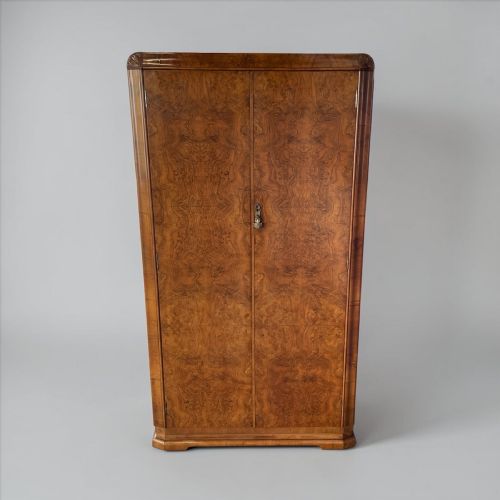
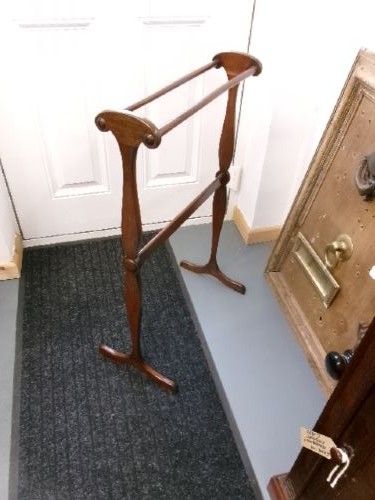
When you search for an antique clothes stand, you encounter a practical domestic furnishing designed to air, hang, or display garments and linens. The selections span eras from the Georgian period through the Edwardian years, reflecting changing domestic routines.
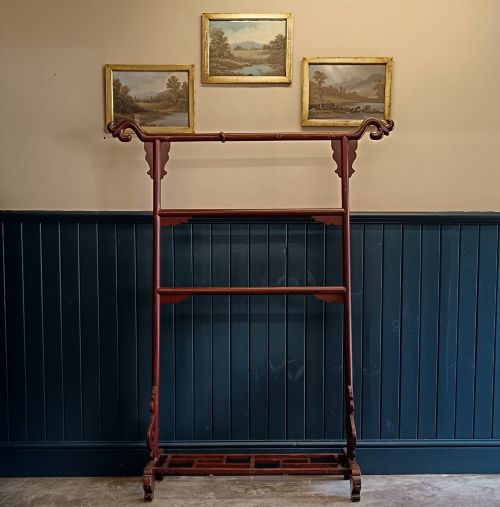
Beyond standard rails, the offerings encompass valet stands, coat racks, and occasional robes stands. Pieces originate from diverse stylistic traditions, including Arts and Crafts interpretations and Chinese lacquered items.
Materials and Technique
Cabinet makers relied heavily on timber such as mahogany, oak, walnut, and pine, selecting each for its grain and structural reliability. Hardwoods provided durability for daily loading, whilst softwoods served for painted or simpler domestic utility items.
Joinery techniques included traditional framing and turning, often enhanced with inlay, carving, or black ebonised finishes. Metal components like brass fixings and iron stands provided the necessary rigidity for folding mechanisms and hanging racks.
Listings feature timbers including mahogany, pine, oak, walnut, and iron across various nineteenth and early twentieth-century periods.
Defining Distinction
The upper tier of pieces displays superior timber selection, evident in deeply figured mahogany grain and precise joinery that keeps the frame rigid over decades of use. Lesser examples employ plain secondary woods with simpler construction methods.
Detailing sets finer items apart, such as subtle inlay work, well-turned uprights, or balanced proportions on folding rails. These deliberate touches elevate a purely utilitarian object into a considered interior element.
Louis Vuitton·Hartman Luggage Co
The Antique Clothes Stand Glossary
- Towel rail
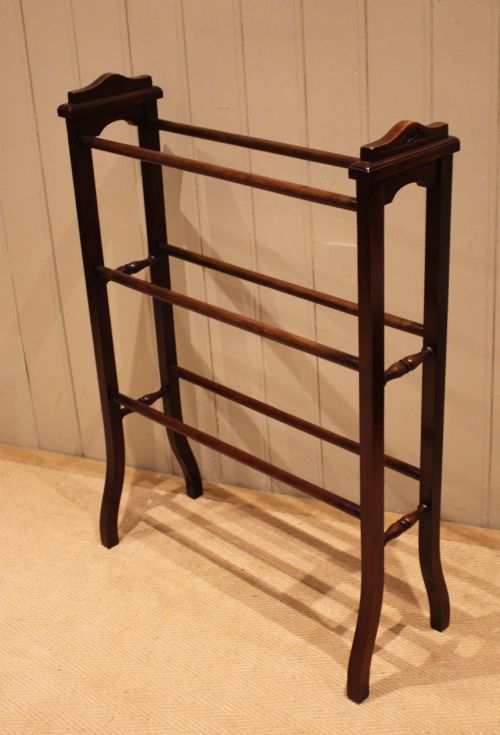
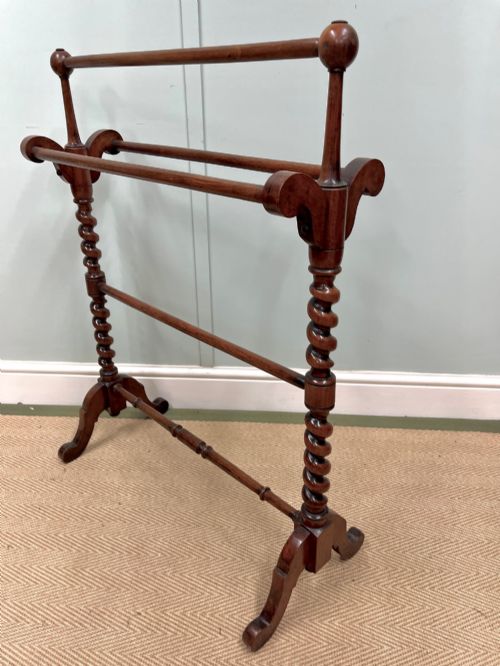
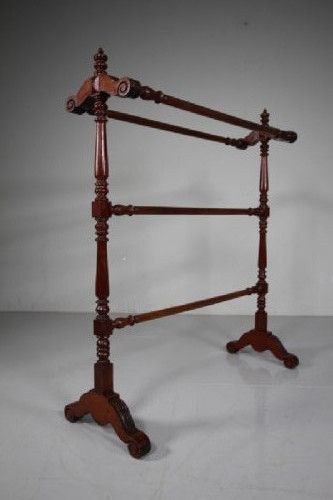
- A freestanding wooden frame with horizontal bars designed for airing textiles and garments. They frequently fold or offer multiple rails for increased capacity.
- Clothes horse
- An alternative term for a folding slatted rack used for drying laundry or hanging garments indoors. Larger examples can feature impressive scale.
- Valet stand
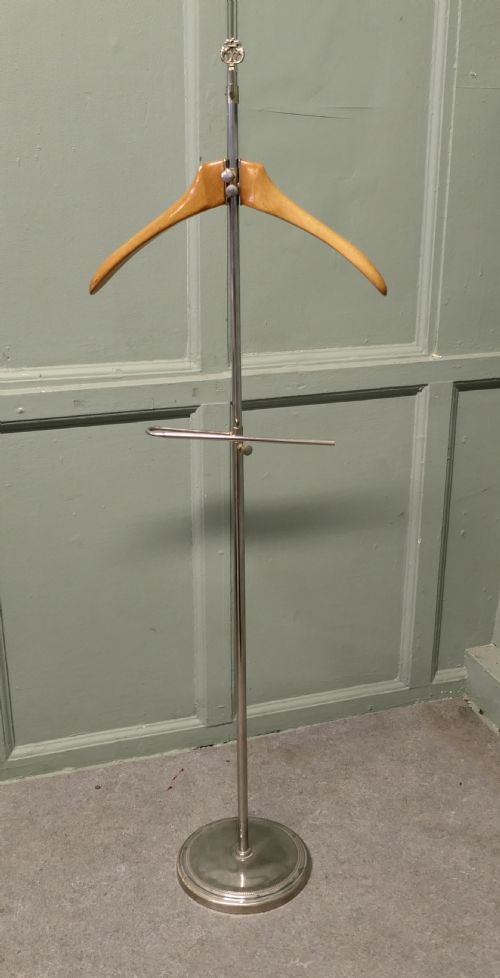
- A specialised piece designed to hold an individual suit or outfit overnight, incorporating hangers and tray compartments. These emerged strongly during the Edwardian era.
- Compactum
- A large, fitted wardrobe combining hanging space, drawers, and shelves within a single architectural unit. They date primarily from the Victorian period.
- Livery cupboard
- A traditional enclosed storage piece used for provisions or clothing, often associated with early oak periods. They exhibit sturdy panel construction.
Antique Clothes Stand: Frequently Asked Questions
How were clothes stands used?
These pieces served practical roles in bedrooms and dressing rooms for airing laundry, organising daily garments, or draping towels. Their freestanding nature allowed them to be moved near fires or open windows as needed.
Over time, specialised designs evolved for specific tasks, from gentlemen's valets holding suits to large folding rails managing household linens.
What woods were used?
Mahogany appears frequently, prized for its strength and rich reddish-brown tone in formal rooms. Oak and walnut also feature prominently in heavier Victorian and Georgian designs.
Pine served as a durable, accessible choice for utility pieces and country houses, often painted or polished to suit simpler domestic settings.
How do I date a piece?
Dating relies on observing stylistic markers, construction methods, and timber choice. Georgian and Regency pieces show classical proportions and fine cabinetwork, whilst Edwardian items often feature lighter frames and simple inlay.
Secondary woods and fixing types inside joints offer further clues to the manufacturing decade, distinguishing nineteenth-century work from later revivals.
Where do I place one?
An antique clothes stand fits naturally into a bedroom, dressing room, or bathroom where textiles require hanging space. Their slim profiles allow them to occupy awkward corners without crowding the floor plan.
They function both as active storage for daily wear and as decorative display items for quilts or vintage garments.