





Antique Clear Glass Drinkware
Antique clear glass drinkware brings the brilliance of lead crystal, cut glass, and engraved glass straight to the table from Georgian, Victorian, and later eras.
Antique Clear Glass Drinkware
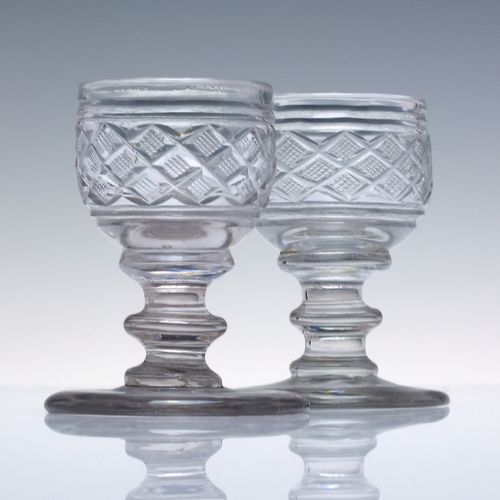
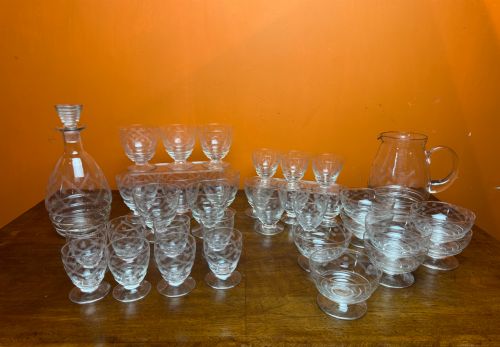
Antique clear glass drinkware encompasses everything from intimate port glasses and whiskey drams to large suites of drinking glasses and matching decanters. You will frequently encounter English and French items spanning the Georgian, Victorian, Edwardian, and Art Deco periods on this page.
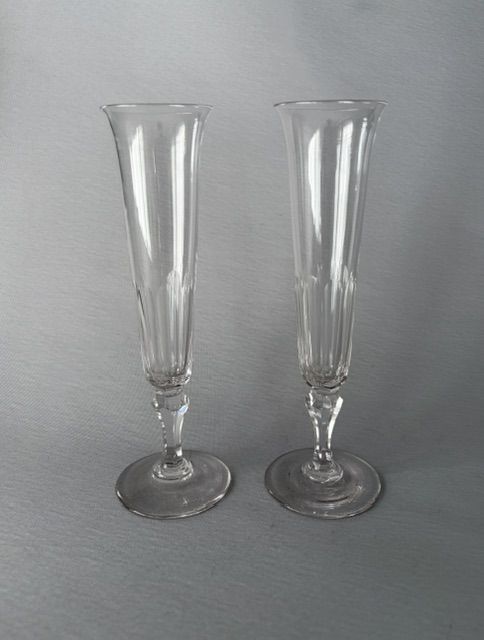
The selection ranges from single wine glasses and matched pairs of tumblers to substantial suites intended for formal dining. Specific forms like rummers, cordial glasses, and champagne flutes appear alongside practical decanters and jugs.
How they were made
Master craftsmen shaped lead crystal and clear glass by hand, utilising traditional blowing and moulding techniques to achieve the desired vessel form. Heavy walls and substantial bases provided stability for daily use.
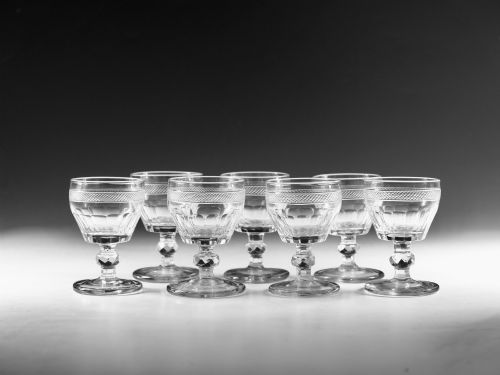
Makers applied surface decoration through wheel-cutting, acid etching, and fine engraving to catch the light across bowls and stems. These techniques created the crisp facets and intricate patterns seen on Georgian Anglo-Irish pieces and later Edwardian services.
Antique Clear Glass Drinkware Retail Price Guide 2026
Typical asking prices for clear glass drinkware among the pieces listed under this phrase on Sellingantiques today, from the lower quarter to the upper quarter. They describe what is for sale here now, not the wider market.
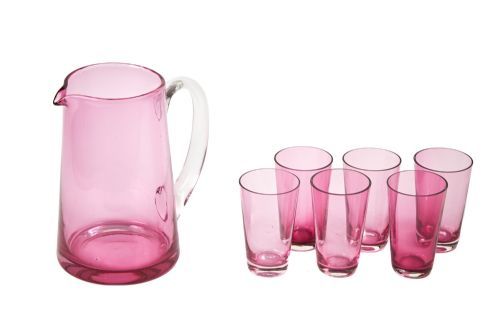
Listings feature lead crystal, cranberry glass, and clear glass shaped into nineteenth-century rummers and twentieth-century decorative suites.
What varies in quality
Quality rests upon the clarity of the metal itself and the precision of the surface cutting or etching. Heavier lead glass offers a sharper ring and deeper refraction than lighter plain glass.
The uniformity within a set distinguishes standard production from superior output, especially in larger suites of drinking glasses. Crispness in wheel-cut facets and delicacy in engraved lines mark the work of accomplished workshops.
Moser Crystal·Otto Prutscher
The Antique Clear Glass Drinkware Glossary
- Lead crystal
- Glass containing a significant lead oxide content which increases weight, brilliance, and refractive index. This material allows for deeper and sharper cutting without fracturing.
- Decanter
- A stoppered glass vessel designed for holding and serving wine or spirits. Quality examples often feature heavy cut glass bodies and matching stoppers.
- Acid etching
- A decorative technique using acid to eat away exposed portions of the glass surface. This creates a frosted design contrasting with polished clear areas.
- Dram glass
- A small drinking vessel intended for a single measure of spirits such as whiskey. These pieces often display heavy Anglo-Irish cutting from the early nineteenth century.
Antique Clear Glass Drinkware: Frequently Asked Questions
How do I date antique clear glass?
Dating relies upon stylistic markers, pontil marks on the base, and the weight of the metal itself. Georgian pieces often show heavy Anglo-Irish cutting, while twentieth-century sets display cleaner modernist lines.
Changes in manufacturing techniques and prevailing decorative styles across the Victorian and Edwardian eras also help pinpoint the decade of production.
Can I use antique drinkware daily?
Many people enjoy using their antique glasses for special occasions, provided they handle them with appropriate care. Hand washing in warm water keeps the glass safe from thermal shock and harsh detergents.
Avoid putting lead crystal or cut glass into modern dishwashers, as the heat and chemicals can cloud the clear surface permanently.
What is the difference between lead glass and crystal?
Lead glass and crystal share similar properties, though modern standards define crystal by specific manufacturing composition and lead content. Both offer superior clarity and weight compared to standard soda-lime glass.
Antique pieces described as lead crystal or lead glass will feel noticeably heavier and produce a resonant tone when gently tapped.
How should I store my drinkware collection?
Store glasses upright on stable shelves where they will not touch or crowd one another. Adequate spacing prevents chipping along the delicate rims and handles.
Keep display cabinets away from direct sunlight and extreme temperature fluctuations to protect the glass over time.
Are mismatched wine glasses authentic?
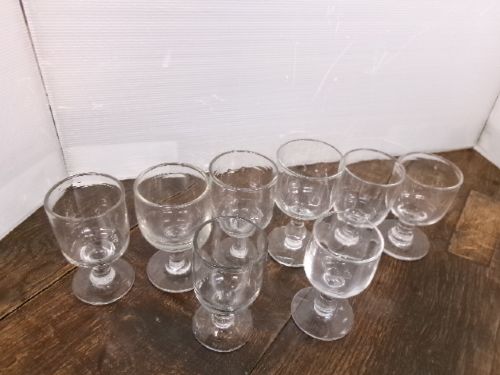
Many older dining sets grew organically over time or lost pieces through daily use. Finding slight variations within larger collections is entirely normal for genuine antique drinkware.
Matching suites became more common during the Edwardian and Art Deco periods, whereas earlier dining often involved varied individual glasses.