

Antique Circular Tilt Top
These antique circular tilt top tables combine ingenious mechanisms with graceful timber, offering versatile functionality for modern interiors.
Antique Circular Tilt Top
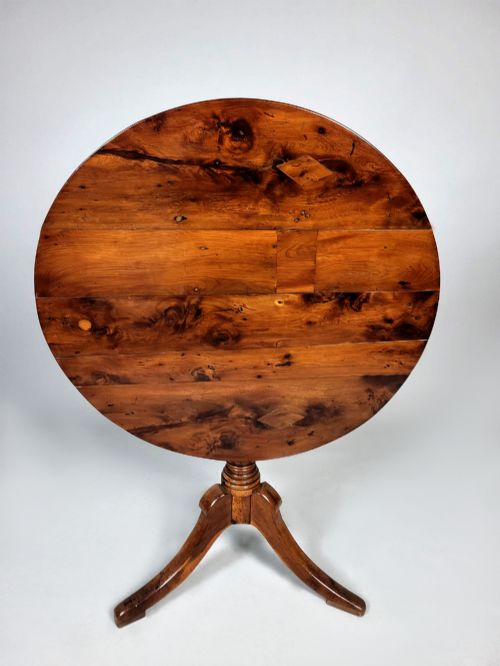
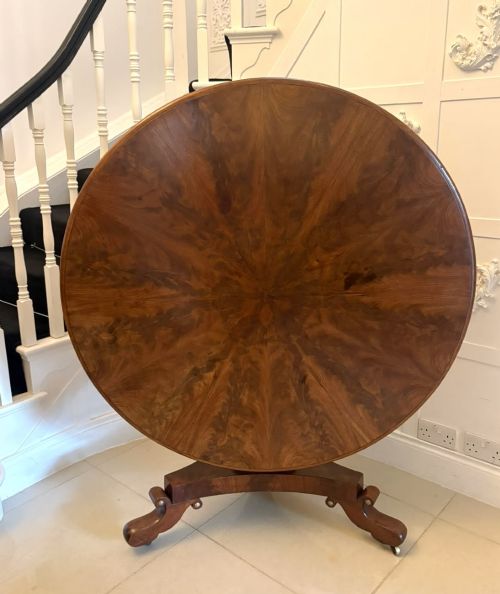
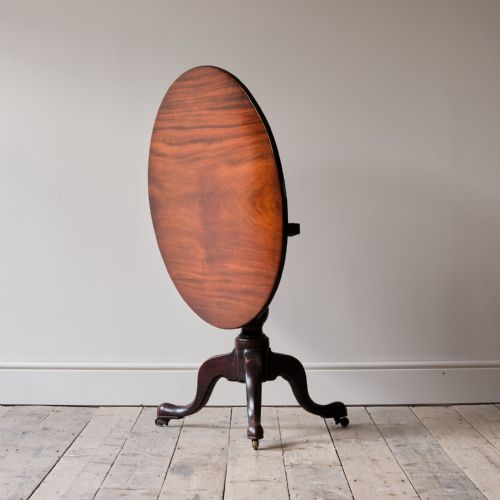
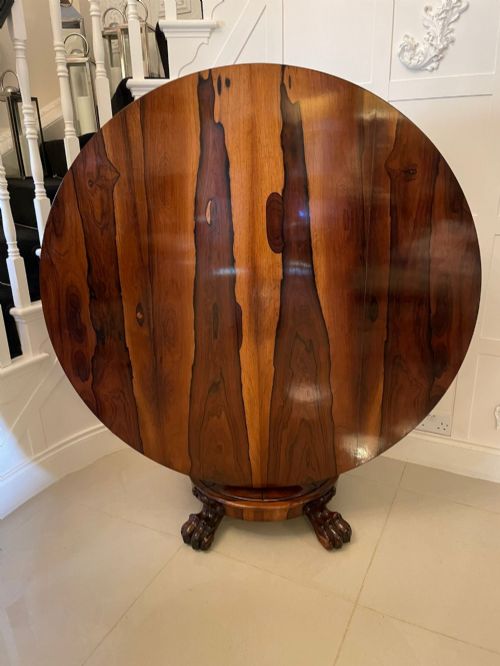
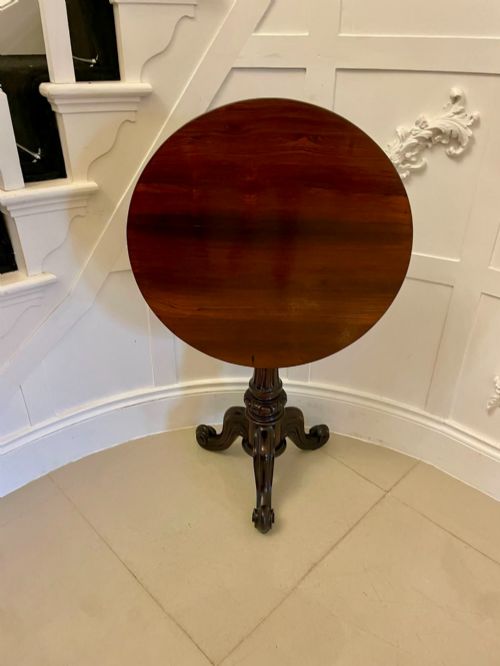
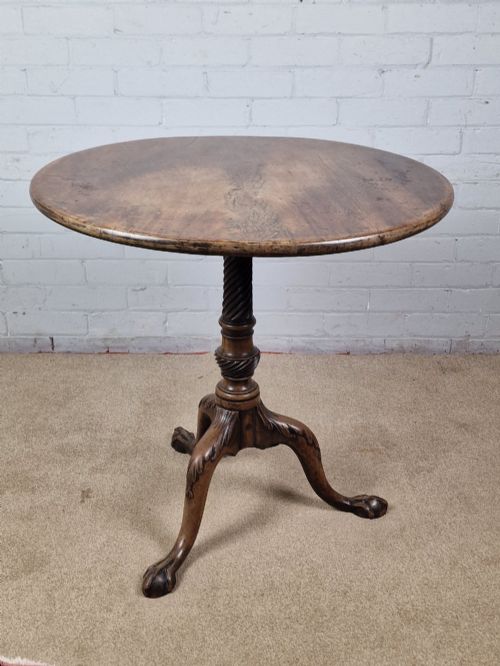
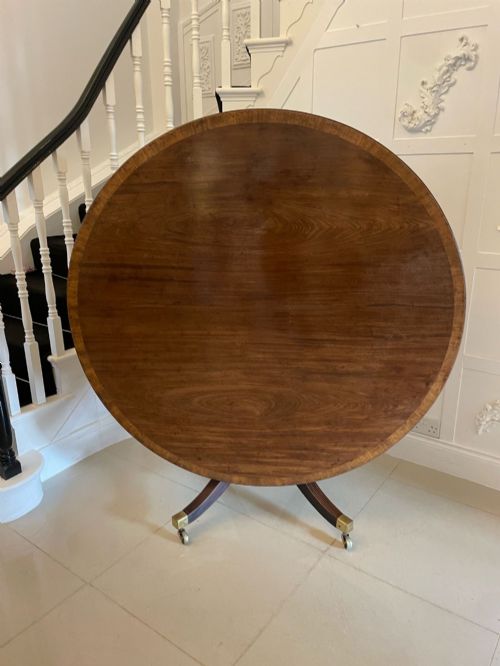
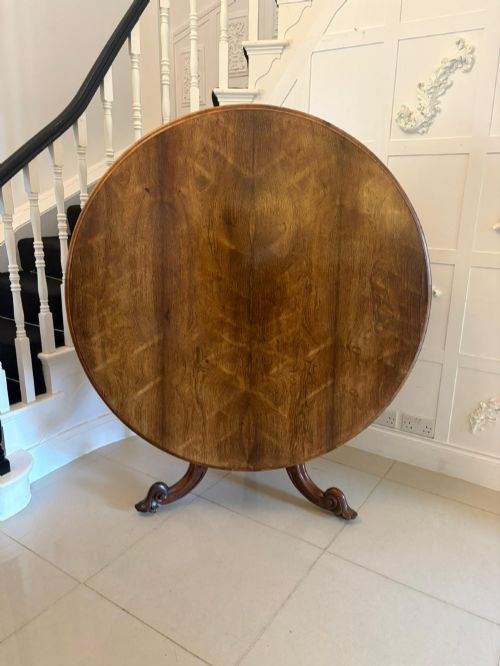
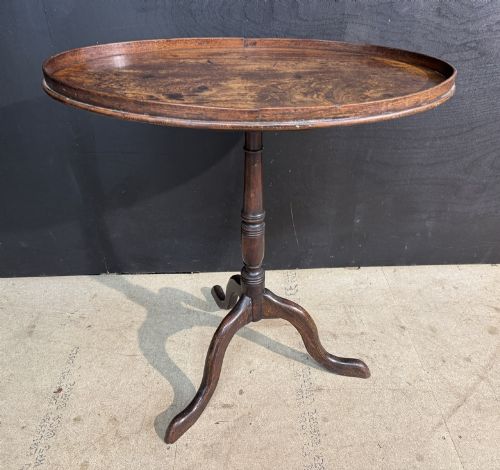
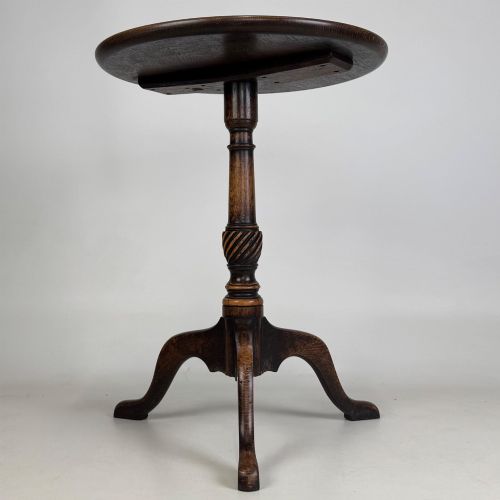
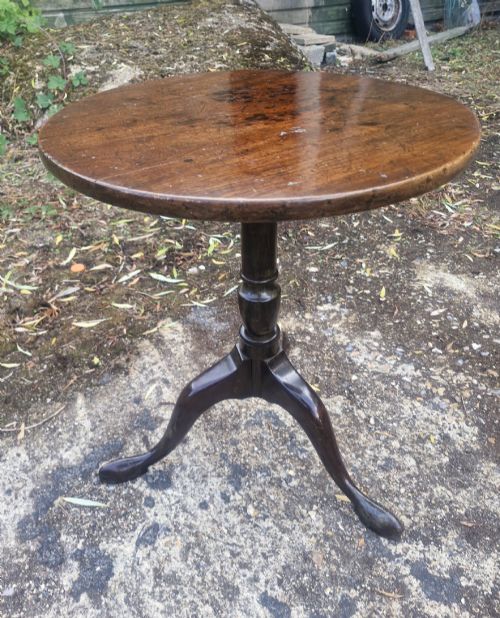
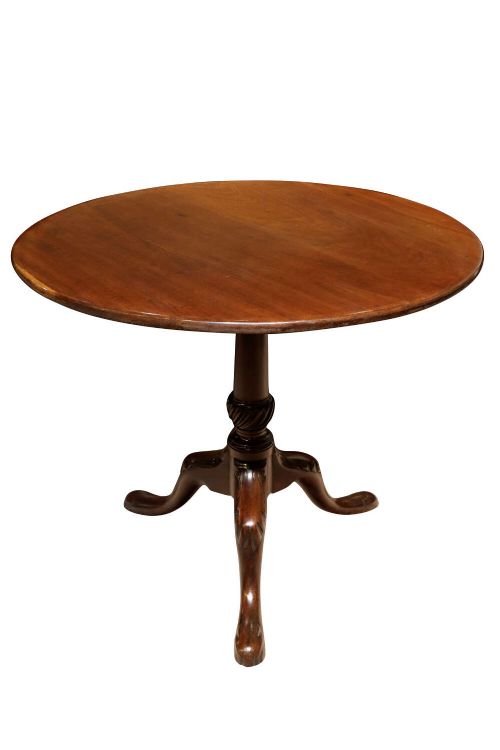
An antique circular tilt top table is a versatile piece designed to pivot flat when needed and fold upright against a wall when floor space is required. The selection spans Georgian, Regency, and Victorian periods, with mahogany and rosewood frequently appearing alongside oak and walnut.
The forms range from compact wine tables and occasional pieces to large breakfast and dining tables supported by tripod bases or central pedestals. Most examples on this page date from the eighteenth and nineteenth centuries, reflecting the enduring utility of this domestic design.
How They Were Made
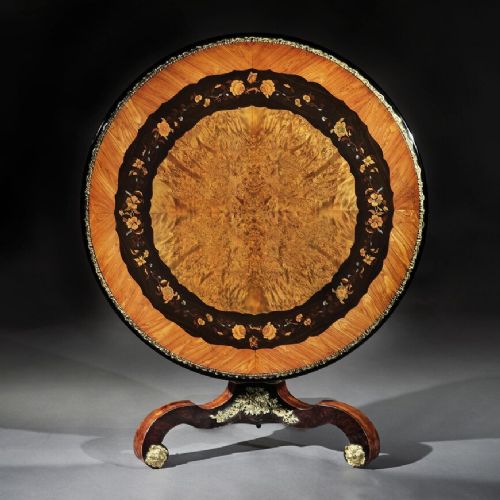
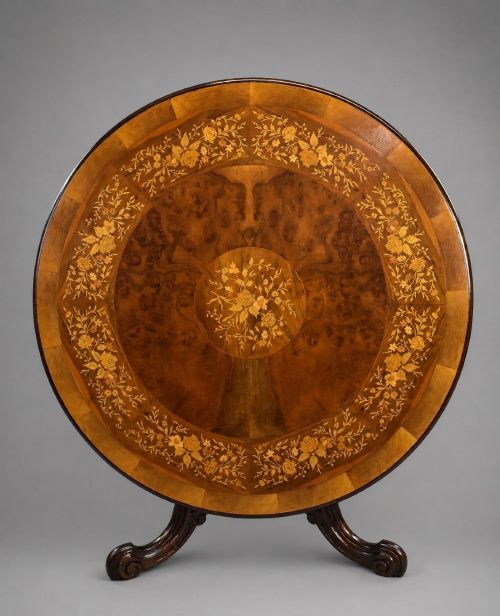
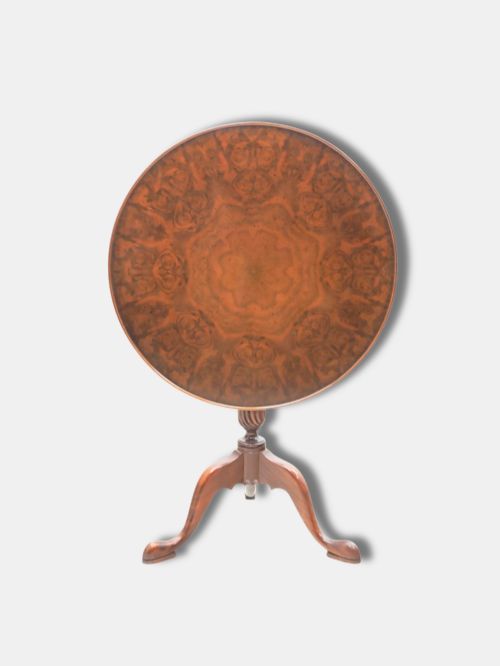
Cabinet makers utilised dense hardwoods such as mahogany, rosewood, and oak, often selecting figured veneers and burr walnut to create striking tabletop patterns. Brass mechanisms and catches secure the tilting mechanism to the central pillar, allowing the top to pivot smoothly.
Tripod bases and pedestals were carved from solid timber, sometimes featuring subtle brass inlays or elaborate grain patterns on the circular surfaces.
Object forms span wine tables, occasional tables, breakfast tables, side tables, and large dining tables with circular tops.
What Varies in Quality
The distinction between ordinary and exceptional pieces lies in the choice of timber and the precision of the tilting mechanism. Finer examples display carefully matched grain patterns across the circular surface and robust, steady pedestal joints that prevent wobble.
Subtlety of carving on the tripod legs and the condition of the original brass hardware further distinguish standard utility tables from superior workshop productions.
Edward Holmes Baldock·Gillow
The Antique Circular Tilt Top Glossary
- Tilt top
- A tabletop mounted on a pivoting mechanism that allows the surface to be stored vertically when not in use. This clever design saved valuable space in period rooms.
- Tripod base
- A support structure featuring three legs radiating from a central pillar. It provides stable footing for circular tables on uneven floors.
- Snap top
- An alternative term for a tilt top mechanism involving a spring catch that locks the surface horizontally. It secures the table firmly in place during use.
- Breakfast table
- A larger circular dining table popular during the Regency and Victorian eras. These pieces often feature a central pedestal rather than a tripod base.
- Patina
- The deep, lustrous surface appearance developed by aged wood over centuries of polishing and handling. It indicates authentic age and careful maintenance.
Antique Circular Tilt Top: Frequently Asked Questions
How do tilt top mechanisms work?
The circular top is fixed to a pivoting block attached to the central pillar or tripod. A small brass catch or latch holds the surface flat during use and releases to let the top fold vertically.
This ingenious mechanism allowed homeowners to clear floor space quickly when the table was not needed for dining or writing.
Where were these tables used?
Smaller tripod versions served as wine tables, lamp tables, or tea tables in sitting rooms and parlours. Larger pedestal formats functioned as breakfast or dining tables in the main rooms of the house.
Because the tops could be folded away, they were easily moved around the room to suit the daily activities of the household.
How do I care for the wood?
Keep the timber away from direct heat sources and strong sunlight to prevent the veneers from drying out or splitting. Regular dusting with a soft, dry cloth helps maintain the natural lustre of the polished surface.
Avoid using silicone-based polishes, as traditional beeswax feeds antique mahogany, rosewood, and oak much better over time.
How do I tell Georgian from Victorian pieces?
Georgian examples often lean towards simpler tripod bases in mahogany or oak, dating from the eighteenth century. Victorian pieces frequently showcase heavier rosewood or burr walnut construction with richer grain patterns and more elaborate pedestal designs.
Examining the construction methods underneath the top often reveals clues about the period and workshop origins.