


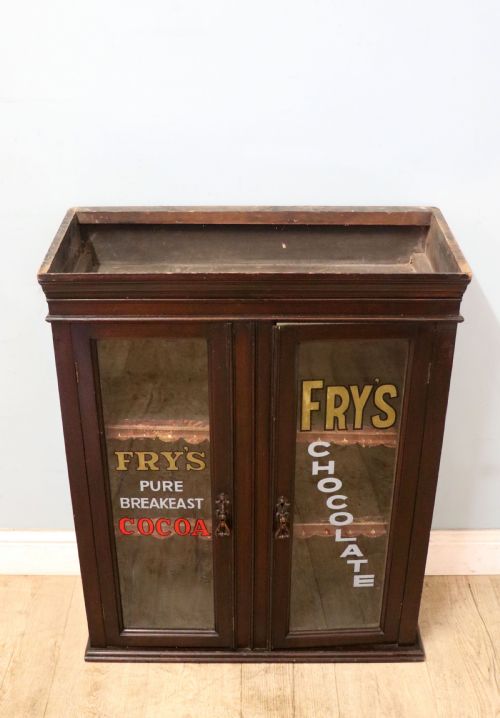

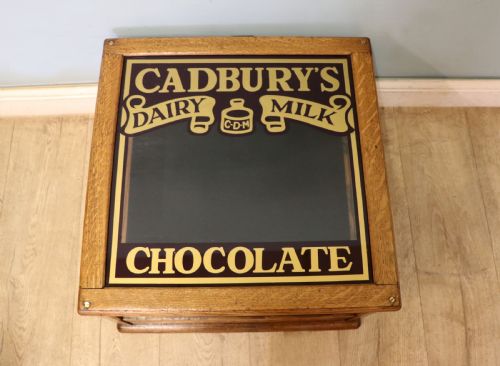


Antique Chocolate Cabinet
An antique chocolate cabinet holds the history of sweet shops and grand houses, offering collectors glass-fronted display cases and porcelain vessels designed for confectionery.
Antique Chocolate Cabinet
When you search for an antique chocolate cabinet, you encounter two distinct forms: commercial shop counters made for confectioners and domestic display vessels from earlier centuries. The commercial examples range from the Edwardian period through to the nineteen-thirties, often bearing historic sign-writing for makers such as Fry, Cadbury, Rowntree and Terry. These shop fittings are most frequently seen on this page, reflecting the survival of counter displays from high streets of the past.
Alongside shop counters, the evidence records domestic porcelain designed specifically for chocolate, including a Georgian Manufacture de la Reine covered trembleuse cup and saucer alongside an eighteen-eighties Royal Vienna chocolate cup. These ceramic pieces share the display function of the larger cabinets, serving the consumption and presentation of chocolate within the home. Together, these objects bridge the gap between commercial retail history and domestic luxury.
The styles span French Neoclassical, Victorian, Edwardian Commercial and Art Deco, showing how the presentation of chocolate evolved from elite dining rooms to bustling twentieth-century sweet shops. Materials shift accordingly, moving from porcelain and gold leaf in the eighteenth century to mahogany, oak, brass and nickel-plated metal in later commercial pieces. This variety ensures that every piece tells a distinct story of merchandising or household entertaining.
What varies in quality
Quality in these pieces rests upon the integrity of the original framing timbers and the clarity of the glass panels used in construction. Cabinets that retain their original commercial hardware and untouched timber surfaces hold greater authenticity than those with excessive modern intervention.
For ceramic items, the fineness of the porcelain body, the preservation of the enamel work and the crispness of the gold leaf application define the standard. In shop fittings, the execution and preservation of the hand sign-written advertising determine the visual impact of the piece.
Antique Chocolate Cabinet Retail Price Guide 2026
Typical asking prices for chocolate cabinet among the pieces listed under this phrase on Sellingantiques today, from the lower quarter to the upper quarter. They describe what is for sale here now, not the wider market.
Materials recorded across the inventory include glass, mahogany, gold leaf, brass, porcelain, enamel, oak, and nickel-plated metal.
Manufacture de la Reine·Royal Vienna·Fry·Cadbury·Rowntree·Terry
The Antique Chocolate Cabinet Glossary
- Trembleuse
- A specialised cup and saucer featuring a raised ring to hold the vessel securely, designed to prevent trembling hands from spilling hot chocolate.
- Shop counter display cabinet
- A glazed retail fixture positioned on top of counters to showcase confectionery and protect stock from customers while maintaining visibility.
- Art Deco
- A design style popular in the nineteen-thirties characterised by geometric shapes, streamlined forms and modern industrial materials.
- Edwardian Commercial
- A utilitarian style of shopfitting from the early twentieth century combining sturdy timber frames with large glass viewing areas.
- Enamel
- A durable decorative coating fused to porcelain or metal surfaces through firing, used to add rich colours and details to ceramics and signs.
Antique Chocolate Cabinet: Frequently Asked Questions
What is an antique chocolate cabinet used for?
These cabinets were originally utilised in Edwardian and twentieth-century sweet shops to display confectionery and chocolates to customers.
Today, collectors use them in domestic settings to display small antiques, ceramics, and curiosities behind protective glass.
Are all chocolate cabinets from shops?
Not all items associated with chocolate are shop fittings, as the category includes both commercial counters and domestic porcelain cups.
Porcelain pieces like trembleuse cups were made for domestic consumption in the Georgian period and the late nineteenth century.
How do I identify a shop display cabinet?
Shop display cabinets typically feature glazed timber frames in oak or mahogany designed to sit upon retail counters.
Many bear historical hand sign-written advertising for prominent confectioners such as Fry, Cadbury, Rowntree or Terry.
What materials are common in these cabinets?
The structural frames are predominantly built from timber such as mahogany, oak, and other hardwoods.
Glass panels provide visibility, while brass and nickel-plated metal often form the hardware and structural trims.