




Antique Chinese Silk Art
These antique chinese silk art pieces bring centuries of hand-rendered pigment and thread into modern rooms.
Antique Chinese Silk Art
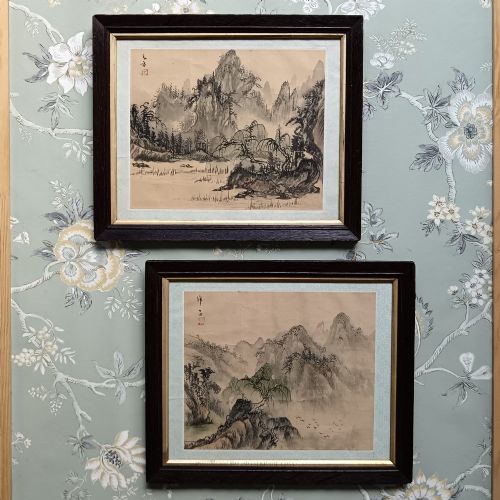
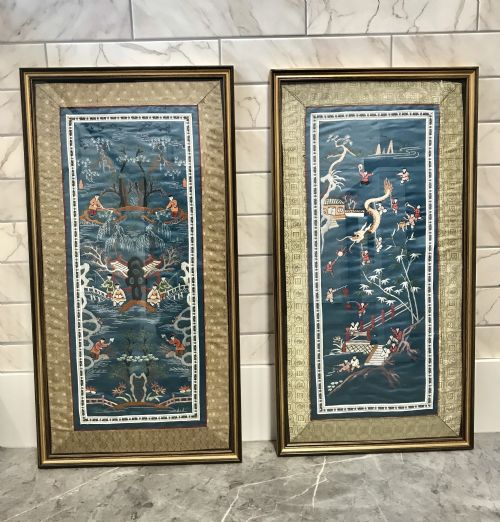
When you search for antique chinese silk art, you encounter a varied selection of framed paintings, wall hangings, and embroidered panels. These works span the nineteenth and early twentieth centuries, capturing traditional subjects from landscape scroll paintings to detailed depictions of figures, birds, and dragons.
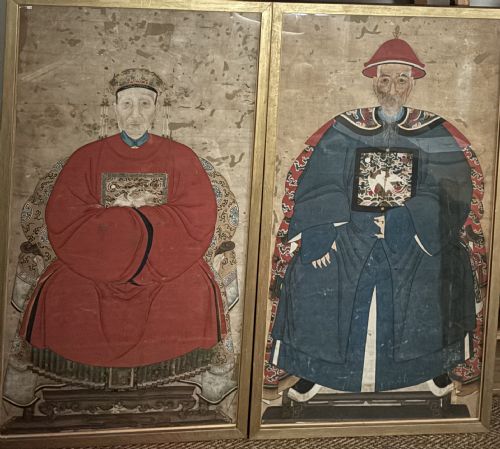
The objects on this page range from large ancestral group portraits and watercolour paintings on silk to hand-sewn textile panels and framed rank badges. Many arrive in their original wooden frames, often preserved behind glass with integrated paper and metallic thread detailing.
Origins stretch across Qing Dynasty styles and traditional Chinese export aesthetics, offering a clear view of historic workshop output. Collectors find everything from intimate framed silk studies to monumental wall art suited for prominent display.
How antique chinese silk art was made
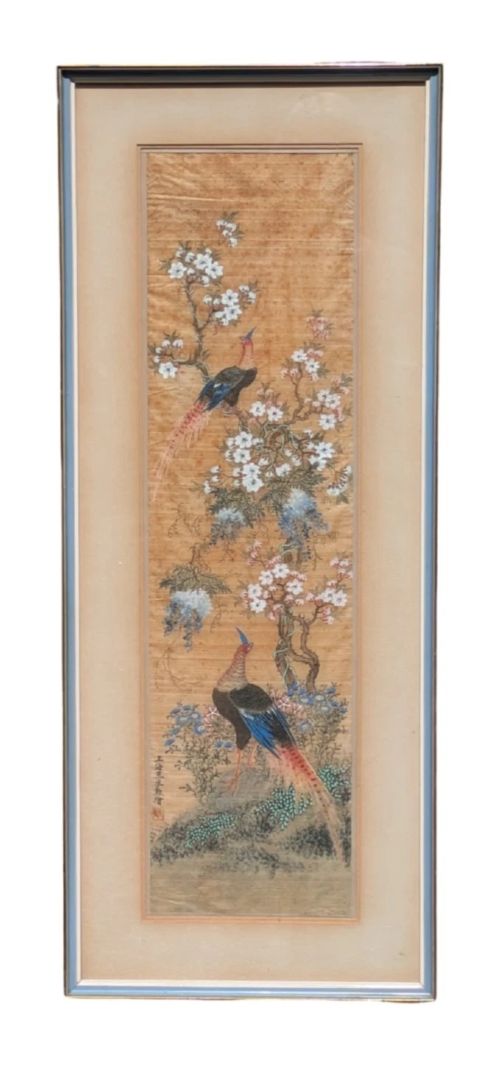
Artisans constructed these works primarily using woven silk grounds, applying water-based pigments, gouache, and ink directly to the fabric surface. Painters utilised fine brushes to build up layered compositions of landscapes, immortals, and fauna with careful precision.
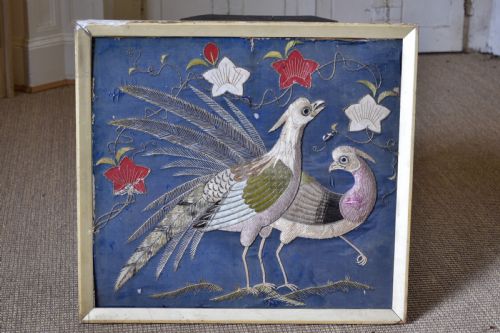
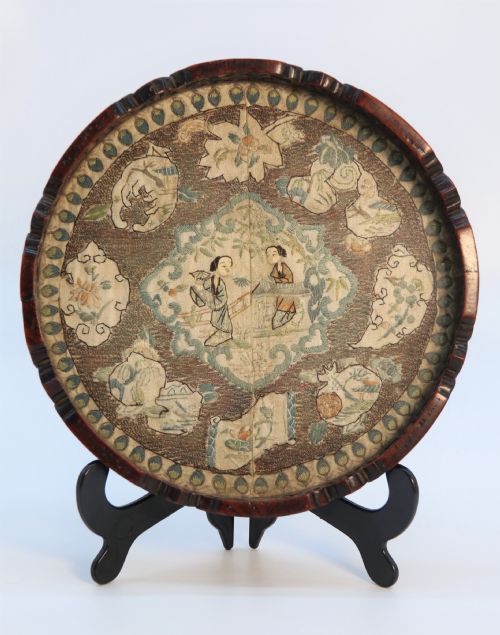
Needlework pieces incorporate elaborate hand-sewn embroidery executed with silk and metallic threads to create tactile depth. Craftsmen frequently mounted these textiles and paintings within carved wooden frames, sometimes incorporating glass protection and paper backings.
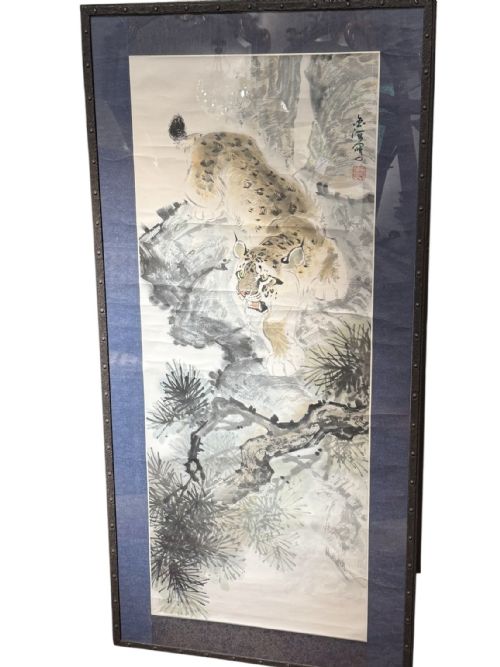
Mandarin ducks and snow leopards share wall space here, proving that Chinese artisans balanced fierce predators with symbols of eternal fidelity.
What varies in quality in antique chinese silk art
The standard of a piece rests on the fineness of the brushwork and the complexity of the needlework execution. Superior examples display disciplined line work in the paintings and tightly controlled, dense stitching in the embroidered sections.
Preservation of the delicate silk fabric and the vibrancy of the original water-based pigments heavily influence the overall character of each work. The presence of original frames and intact mounting materials also contributes to the integrity of the piece.
The Antique Chinese Silk Art Glossary
- Rank badge
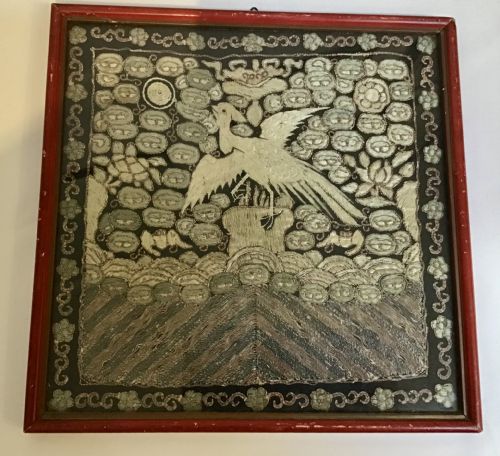
- A square embroidered patch worn on the robes of Qing Dynasty officials to denote their social standing. These badges typically feature detailed animal or bird motifs rendered in silk and metallic thread.
- Shan shui
- A traditional style of Chinese painting that depicts natural scenery using ink and brush on silk or paper. These works focus on mountains, rivers, and waterfalls.
- Gouache
- An opaque water-based pigment used by artists to achieve solid areas of colour on silk grounds. It offers greater coverage than standard watercolour.
- Scroll painting
- A flexible artwork format designed to be rolled or hung, often mounted on silk or paper backings. These pieces frequently portray immortals, animals, or narrative scenes.
- Ancestor painting
- A formal portrait commissioned to honour family forebears, usually depicting seated figures in traditional attire. These works served a commemorative function within households.
Antique Chinese Silk Art: Frequently Asked Questions
How should I hang antique silk art?
Position these works away from direct sunlight to protect the fragile silk fibres and water-based pigments from fading over time. Maintain stable indoor humidity levels to preserve the fabric and any associated wooden framing.
Ensure pieces under glass have adequate spacing to prevent the textile from touching the surface. Professional framing with UV-filtering glass offers the best long-term protection.
What subjects appear on these pieces?
Common subjects include traditional landscapes, Daoist immortals, snow leopards, phoenixes, mandarin ducks, and garden birds. Ancestor portraits and rank badges also feature prominently among the surviving textile and painting works.
Floral arrangements, dragons, and figurative groupings reflect historic Qing Dynasty aesthetics. Each motif carries specific cultural and symbolic meanings tied to longevity, status, and nature.
Are these works hand painted?
The majority of the pictorial works are executed by hand using water-based pigment, ink, or gouache applied directly to a silk ground. Artisans also utilised manual needlework techniques to create hand-embroidered panels and robes.
Signatures and seals occasionally appear on the painted examples, indicating the hand of individual makers or studio traditions. The absence of mechanical printing methods distinguishes these historic objects from later reproductions.
How do I identify a rank badge?
Rank badges present as distinct square panels featuring embroidered animals or birds surrounded by auspicious symbols and clouds. Officials wore them on the front and back of court robes during the Qing Dynasty.
Civil officials displayed specific birds while military officials wore land animals to indicate their respective grades. The meticulous use of metallic thread and fine silk stitching marks their official origin.
What framing is typical for these items?
Many pieces retain their original wooden frames, which may include carved hardwood details or simple moulded profiles. Glazing with glass is common to shield the delicate silk surfaces from dust and handling.
Scroll formats often feature fabric borders and wooden rollers for hanging or storage. Surviving original mountings provide valuable context regarding the age and provenance of the artwork.