
Antique Chandelier Lighting
Antique chandelier lighting brings remarkable presence to a room, casting intricate patterns through cut crystal and cast metal.
Antique Chandelier Lighting
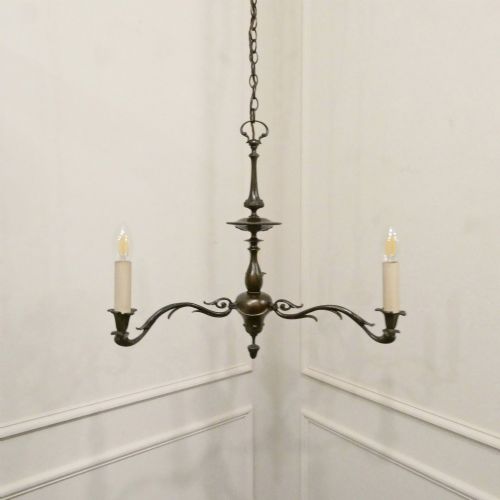
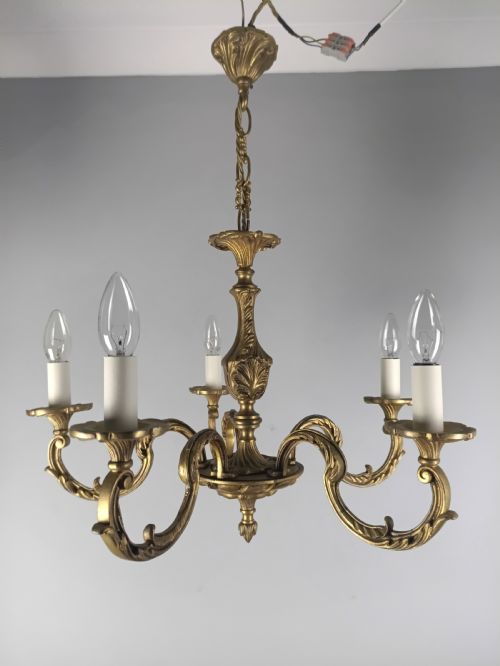
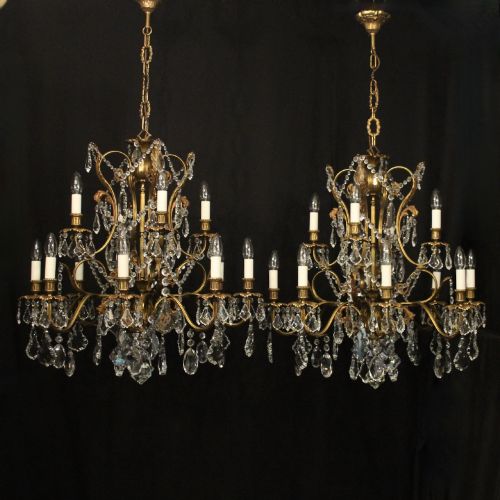
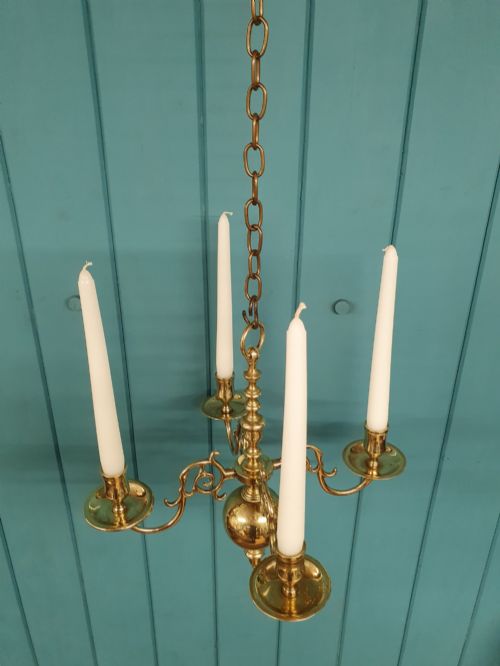
When searching for antique chandelier lighting, buyers encounter overhead fixtures designed to illuminate interiors through multiple candle or bulb arms. These pieces range from compact brass ceiling fittings to multi-tiered crystal centrepieces.
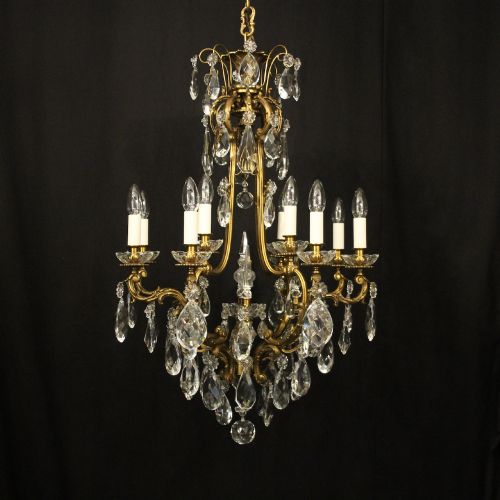
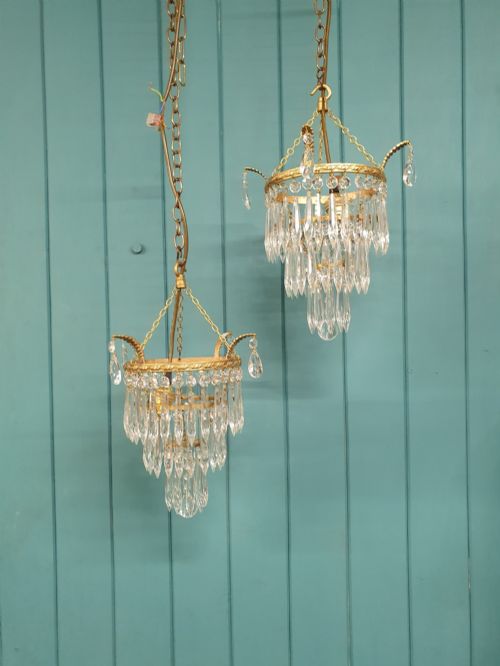
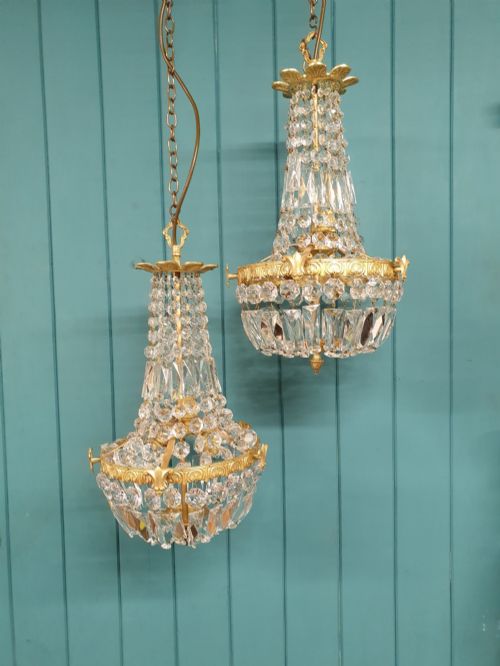
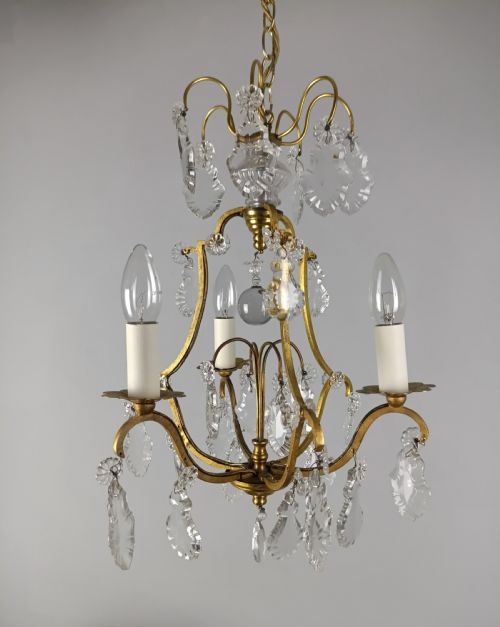
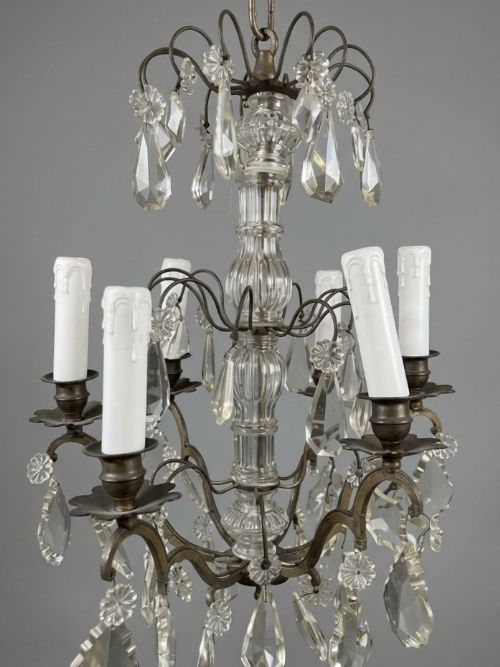
The selections here are dominated by French designs from the nineteenth and early twentieth centuries, spanning periods such as Edwardian, Art Deco, and 1930. Common forms include birdcage frames, tent and waterfall crystal arrangements, and hall lanterns.
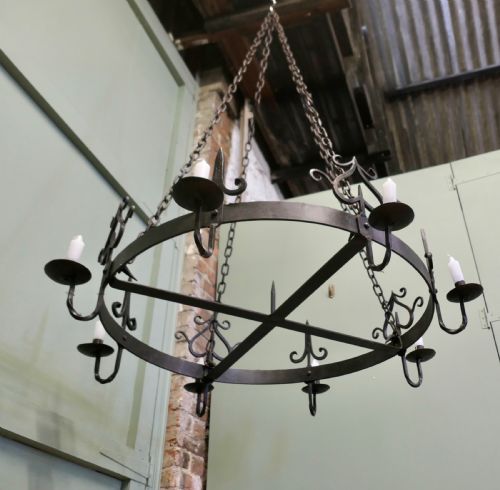
Origins stretch across France and Italy, bringing distinct regional interpretations of Rococo, Empire, and Gothic styles into domestic spaces.
How they were made
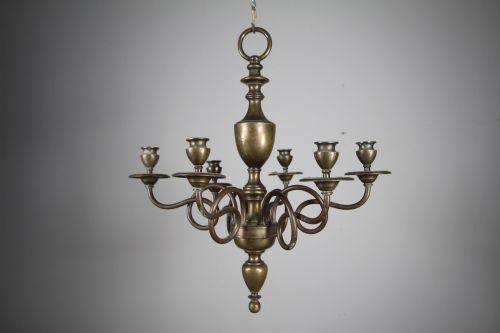
Foundations rely heavily on cast metals like brass, bronze, and gilt spelter, shaped into arms, frames, and ornate decorative mounts. Gilding and silvering techniques were frequently applied to metal surfaces to catch and reflect ambient light.
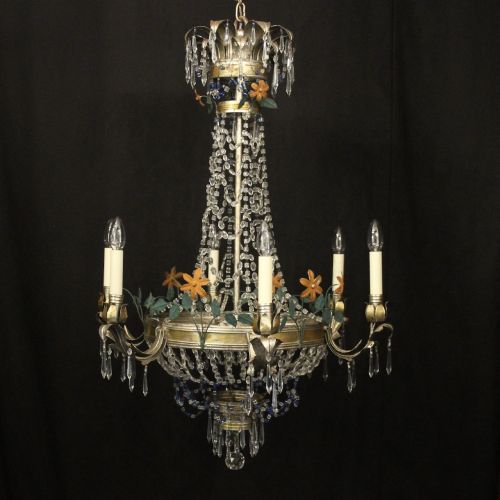
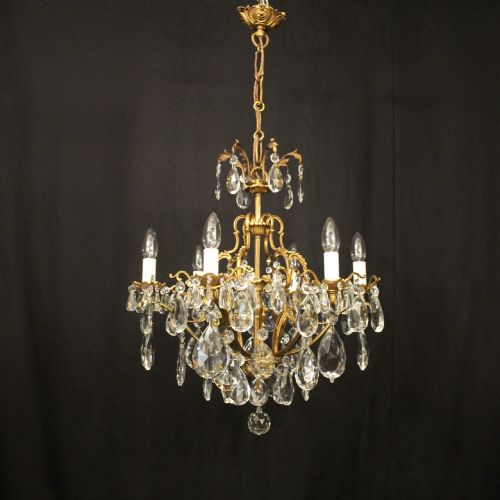
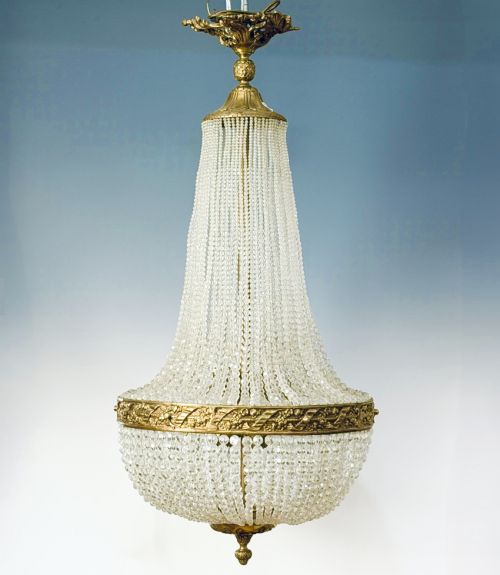
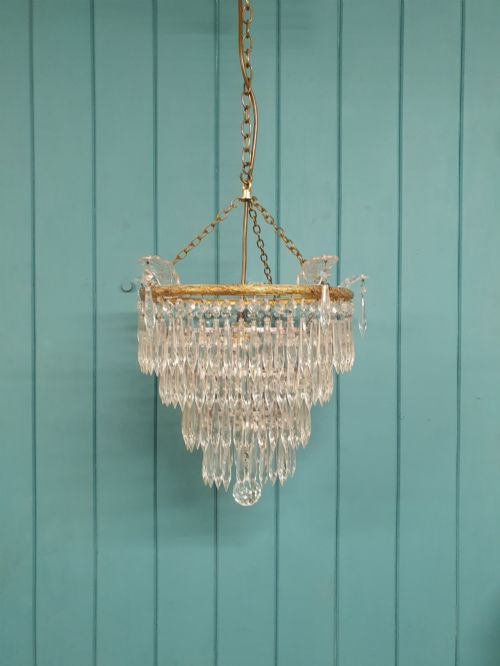
Cut glass and crystal components, including spikes, drops, and beads, were painstakingly shaped and hand-strung to form elaborate tents and waterfalls. These reflective elements work in tandem with the metal armature to maximise illumination from early candle holders or later electrified fittings.
Object forms span conventional multi-arm chandeliers alongside pendant lights, hall lanterns, and birdcage configurations.
What varies in quality
The caliber of an antique chandelier rests largely on the crispness of its metal casting and the depth of its crystal cutting. Finer examples display sharply defined ornamentation on bronze or brass frames rather than soft, muddy relief work.
The completeness and integrity of the crystal drops also dictate standard, where uniform clarity and original fixings separate standard production from superior craftsmanship. Heavier gauge metalwork and substantial proportions indicate higher grade execution throughout.
Degué
The Antique Chandelier Lighting Glossary
- Ormolu
- Gilded bronze, where a layer of gold is applied to a bronze base using a mercury amalgamation process or later electroplating. This finish gives a warm, enduring metallic sheen.
- Spelter
- A zinc alloy frequently used as a cheaper substitute for bronze in decorative metalwork. It was often painted or gilded to imitate more expensive metals.
- Tent and waterfall
- A configuration of crystal drops where an upper canopy forms a tent shape, dropping down into a cascading tier of further crystals. This layout was designed to refract maximum light.
- Birdcage
- A skeletal metal frame shaped like an avian cage, used to support internal candle arms and exterior crystal swags. It is a defining profile of certain French lighting designs.
- Hall lantern
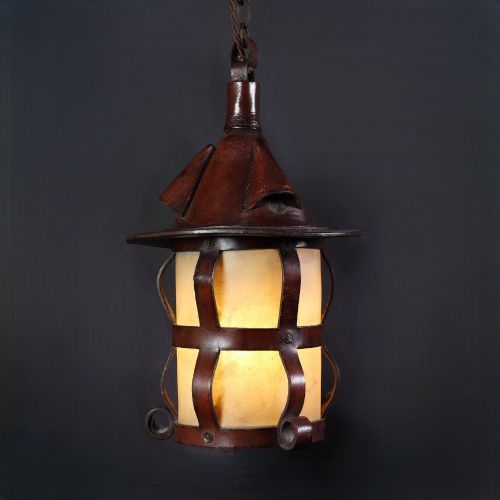
- An enclosed ceiling light, often glazed, designed primarily for entrance halls and corridors. They combine metal frames with convex or flat glass panels.
Antique Chandelier Lighting: Frequently Asked Questions
How do I choose the right size chandelier?
Scale depends entirely on the dimensions of the room and the height of the ceiling. Smaller rooms benefit from compact four or five light fittings, while larger spaces require multi-tiered arrangements.
Consider the vertical drop to ensure the fixture hangs clear of head height while remaining visually anchored to the space.
Were these fixtures electrified originally?
Most pieces originating from the nineteenth and early twentieth centuries were built for candles before being converted to electricity later. Conversion methods vary, with some retaining dummy candle sleeves.
Wiring is routinely updated to meet modern safety standards while preserving the original metalwork and structural integrity.
How do I clean an antique crystal chandelier?
Dusting with a soft, dry brush removes surface debris without disturbing delicate wire connections. For deeper cleaning, a specialist glass cleaner applied by hand to individual drops prevents moisture damage to older metal frames.
Detaching crystals for washing should be done sparingly and methodically to maintain their exact original arrangement.
How do I date an antique chandelier?
Dating relies on stylistic markers, manufacturing techniques, and materials characteristic of specific periods like Edwardian or Art Deco. Heavy casting and gilt bronze often point to earlier nineteenth century origins, whereas streamlined geometric motifs suggest the nineteen-twenties.
Examining the fixings, screw types, and wiring channels provides further clues to the period of manufacture.