







Antique Chandelier Ceiling Mount
These antique chandelier ceiling mount pieces bring period illumination to a room, offering brass frames and crystal drops.
Antique Chandelier Ceiling Mount
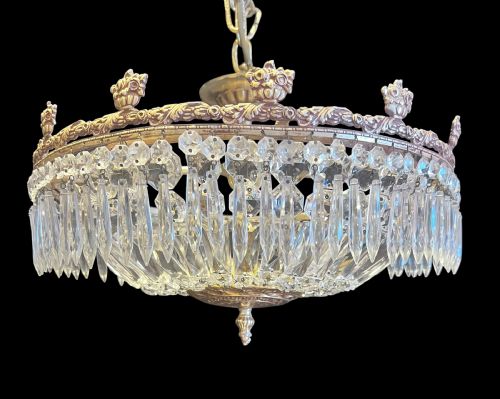
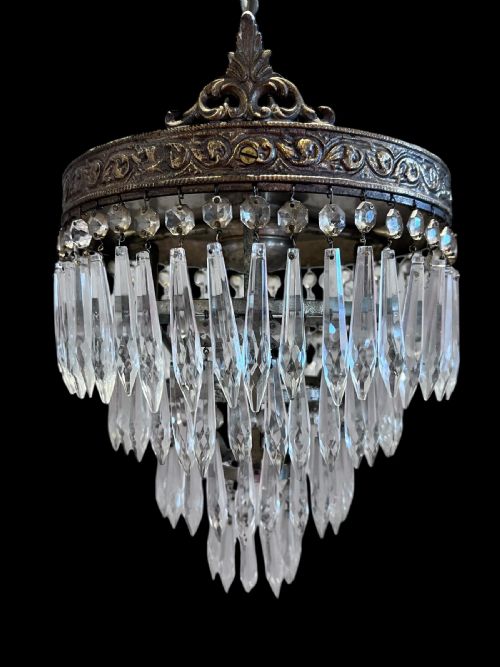
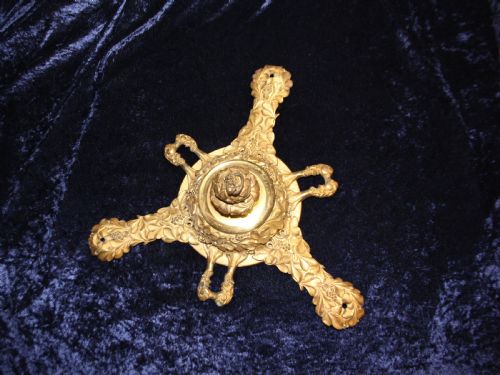
The pieces on this page span styles ranging from French Empire and Art Deco to Neo-Classical Revival. You are most likely to meet brass and cut glass bag chandeliers, plafonieres, and cast brass ceiling roses among the current selections.
Makers and designers from France and Britain are represented through works featuring bronze, chrome, copper, and ormolu. Each object serves to anchor interior lighting while displaying period metalwork and glass techniques.
How they were made
The makers of these light fittings utilised cast brass, bronze, copper, and nickel to form structural frames, branches, and mounts. Details such as acanthus leaf motifs were cast into the metal before finishing.
Glass elements include cut glass, crystal glass, and beaded drops assembled by hand to reflect light from internal bulbs. Metal mounts secure these glass components directly to ceiling plates and roses.
Antique Chandelier Ceiling Mount Retail Price Guide 2026
Typical asking prices for chandelier ceiling mount among the pieces listed under this phrase on Sellingantiques today, from the lower quarter to the upper quarter. They describe what is for sale here now, not the wider market.
The listings on this site feature brass, bronze, copper, and nickel combined with cut glass and crystal across Victorian, Edwardian, and 1930s periods.
What varies in quality
Quality in these ceiling mounts is evident in the crispness of the metal casting, seen particularly in the definition of acanthus leaves and brass mounts. Heavier gauge metals and finely hand-cut crystal prisms separate superior examples from standard production.
The complexity of the assembly dictates the grade of the piece, with multi-branch brass structures and beaded bag chandeliers requiring intricate hand-threading of glass elements. Integrated ormolu and detailed bronze work also indicate higher workmanship.
Jean Gauthier
The Antique Chandelier Ceiling Mount Glossary
- Plafoniere
- A shallow ceiling-mounted light fitting, often featuring glass bowls or crystal drops held in brass or bronze mounts. These fixtures sit close to the ceiling surface.
- Ormolu
- Gilded bronze used for decorative mounts and fittings on lighting fixtures. The technique involves applying a gold amalgam to a bronze base.
- Cut glass
- Glass that has been shaped and faceted on a wheel to increase light refraction. It differs from moulded glass by its sharp edges and hand-polished facets.
- Ceiling rose
- A decorative circular moulding fixed to the ceiling around the point where a light fitting emerges. They are frequently cast in gilt or standard brass.
Antique Chandelier Ceiling Mount: Frequently Asked Questions
What is a ceiling mount chandelier?
A ceiling mount chandelier is a light fixture designed to attach directly against the ceiling rather than suspend from a chain or cord. These fittings include plafonieres and bag chandeliers.
They provide illumination while remaining close to the ceiling plane, making them suitable for rooms with lower ceiling heights.
How do I date a brass chandelier?
Dating relies on stylistic clues and construction methods visible in the metalwork and glass. Edwardian and Victorian pieces often show distinct casting styles compared to nineteen-thirties Art Deco designs.
Examining the type of metal, such as raw brass, bronze, or copper, also helps establish the period of manufacture.
Where were plafonieres used?
Plafonieres were utilised in principal rooms of homes to provide ambient overhead lighting. Their shallow profile suited hallways, bedrooms, and reception spaces.
They combine a decorative glass bowl or shade with secure metal mounts fixed straight to the ceiling.
What materials make up these lights?
The primary materials are brass, bronze, copper, and nickel, paired with cut glass, crystal, and crystal glass beads. Some pieces incorporate gilt brass or ormolu for decorative effect.
These combined elements determine the weight, appearance, and reflection quality of each fitting.