
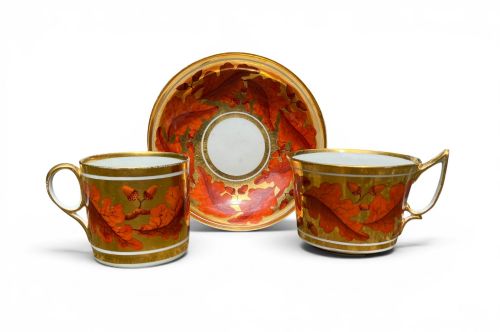


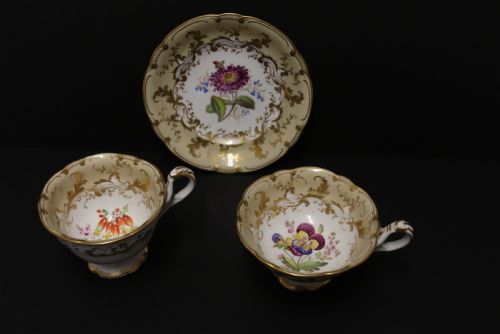


Antique Ceramic Tea Trio
These antique ceramic tea trio sets are matching cups, saucers, and plates designed for the formal table, bringing Regency and Victorian elegance directly to your tea service.
Antique Ceramic Tea Trio
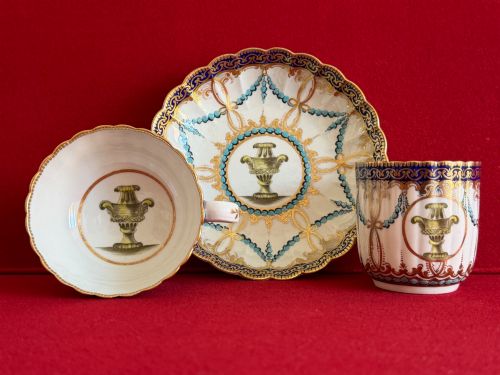
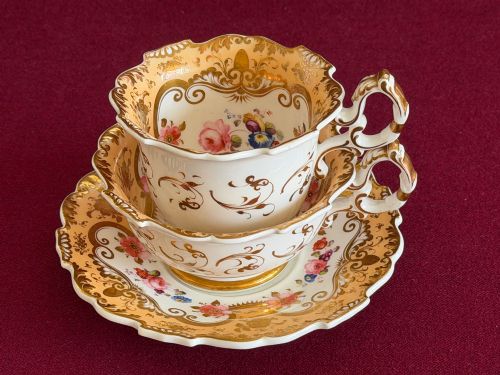
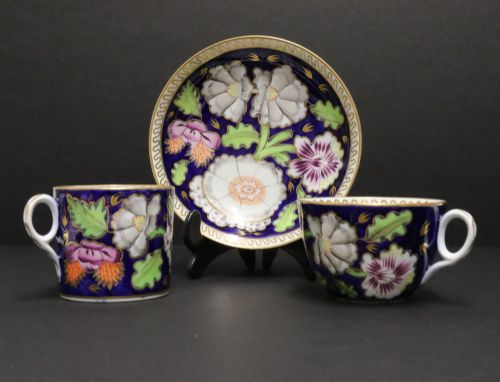
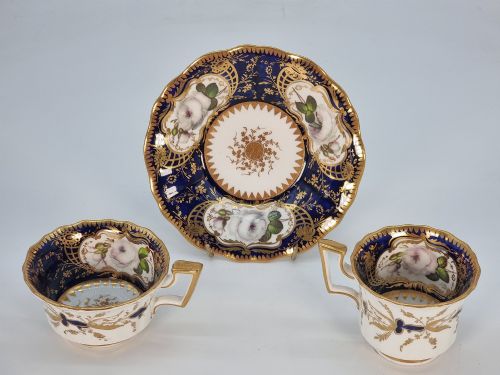
An antique ceramic tea trio consists of a matching teacup, saucer, and side plate formed from fine pastes of porcelain or bone china. When you search for an antique ceramic tea trio, you encounter matching sets originating from the eighteenth century onward, spanning the Regency, Victorian, and Edwardian eras.
The pieces on this page include cabinet trios and teaware sets produced by notable English factories, encompassing forms from simple tea services to ornate gilded sets. Most examples date from the early nineteenth century during the Regency and Georgian periods, showcasing hand-painted details and transfer-printed motifs.
Materials and Manufacture
Potters formed these pieces using porcelain and bone china, firing the clay at high temperatures to achieve a durable and translucent body. Enamel glazes and hand-painted pigments provided the primary decoration before a secondary firing fused the colours to the surface.
Finishing touches involved the application of gold leaf and gilding to rims, handles, and borders. Skilled artisans executed these metallic details by hand, using liquid gold that was subsequently burnished to a bright finish.
The documented forms span individual cabinet trios, extensive tea and coffee services, and matching teacup sets originating from historic English potteries.
Assessing Quality and Execution
The distinction between standard production and top-tier pieces lies in the precision of the hand-painting and the crispness of the porcelain form. Superior examples display meticulously applied enamel colours and finely detailed gilt work executed by named manufactories.
Body thickness and translucency also indicate quality, with finer bone china and porcelain yielding lighter, more resonant vessels. The presence of sophisticated decorative patterns, such as delicate florals or exotic motifs, elevates the status of the individual trio.
A H & R Daniel·Newhall·Coalport John Rose·Derby·Royal Worcester·Davenport·Minton·Spode·Wileman Foley Shelley·Gladstone Potteries
The Antique Ceramic Tea Trio Glossary
- Cabinet trio
- A decorative set intended primarily for display in a cabinet rather than for daily use. These pieces often feature superior hand-painted decoration and extensive gilding.
- Bone china
- A type of soft-paste porcelain containing bone ash, which increases the strength, whiteness, and translucency of the fired ceramic body.
- Flight Period
- A phase in the history of Worcester porcelain production dating from the late eighteenth century, marked by specific factory management and high-grade wares.
- Gilding
- The application of gold leaf or powdered gold to the ceramic surface to ornament handles, rims, and panels.
- Enamel glaze
- A vitreous composition fused to the surface of the ceramic during firing to provide colour, pattern, and a glossy protective finish.
Antique Ceramic Tea Trio: Frequently Asked Questions
What is an antique ceramic tea trio?
An antique ceramic tea trio is a matching set comprising a teacup, a saucer, and a corresponding side plate made of porcelain or bone china.
These sets were utilised for formal dining and afternoon tea gatherings from the Georgian period through the Edwardian era.
How do I date an antique tea trio?
Dating relies on identifying factory marks stamped or painted on the underside of the porcelain, alongside stylistic clues such as handle shapes and glaze colours.
Regency and eighteenth-century pieces often feature handwritten pattern numbers and distinctive soft-paste bodies without standard manufacturer stamps.
Are these trios safe for daily use?
While the porcelain and bone china are structurally sound, the presence of hand-painted enamels and delicate gold leaf means most collectors prefer gentle hand washing.
Using them for special occasions preserves the historic gilding and prevents modern detergents from dulling the antique glaze.
What is the difference between porcelain and bone china?
Porcelain is a hard or soft ceramic material fired at high temperatures to achieve a dense, waterproof body.
Bone china incorporates animal bone ash into the mixture, resulting in a lighter, highly translucent ceramic that remains remarkably strong.