



Antique Cassolettes Pair
An antique cassolettes pair brings classical symmetry to a room, offering a dual-function decorative urn that reverses to reveal a candle socket.
Antique Cassolettes Pair
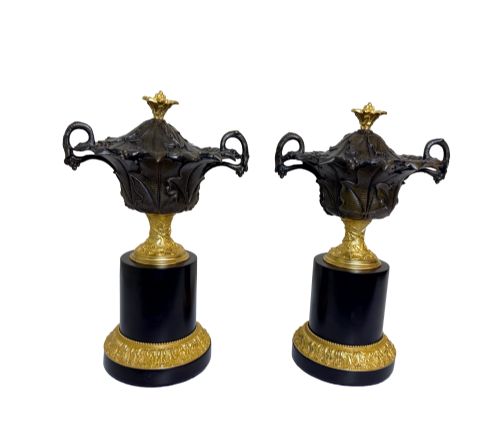
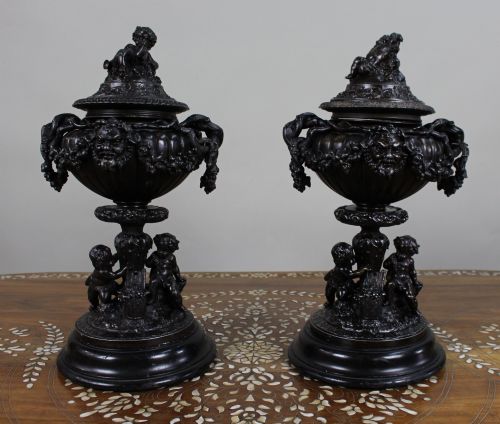
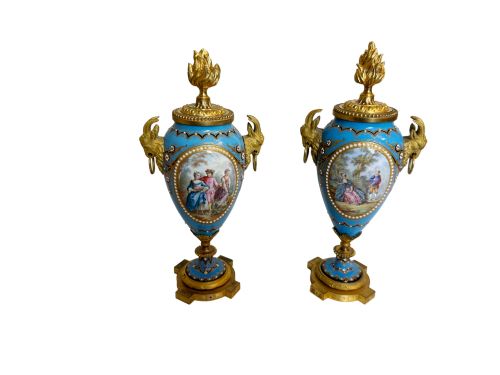
An antique cassolettes pair consists of decorative lidded urns designed in the Neoclassical, Louis XVI, and French Empire styles. These ornamental vessels frequently appear from the nineteenth century, including Regency and Victorian periods, drawing on Grand Tour traditions.
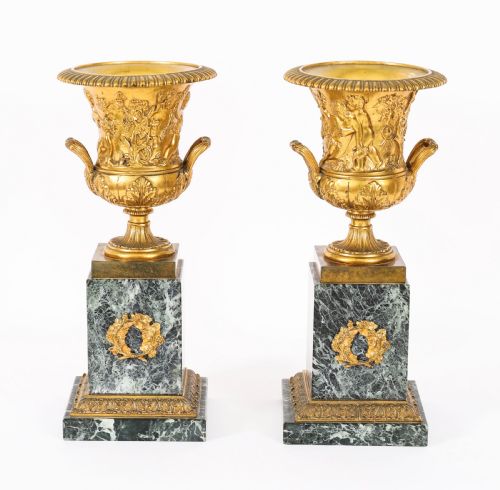
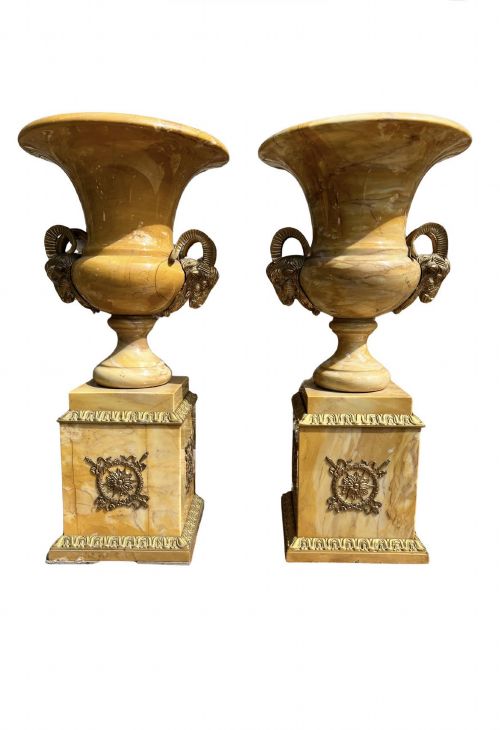
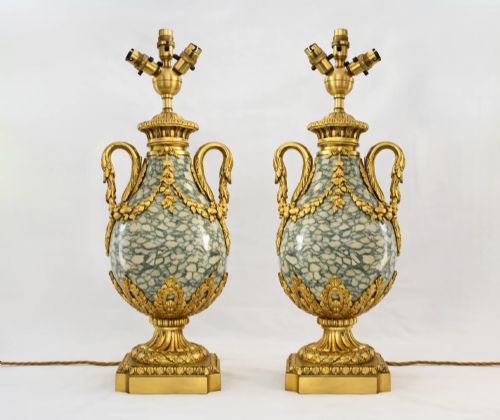
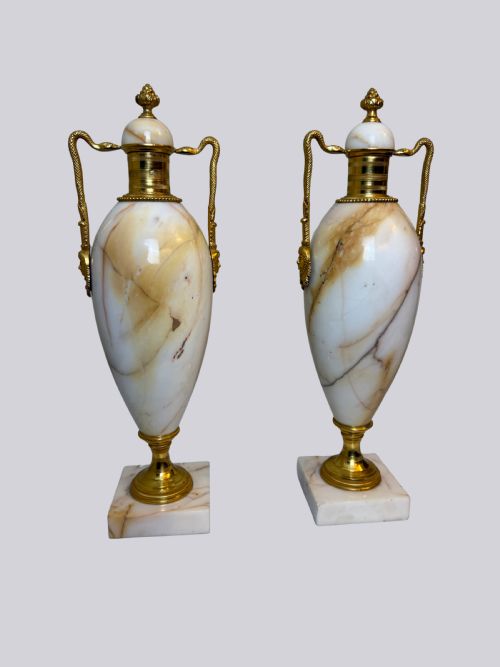
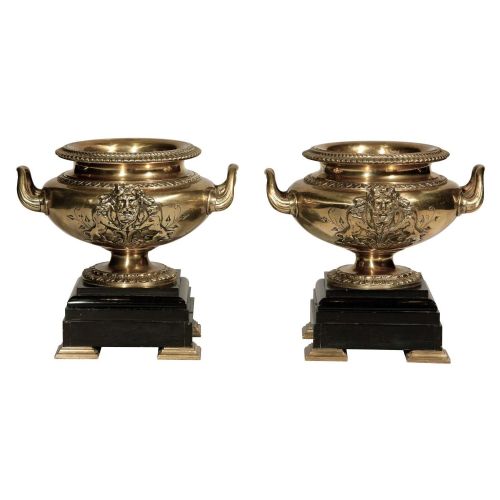
Buyers encounter forms ranging from classical campana-shaped vases to amphora styles and mounted coupes on pedestals. Many examples function as decorative vases or have been adapted as table lamps while retaining their classical proportions.
How they were made
Maker workshops combined cast bronze, patinated bronze, and gilt bronze, or ormolu, with various stones including white, green, black, rouge, and Sienna marble, as well as white onyx and quartz. Metal mounts and handles were finely cast and applied to carved stone bodies.
Construction techniques involved fitting removable lids or reversible tops that allowed the vessels to transform between closed urns and candle holders, sometimes incorporating brass, silvered elements, or enamelled details.
Some nineteenth-century cassolette lids double as secret candle sockets for impromptu parlour illumination.
What varies in quality
Quality rests in the crispness of the bronze casting and the precision of the gilt or ormolu chasing. Finer examples display sharp detail in masks, foliage, and handles rather than smoothed or softened edges.
The choice and turning of the marble or onyx body dictate the visual balance of the pair. Uniform veining, polished stone surfaces, and tight joints between metal mounts and stone distinguish superior examples.
Flight Barr And Barr·Royal Worcester
The Antique Cassolettes Pair Glossary
- Cassolette
- A dual-purpose decorative vessel with a reversible lid that functions as an urn or a candlestick. The top typically lifts off and inverts to hold a taper.
- Ormolu
- Gilt bronze created by applying a mercury-gilt amalgam to cast bronze. This technique imparts a rich golden finish characteristic of French Empire and Louis XVI decorative arts.
- Campana
- A bell-shaped classical urn form derived from antiquity. These vessels feature flared rims and tapering bodies often mounted on square plinth bases.
- Grand Tour
- A period of European travel undertaken by the elite to collect classical antiquities and souvenirs. Pieces made in this manner emulate ancient Greek and Roman art.
Antique Cassolettes Pair: Frequently Asked Questions
How do you use cassolettes?
These vessels serve as ornamental mantel or table centrepieces in their closed urn configuration. By reversing the lid, they convert into candlesticks for ambient lighting.
Historically, they also held aromatics or perfumes when used as scent burners. Today, they remain valued decorative objects for formal interiors.
How do you date nineteenth century bronze and marble pieces?
Dating relies on stylistic markers such as Louis XVI revival motifs or French Empire proportions. Material composition, casting methods, and patination provide further clues to age.
Nineteenth-century examples often reflect Grand Tour influences from the Regency through the late Victorian period. Examining the internal fittings and screw threads helps confirm the period.
Where should you place a pair in a room?
Pairs look best displayed symmetrically on mantelpieces, console tables, or sideboards. Their classical silhouettes anchor formal room schemes.
Ensure they sit on stable, level surfaces away from heavy traffic areas to protect delicate marble and gilt bronze mounts.