





Antique Carved Monkey
These antique carved monkey figures, ranging from Black Forest nutcrackers to Chinese soapstone groups, bring character and wit to any interior.
Antique Carved Monkey
When you search for antique carved monkey objects, you encounter a surprisingly wide array of utilitarian and decorative forms from various global traditions. The selection includes desk accessories, parasol handles, diorama scenes, and dinner gongs spanning multiple centuries.
You are most likely to meet Black Forest wooden nutcrackers, Chinese soapstone scholar groups, and Japanese stag horn or ivory items on this page. These diverse works cross European and Asian craftsmanship, reflecting distinct regional styles and cultural attitudes toward the animal.
The objects serve both practical functions and purely visual roles, merging utility with detailed zoomorphic sculpture. From nineteenth-century European novelty items to early twentieth-century American prisoner art, each piece tells a distinct story of its maker's intent.
Materials and carving techniques
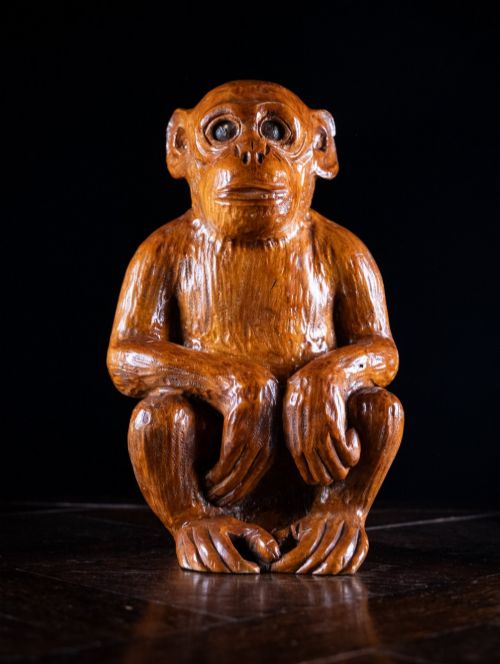
Carvers utilised natural materials such as hardwood, walnut, stag horn, deer antler, soapstone, and mango wood to capture the texture of fur and the expressive postures of the animals. Artisans shaped these mediums using traditional hand tools to achieve fine surface detail and depth.
Surface treatments vary by origin, ranging from the polychrome finish on Burmese temple carvings to the natural oiled grain of Black Forest woodwork. Some pictorial representations, such as oil paintings on canvas, employ brushwork rather than chisel work to render the subject.
Antique Carved Monkey Retail Price Guide 2026
Typical asking prices for carved monkey among the pieces listed under this phrase on Sellingantiques today, from the lower quarter to the upper quarter. They describe what is for sale here now, not the wider market.
Listings feature items from the eighteenth, nineteenth, and twentieth centuries, executed in materials including soapstone, stag horn, hardwood, and oil paint.
Assessing craftsmanship and execution
The integrity of the material also dictates quality, with sound, unblemished horn, dense hardwoods, and finely grained soapstone yielding sharper details and better long-term durability. Wear should remain honest to the age of the item without obscuring the original tool marks.
The Antique Carved Monkey Glossary
- Black Forest
- A nineteenth-century European wood-carving style originating in Switzerland and Germany. It is particularly known for realistic depictions of animals, including bears and monkeys.
- Meiji Period
- A Japanese era lasting from eighteen sixty-eight to nineteen twelve. Carvings from this time demonstrate exceptional precision in stag horn and ivory.
- Soapstone
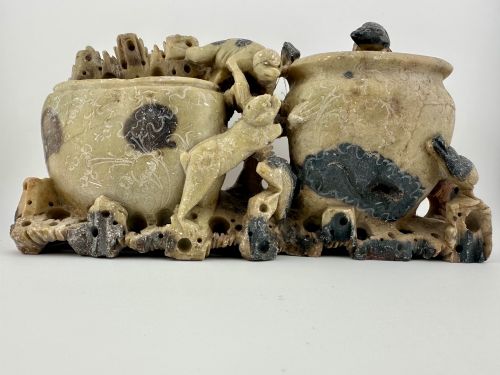
- A talc-schist rock prized by Chinese artisans for its softness. It allows for intricate, multi-figure scholar's desk groups and brush washers.
- Diorama
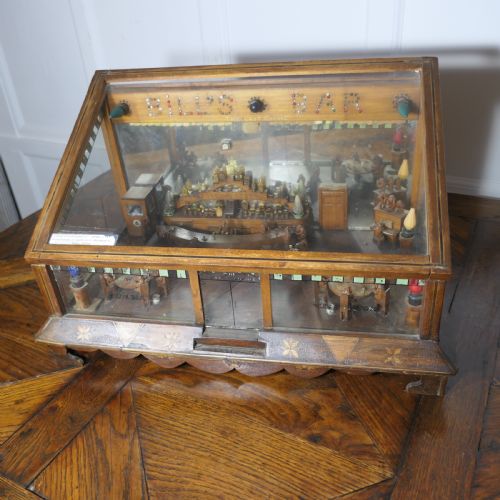
- A three-dimensional miniature scene enclosed in a case. Prisoner art examples often depict interior settings like novelty saloons.
- Polychrome
- Painted or decorated in several colours. This technique appears on Burmese temple carvings to heighten visual impact.
Antique Carved Monkey: Frequently Asked Questions
What were carved monkey nutcrackers used for?
These functional objects were designed to crack nuts using lever mechanisms built into the animal's limbs or body. Owners displayed them proudly on dining tables during the nineteenth and twentieth centuries.
They combined everyday utility with whimsical Victorian and Edwardian humour, serving as both conversation pieces and robust kitchen implements.
How do I date an antique monkey carving?
Dating relies on examining the material, tool marks, style, and provenance associated with specific periods like the Meiji era or Qing Dynasty. Wear patterns and patination on wood or horn also offer clues to age.
Comparative analysis with documented pieces from the same workshop or regional tradition helps narrow down the decade of production.
Where were Black Forest carvings made?
These pieces originated primarily in the mountainous regions of Central Europe, specifically Switzerland and Germany, during the nineteenth century. Local woodworkers utilised native timbers like walnut and linden.
They catered largely to the tourist trade and international export markets, creating domestic items with distinct animal motifs.
What is a brush washer?
A brush washer is a scholar's desk accessory used in traditional Chinese art to clean ink brushes after writing or painting. These items were often carved from soapstone into elaborate figural scenes.
They formed part of the scholar's essentials, combining practical utility with refined sculptural aesthetics on the desk.