



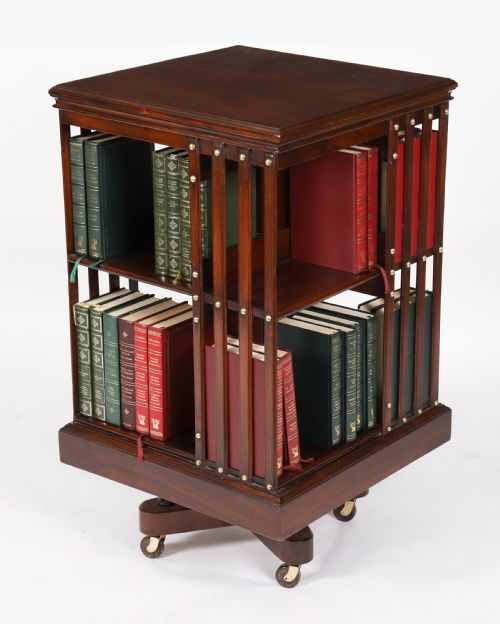
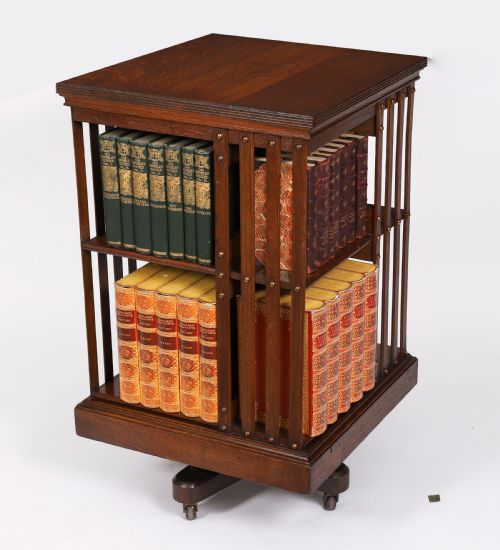


Antique Carousel Bookcase
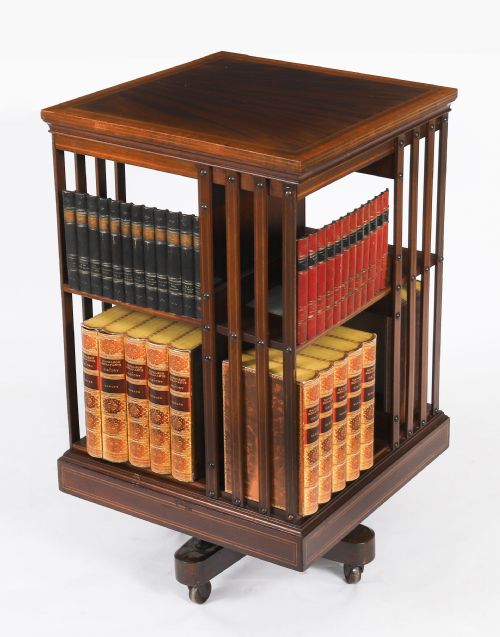
An antique carousel bookcase is a rotating tier of shelves designed to spin smoothly, and you want one for practical desktop or floor storage with period charm.
Antique Carousel Bookcase
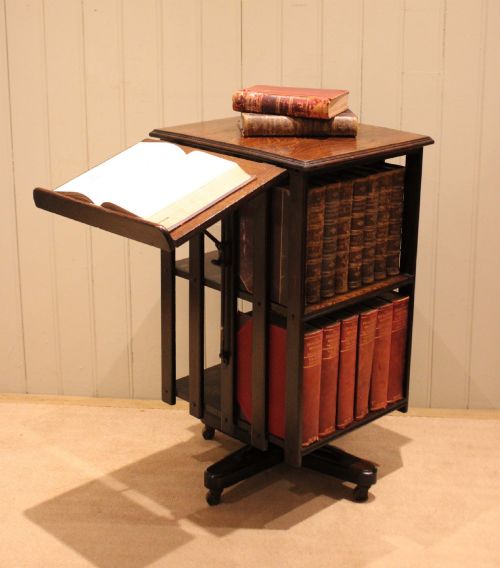
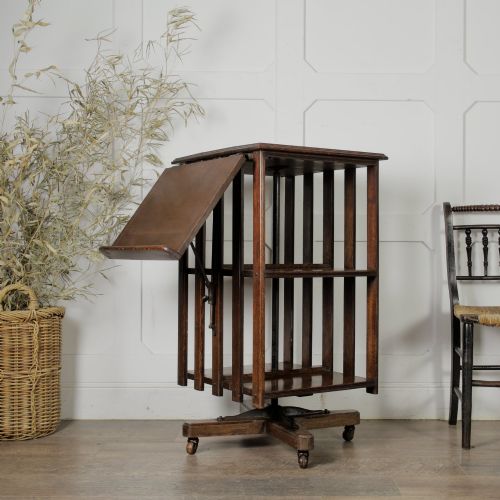
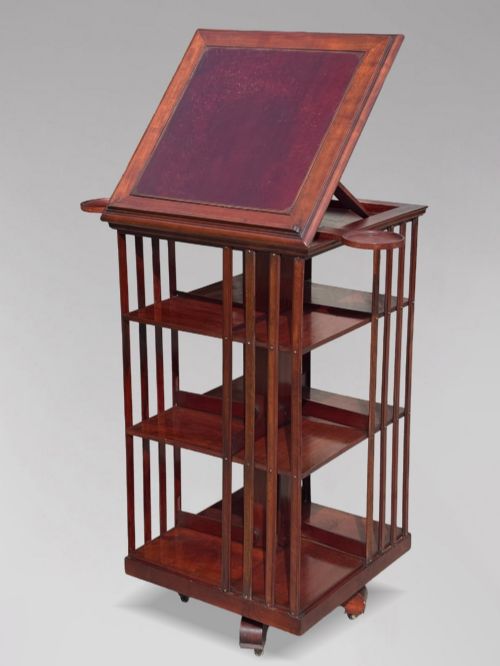
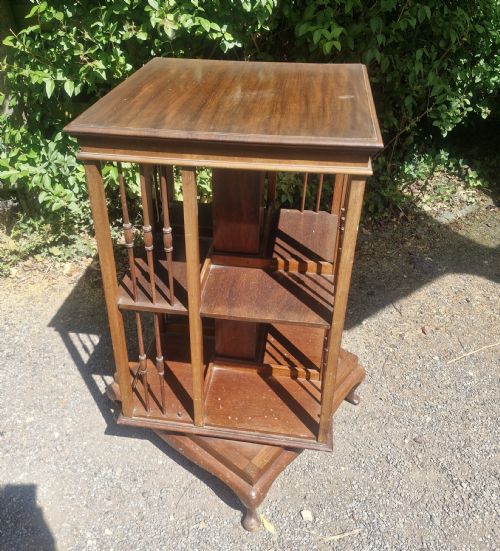
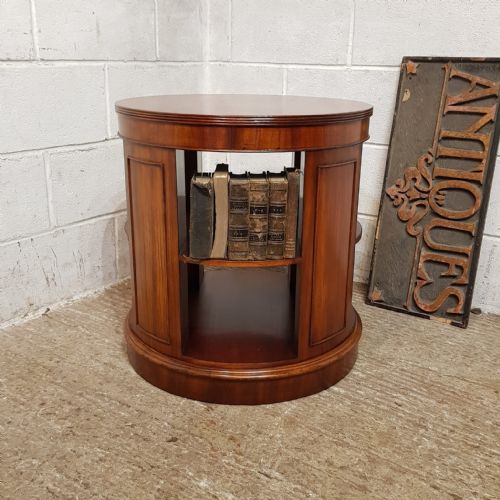
When you search for an antique carousel bookcase, you find revolving bookcases and book stands spanning the Victorian and Edwardian periods. These rotating pieces come in various heights, from small table top models to large floor-standing designs.
The materials you encounter most often include mahogany, oak, and walnut, frequently complemented by brass hardware and inlaid details. Forms range from simple round revolving bookcases to pieces mounted with ormolu or finished in flame mahogany.
Makers such as Maple & Co and Heals produced notable examples, showing that these rotating stands served both modest reading rooms and grand libraries. You are most likely to meet Edwardian and Victorian iterations featuring multiple tiers designed to turn on internal mechanisms.
What varies in quality
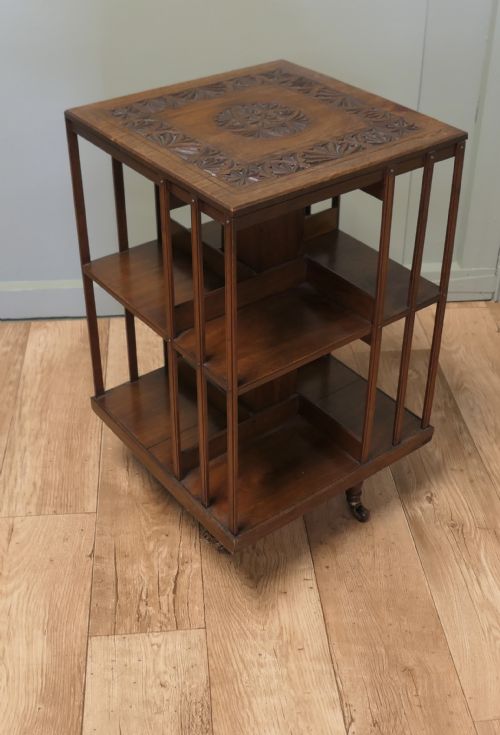
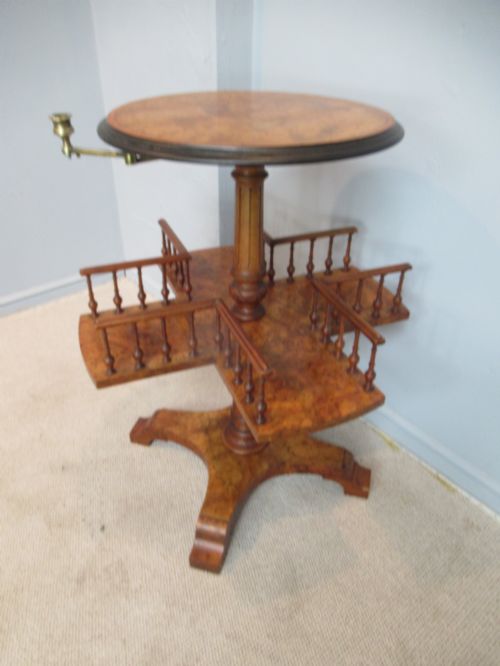
The sophistication of the timber selection and the precision of the joinery set finer examples apart from simpler utilitarian pieces. Flame mahogany, burr walnut, and intricate satinwood inlay indicate a higher grade of manufacture intended for prominent display.
The smoothness of the revolving mechanism and the quality of the brass or cast iron hardware determine how well the bookcase functions over time. Maker attribution, such as works bearing the stamp of Maple & Co or Heals, further elevates the standing of an individual piece.
Antique Carousel Bookcase Retail Price Guide 2026
Typical asking prices for carousel bookcase among the pieces listed under this phrase on Sellingantiques today, from the lower quarter to the upper quarter. They describe what is for sale here now, not the wider market.
Listings feature oak, mahogany, walnut, and satinwood across Victorian and Edwardian periods.
Maple & Co·Heals
The Antique Carousel Bookcase Glossary
- Revolving bookcase
- A rotating piece of furniture with shelves designed to hold books accessibly on all sides. It turns on a central pivot mechanism hidden beneath the base or top.
- Flame mahogany
- A veneer cut from timber where the grain creates a distinctive flickering flame pattern. It appears on finer Edwardian and Victorian furniture.
- Inlay
- Pieces of contrasting wood, satinwood, or other materials fitted into the surface of a primary timber to form decorative motifs. This technique defines many Edwardian pieces.
- Ormolu
- Gilded bronze mounts applied for decorative effect on furniture frames. It signals a more opulent style, seen on specific Victorian pieces.
- Burr walnut
- A figured wood grain full of swirling node formations highly prized for decorative cabinet work. Scottish makers utilised this timber for 19th-century book stands.
Antique Carousel Bookcase: Frequently Asked Questions
How do revolving bookcases work?
These bookcases rotate around a concealed central vertical axis supported by a hidden mechanism beneath the tiers. This allows users to access volumes from any side without moving the entire unit.
Internal iron and brass components bear the weight and provide the smooth spinning motion characteristic of period examples.
Where should I place a revolving bookcase?
Floor-standing models suit corners or open spaces beside armchairs where books need to remain within arm's reach. Table top versions fit neatly onto desks or side tables for smaller reference volumes.
Because they spin, they require clearance on all sides so the tiers can turn freely without hitting surrounding furniture.
How do I date an antique revolving bookcase?
Dating relies on observing the prevailing wood choices, hardware styles, and decorative techniques recorded across the Victorian and Edwardian eras. Heavy oak framing often points toward the late 19th century, while lighter inlaid mahogany frequently indicates the Edwardian period.
Maker signatures or stamps, when present, provide a direct link to specific workshops operating around 1890 or 1900.
What is the difference between a book stand and a bookcase?
Book stands generally refer to more compact or table top revolving formats intended for a smaller selection of daily reading. Bookcases encompass larger floor-standing pieces built with multiple tall tiers for extensive libraries.
Both types utilise the same rotating mechanical action to present books from all angles.