





Antique Cane Rocker
An antique cane rocker brings effortless movement and light seating to a room, offering the classic charm of woven panels and turned wood.
Antique Cane Rocker
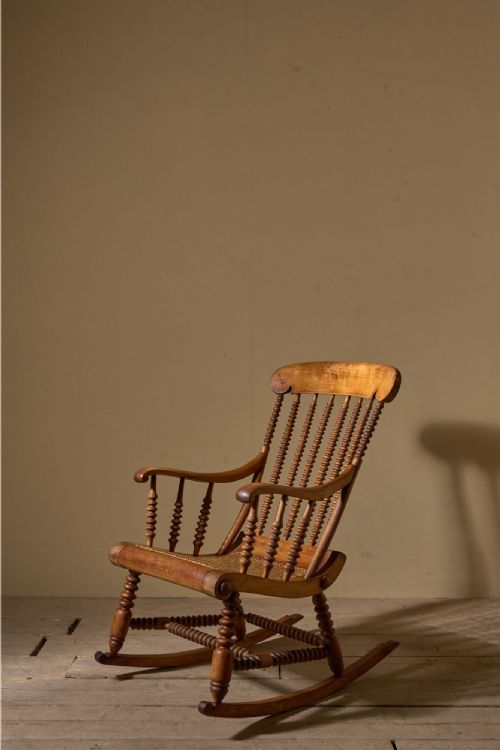
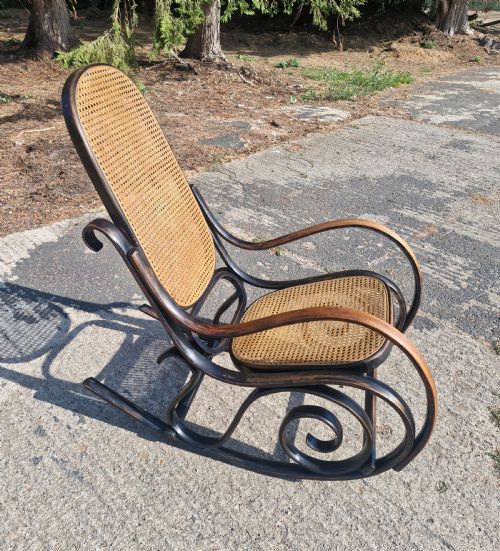
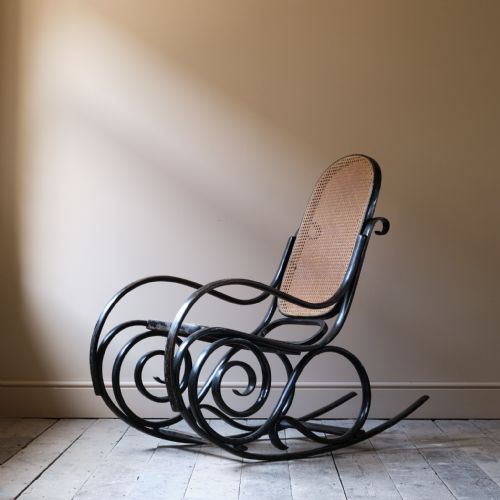
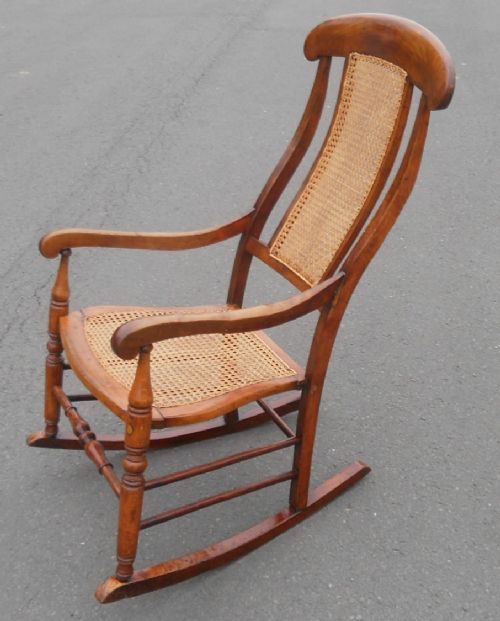
An antique cane rocker combines a sturdy wooden frame with flexible woven seating, creating a comfortable chair designed for gentle motion. These seats appear across the nineteenth century and into the Edwardian era, spanning Victorian country styles and precise bentwood engineering.
Most examples found here feature beech, oak, or other hardwoods paired with natural rattan or cane. The selection ranges from spindle-backed country models to early twentieth-century bentwood forms produced by prominent makers.
Buyers encounter both full-sized armchairs and smaller children's versions intended for dolls or nurseries. Each piece reflects the domestic habits of the Victorian and Edwardian periods, prioritising relaxed seating in sitting rooms and bedrooms.
Materials and construction methods
Makers built these rocking chairs using solid hardwoods such as beech and oak, often shaping structural members through steam bending or bobbin turning. Steam-bent beech allowed makers like Thonet to produce fluid, curved frames without heavy joints.
The seating panels utilise woven rattan cane threaded through drilled holes in the wooden frames. This technique provided a resilient, breathable surface that supported the sitter while keeping the overall chair lightweight.
Antique Cane Rocker Retail Price Guide 2026
Typical asking prices for cane rocker among the pieces listed under this phrase on Sellingantiques today, from the lower quarter to the upper quarter. They describe what is for sale here now, not the wider market.
The listings here span the 19th Century, Victorian, Edwardian, and 1900 periods, featuring beech, oak, and rattan cane materials.
Distinguishing quality in construction
Quality rests in the integrity of the wooden frame and the precision of the woven cane work. Finer examples display tight, uniform hand-weaving and cleanly turned spindles without crude repairs.
The sophistication of the design distinguishes standard country seating from high-end workshop production, such as marked bentwood pieces. Heavier hardwood frames and balanced rocking runners separate superior seating from simpler utility chairs.
The Antique Cane Rocker Glossary
- Cane
- A material derived from the peeled outer bark of rattan palms. It is woven into open patterns to form flexible seats and backs.
- Bentwood
- Wood softened through steaming and bent into curved shapes. This technique defines the lightweight chairs produced during the late nineteenth and early twentieth centuries.
- Spindle back
- A chair back constructed from multiple thin, turned wooden rods. This traditional form provides sturdy vertical support.
- Bobbin turning
- A method of lathe-turning wood to create a sequence of rounded spheres resembling spools or bobbins. It is a decorative feature seen on nineteenth-century frames.
Antique Cane Rocker: Frequently Asked Questions
What is an antique cane rocker?
An antique cane rocker is a nineteenth or early twentieth-century seating chair featuring wooden frames, curved rocking runners, and woven rattan panels.
These chairs were standard household items designed for relaxation, appearing in styles ranging from simple country spindle backs to industrial bentwood designs.
How do I date an antique cane rocker?
Dating relies on identifying stylistic markers, construction techniques, and materials recorded in the piece. Victorian models often feature heavy turned wood, whereas Edwardian and later pieces frequently employ steam-bent beech.
Examining the weave pattern and assembly methods also helps narrow down the period of manufacture between the mid-nineteenth century and the early twentieth century.
Are these rockers comfortable for daily use?
These chairs provide a gentle rocking motion and flexible seating through their woven cane panels. The natural give of the rattan makes them pleasant for quiet reading or relaxing.
Owners should place them on stable floor surfaces to ensure smooth movement along the curved wooden runners.
How do I care for cane seating?
Cane seating benefits from occasional light cleaning with a damp cloth to remove dust from the woven strands. Keeping the natural rattan slightly hydrated prevents it from becoming brittle over time.
Avoiding excessive direct heat helps preserve the flexibility of both the wooden frame and the woven panels.