



Antique Buttoned Parlor Chair
An antique buttoned parlor chair brings Victorian comfort to a drawing room, offering deep tufting and rich timber framing.
Antique Buttoned Parlor Chair
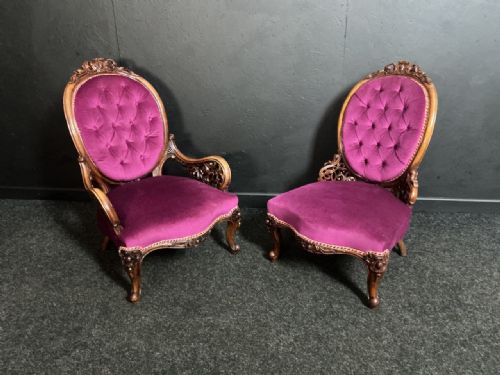
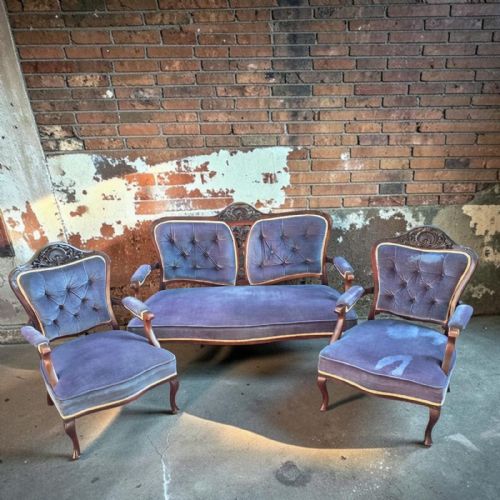
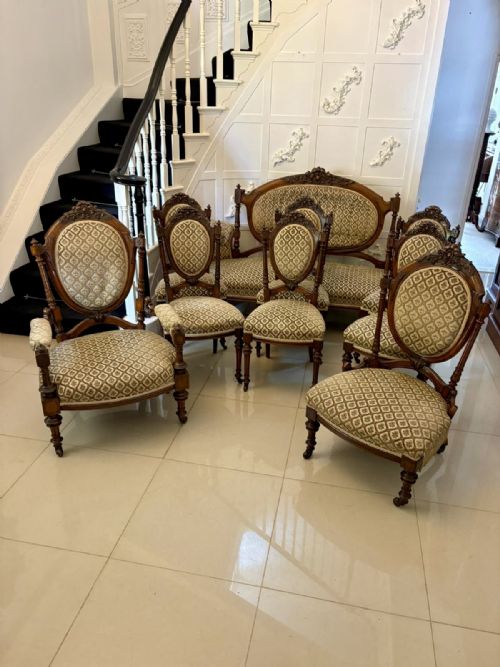
An antique buttoned parlor chair serves as a comfortable, formal seat originating predominantly in the Victorian period. These pieces frequently appear as individual parlor chairs, nursing chairs, or part of larger salon suites.
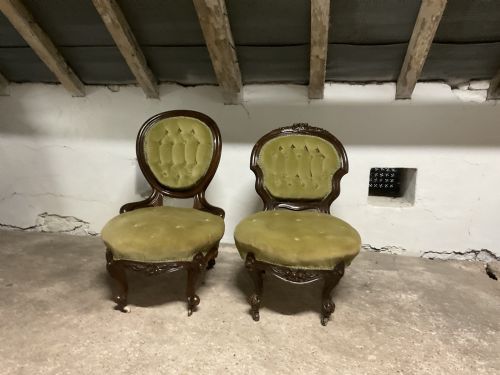
The materials and styles span walnut and mahogany frames paired with velvet, fabric, and deep buttoned upholstery. Makers constructed these items during the nineteenth and early twentieth centuries for formal entertaining.
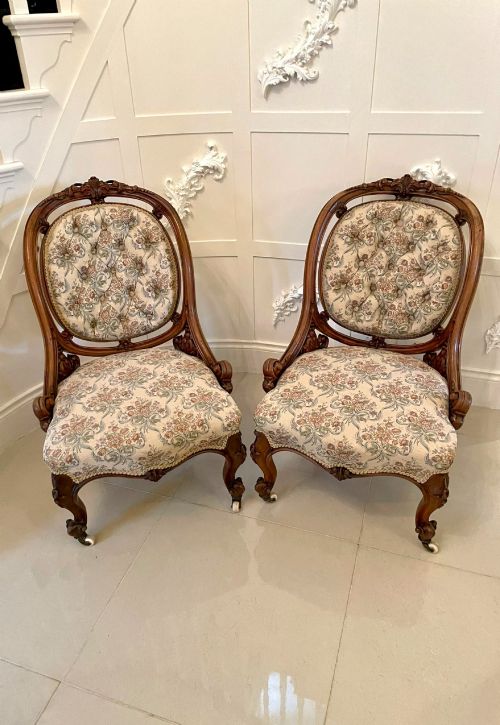
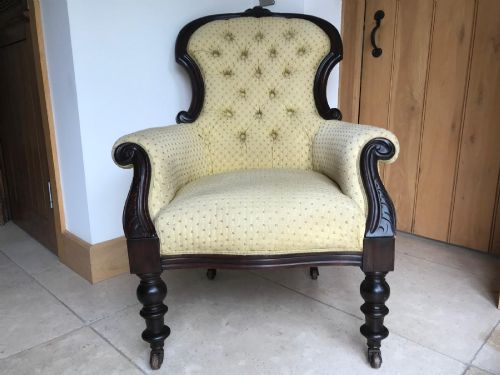
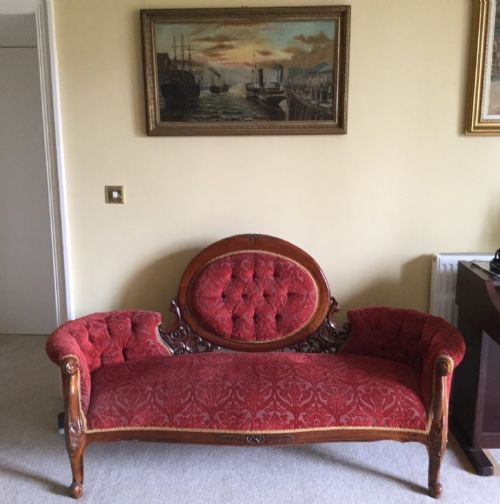
Buyers encounter designs featuring showwood frames in walnut, rosewood, or mahogany, often styled in Victorian Rococo Revival or Aesthetic Movement aesthetics. The defining characteristic remains the buttoned upholstery across the back.
How they were made
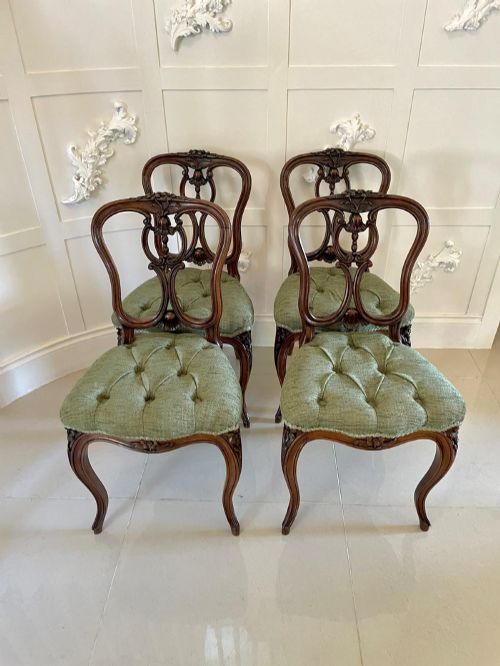
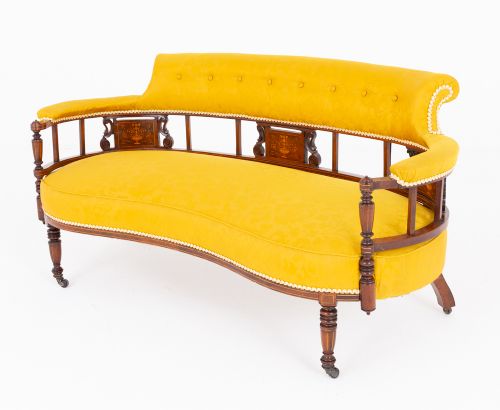
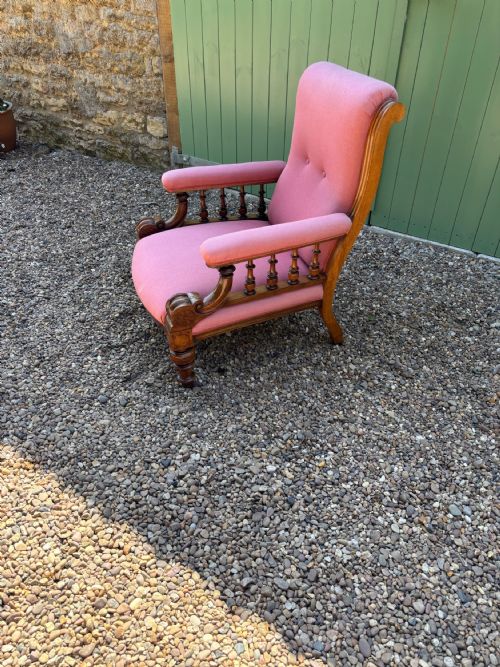
Craftsmen built the structural frames using solid hardwoods like walnut, mahogany, and rosewood, often shaping the timber with carved details and cabriole legs. Showwood frames expose the polished wood around the upholstered sections.
Upholsterers built up the seat and back using traditional stuffing techniques, securing the deep tufting with thread pulled through to create the buttoned effect. Fabrics such as velvet, brocade, and heavy upholstery textiles covered these sprung bases.
Antique Buttoned Parlor Chair Retail Price Guide 2026
Typical asking prices for buttoned parlor chair among the pieces listed under this phrase on Sellingantiques today, from the lower quarter to the upper quarter. They describe what is for sale here now, not the wider market.
Listings feature walnut frames most frequently among nineteenth century seating.
What varies in quality
The refinement of the timber carving dictates much of the distinction between standard and superior pieces, with exhibition quality items displaying intricate floral or scroll work on the walnut frames. Crisp joinery and substantial timber gauge separate robust seating from simpler variants.
The ambition of the suite or individual chair influences its standing, ranging from simple mahogany parlour chairs to elaborate matched salon sets featuring gilt or ebonised finishes. High grade showwood frames retain their original finish and structural integrity beneath the upholstery.
James Shoolbred
The Antique Buttoned Parlor Chair Glossary
- Button back
- An upholstery technique where buttons are pulled deep into the padding in a diamond pattern. This creates distinct tufts across the backrest.
- Cabriole leg
- A furniture leg that curves outward in a convex arc and tapers inward in a concave arc, ending in a pad or scroll foot. It draws inspiration from animal forms.
- Salon suite
- A matched set of seating furniture designed for a formal drawing room. These groupings typically include a settee alongside armchairs and side chairs.
- Spoon back
- A chair back shaped like the bowl of a spoon, curved to fit the human spine. This form is common in Victorian walnut seating.
Antique Buttoned Parlor Chair: Frequently Asked Questions
How do I identify a Victorian parlor chair?
Victorian parlor chairs display dark hardwoods like walnut or mahogany, often with curved cabriole legs and floral carvings. Look for characteristic buttoned upholstery and sprung seats designed for formal reception rooms.
These pieces typically date from the mid to late nineteenth century, reflecting the revival styles popular during that era. The presence of exposed showwood framing further confirms the Victorian origin.
What is a salon suite?
A salon suite comprises a matching set of seating furniture, such as a settee paired with several armchairs and side chairs. These suites furnished Victorian drawing rooms for receiving guests.
Acquiring a complete suite provides a unified decorative scheme, though individual parlor chairs also function well independently.
Are these chairs comfortable for daily use?
These chairs provide firm support through traditional sprung bases and padded backs. Many feature upright postures intended for formal sitting rather than lounging.
Upholstery condition varies across surviving examples, so check whether the internal webbing and springs have been restored if you plan regular daily seating.