

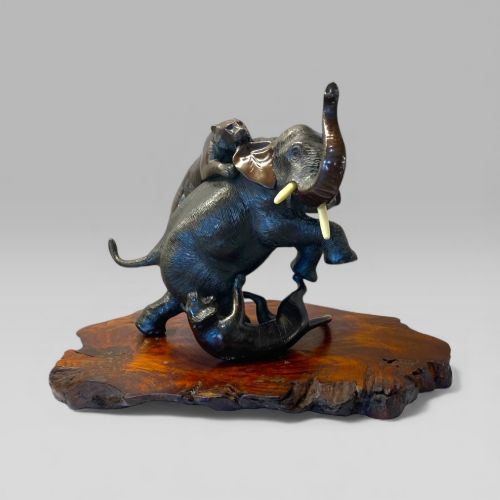


Antique Bronze Wildlife Group
These antique bronze wildlife groups capture the raw tension of the natural world, combining muscular grace with meticulous metalwork that every collector seeks.
Antique Bronze Wildlife Group
An antique bronze wildlife group captures a dramatic scene from nature, typically showing predators and prey locked in fierce combat or resting in naturalistic repose. These pieces span the nineteenth and early twentieth centuries, originating primarily from European animalier workshops and Japanese Meiji period foundries.
You are most likely to encounter dynamic multi-figure compositions on this page, such as elephants fighting tigers, lions with lionesses, or foxes and hares caught mid-action. These sculptures vary in scale from intimate desktop studies to large floor-standing works mounted on marble or hardwood bases.
The aesthetic divides clearly between the anatomical realism of French animalier bronzes and the theatrical intensity of Japanese Meiji okimono. Both traditions treat wild animals with fierce respect, focusing on muscle tension, fur texture, and the split-second drama of the hunt.
How they were made
Foundries cast these wildlife groups using the lost-wax technique, allowing sculptors to render complex fur, bone, and foliage with absolute fidelity. Molten bronze filled the moulds before being hand-finished with chisels and files to sharpen every claw, whisker, and sinew.
Makers applied chemical patination to the heated metal, ranging from deep dark patinas to nuanced brown and golden tones that mimic natural coats. Many sculptures incorporate integrated or separate wooden, bone, ivory, and marble bases that anchor the heavy metal composition.
Antique Bronze Wildlife Group Retail Price Guide 2026
Typical asking prices for bronze wildlife group among the pieces listed under this phrase on Sellingantiques today, from the lower quarter to the upper quarter. They describe what is for sale here now, not the wider market.
Listings feature nineteenth and early twentieth-century bronzes across French animalier and Japanese Meiji styles.
What varies in quality
The depth and subtlety of the patination separate ordinary castings from masterworks, as chemical treatments must look organic rather than painted on. Furthermore, the complexity of the grouping - such as multiple figures interacting in a balanced composition - demands superior foundry skill.
Tsunemitsu 常光·Kaniya Kuniharu·G.Gardet·Vannetti·P J Mene·Alfred Dubucand·I. Rochard
The Antique Bronze Wildlife Group Glossary
- Animalier
- A nineteenth-century artistic movement dedicated to the realistic portrayal of animals, particularly wild beasts in motion or combat. Sculptors in this tradition studied live specimens extensively in menageries.
- Okimono
- A Japanese decorative sculpture designed for display on a shelf or tokonoma, highly popular during the Meiji period. These bronzes often depict intense wildlife scenes with astonishing textural detail.
- Patina
- The surface coloration and sheen developed on bronze either naturally over time or artificially through chemical application. A good patina enhances the perceived depth of the fur and muscle.
- Lost-wax casting
- A traditional method where a wax model is rendered into a mould, melted out, and replaced with molten bronze. This technique permits undercuts and intricate details essential for wildlife studies.
Antique Bronze Wildlife Group: Frequently Asked Questions
What is an animalier bronze?
An animalier bronze is a nineteenth-century sculpture focused specifically on the realistic depiction of animals. These works capture creatures in natural poses, often showing the raw drama of predation.
European sculptors pioneered this genre by observing live animals in zoological gardens. Their bronzes prioritise anatomical accuracy and movement above idealised human forms.
How do I care for antique bronze?
Keep antique bronze away from direct sunlight and damp environments to protect the original patination. Dust the piece gently with a soft, dry brush to prevent particulate accumulation in the crevices.
Avoid using commercial metal polishes, as abrasive pastes will strip away the historic patina. Occasional light application of microcrystalline wax helps protect the surface from atmospheric moisture.
What is a Meiji period bronze?
A Meiji period bronze dates from the era of Japanese history between 1868 and 1912, when metalworkers reached unprecedented heights of technical mastery. These pieces often feature complex subjects like elephants battling multiple tigers.
Japanese okimono from this era combine traditional casting methods with extraordinary surface detailing. They reflect a deep fascination with natural power and narrative tension.