



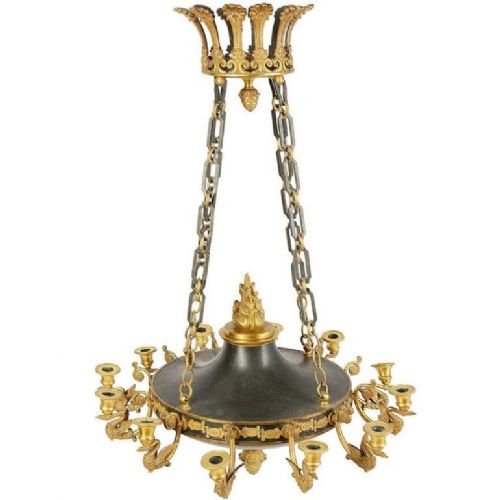

Antique Brass Lustres
These antique brass lustres combine warm metalwork with dangling glass drops to throw a brilliant, refractive light across a room.
Antique Brass Lustres
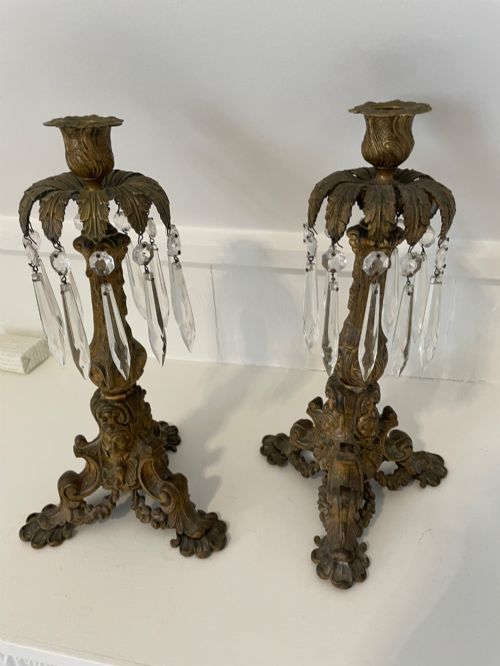
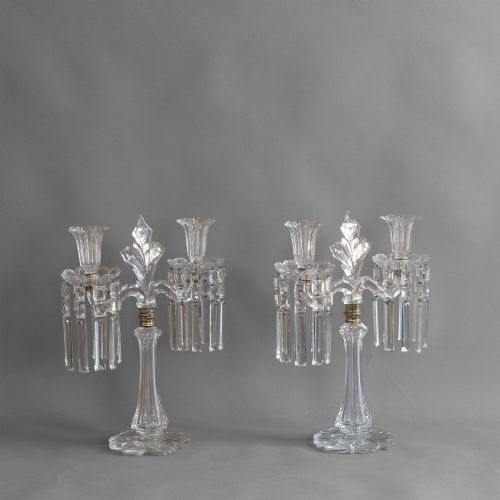
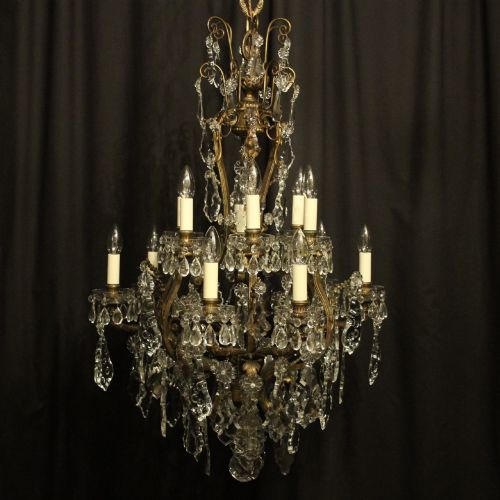
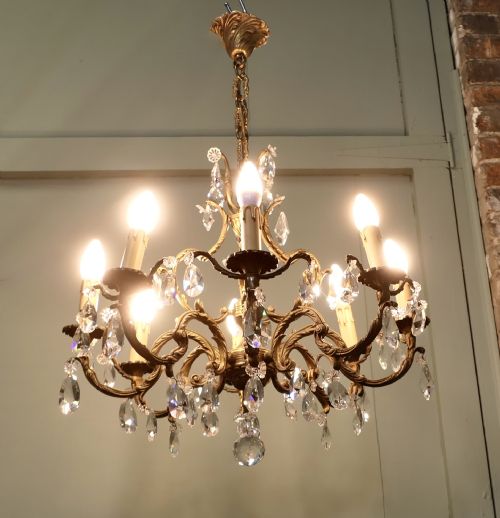
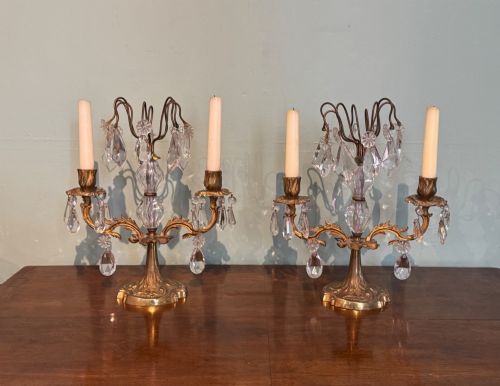
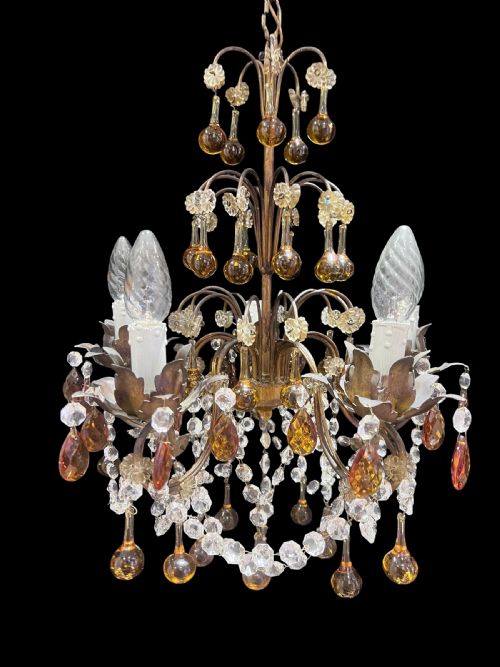
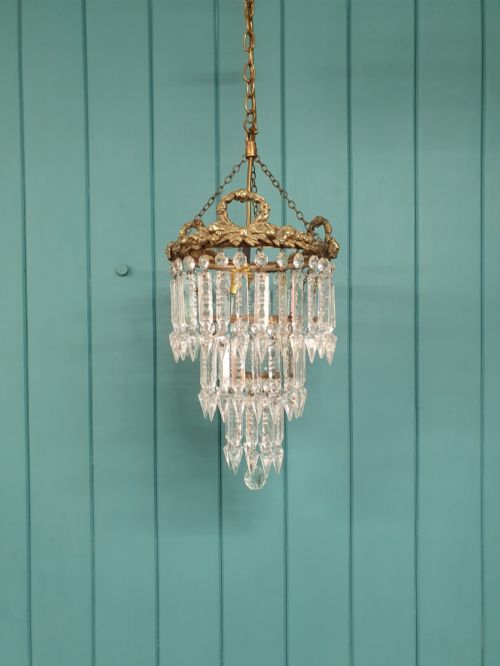
When you search for antique brass lustres, you encounter lighting and candle holders designed to catch and multiply illumination through suspended crystal or glass pendants. The items on this page range from table-standing pairs to large chandeliers, drawing heavily on French and English domestic design.
The selection includes 19th Century and Victorian specimens alongside Edwardian pieces and early 20th century productions. You will frequently find pairs of table lustres and multi-armed chandeliers incorporating brass, gilt metal, and cut glass components.
Materials and construction
The foundation of these pieces relies on cast and turned brass, gilt bronze, or ormolu, often paired with nickel plating or gilt metal finishes. Structural frames support sockets or candle cups designed to hold tapers, lamps, or electrical conversions.
Hanging drops of cut glass, crystal, or coloured crystals are attached to the arms and sconces using small wire loops or pins. These prismatic drops require careful hand-cutting and polishing to achieve their characteristic light dispersion.
Antique Brass Lustres Retail Price Guide 2026
Typical asking prices for brass lustres among the pieces listed under this phrase on Sellingantiques today, from the lower quarter to the upper quarter. They describe what is for sale here now, not the wider market.
Some Edwardian wall lights feature playful cherubs holding up the branches where the glittering glass drops dangle.
Quality factors in brass and glass lighting
The distinction between tiers rests upon the precision of the metal casting and the clarity of the glass. Finer examples display crisp chasing on the bronze or brass elements and heavy, hand-cut crystal drops that retain sharp facets rather than rounded edges.
Proportion and completeness also govern the hierarchy. Pieces that retain their matching set of original glass pendants without replacements, alongside substantial weight in the primary metal structure, occupy the upper end of the selection.
The Antique Brass Lustres Glossary
- Lustre
- A candlestick, candelabrum, or chandelier ornamented with cut glass pendants. These hanging drops catch and refract the flame or bulb light.
- Ormolu
- A metallic technique of applying finely ground high-carat gold to an object of bronze. This provides a rich, durable golden surface on decorative mounts.
- Prism
- A geometric cut glass pendant suspended from the arms of lighting fixtures. Prisms disperse light into spectral colours.
- Sconces
- The bracket or cup on a lighting fixture designed to catch wax or hold the base of a candle. They anchor the hanging crystal drops in place.
- Cricklite
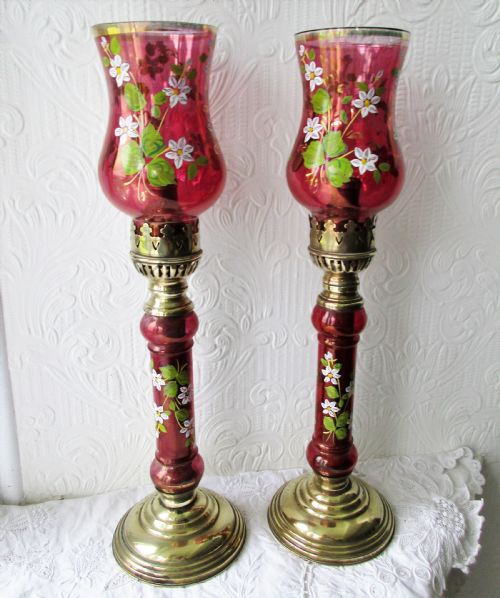
- A specific brand of patent table candelabra utilising glass shades and brass stands. These nineteenth-century pieces often accommodated small night-lights or candles.
Antique Brass Lustres: Frequently Asked Questions
What is an antique lustre?
An antique lustre is a candle holder or lighting fixture adorned with hanging glass or crystal drops designed to reflect light.
They emerged as decorative table and ceiling pieces meant to maximise the illumination of a single flame.
How do I clean crystal lustres?
Cleaning involves washing the glass drops individually in warm, soapy water while they remain attached or after careful removal.
Metal components require gentle dusting to preserve patination without abrasive polishes that damage gilt surfaces.
Were these fixtures electrified?
Many surviving examples began as candle holders or oil-burning lamps before later conversion to electricity during the twentieth century.
Original configurations held tapers, whilst chandeliers and wall lights often accommodated multiple small bulbs.
How do I date a brass lustre?
Dating relies on examining the casting style, screw threads, assembly methods, and the cut of the glass drops.
Victorian and Regency pieces display heavier brass foundations and hand-beveled crystal, whereas Edwardian items often incorporate nickel plating or lighter frames.