
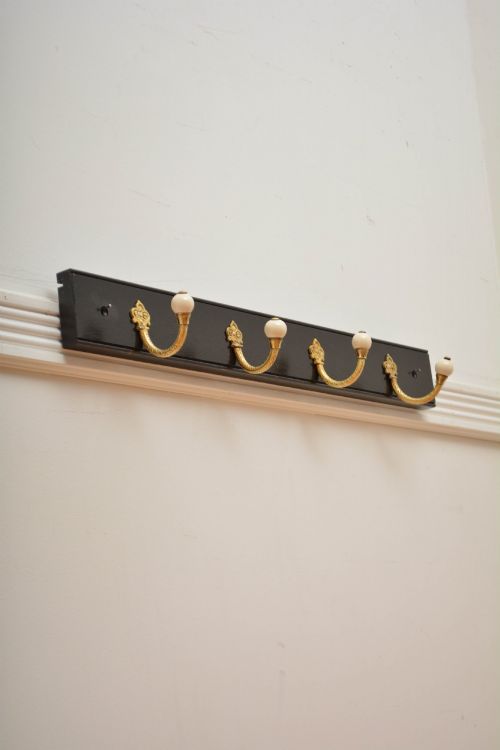


Antique Brass Hat Pegs
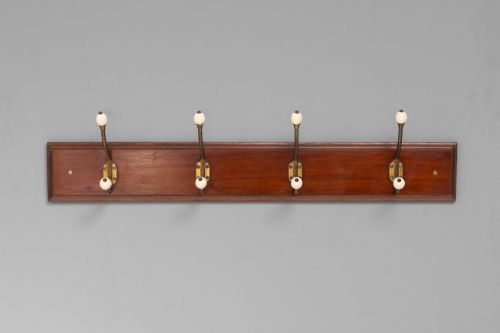
Antique brass hat pegs bring solid nineteenth and early twentieth century utility to a hallway, offering sturdy metalwork mounted on timber backboards.
Antique Brass Hat Pegs
When you search for antique brass hat pegs, you encounter wall-mounted hardware and rails designed to hold outerwear in domestic entrances. These fixtures range from single hooks and pairs to long coat racks fitted with multiple projections.
The pieces appearing on this page date predominantly from the Victorian era through to the early twentieth century, spanning decades such as 1880, 1900, 1910 and 1930. They typically combine cast or forged metal hooks with wooden mounting boards.
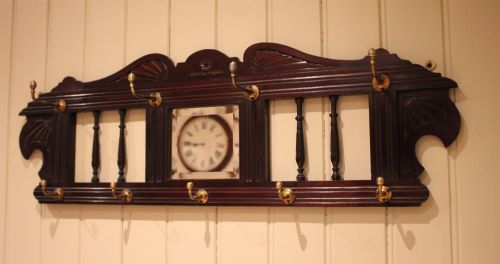
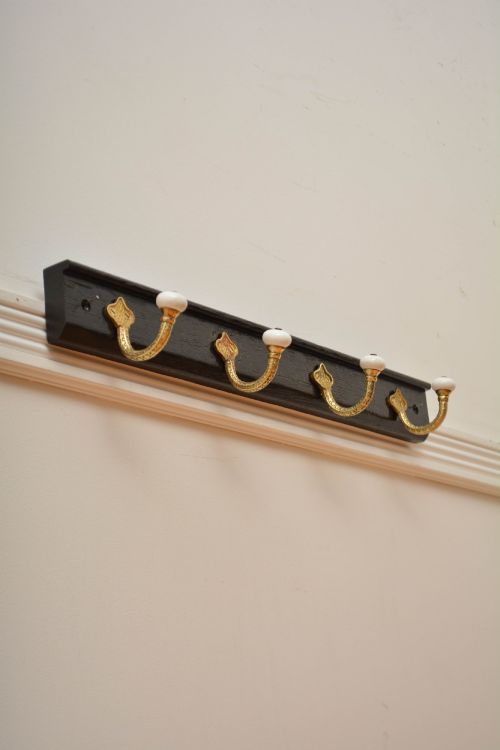
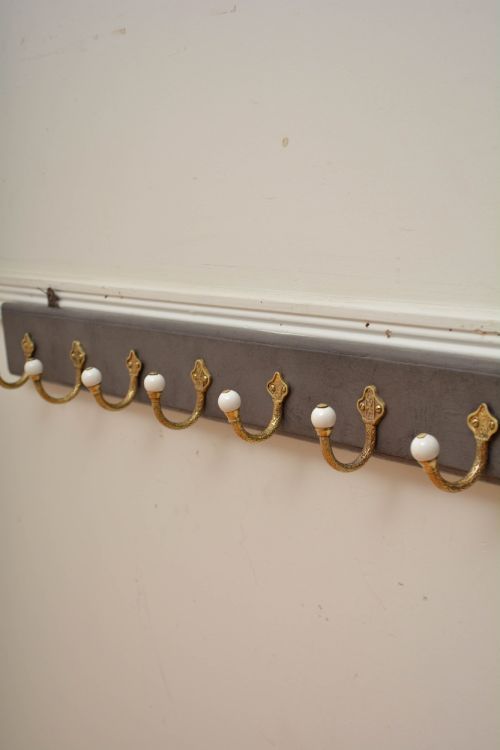
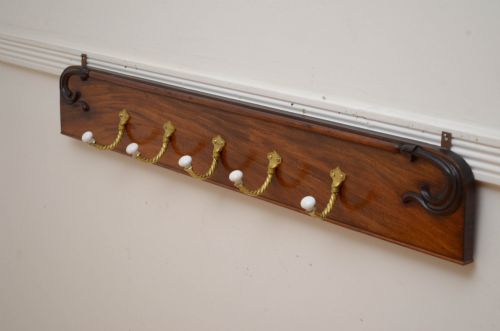
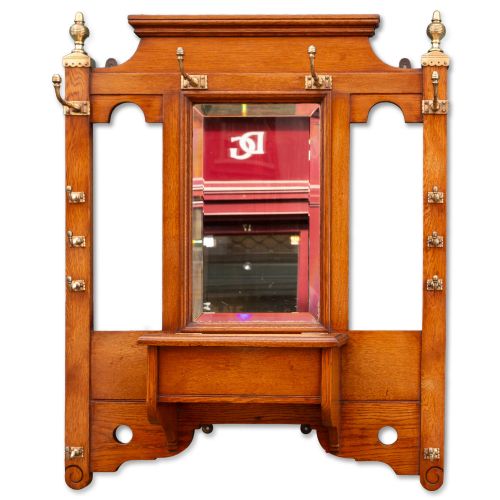
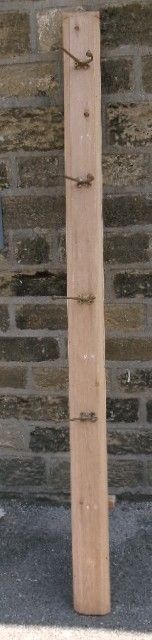
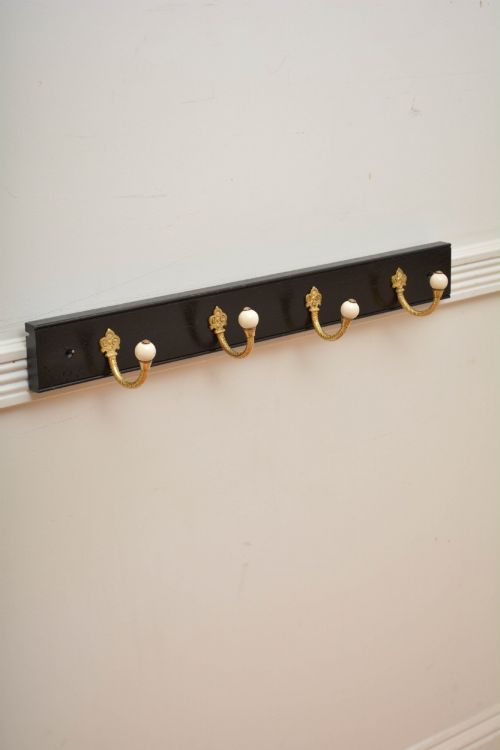
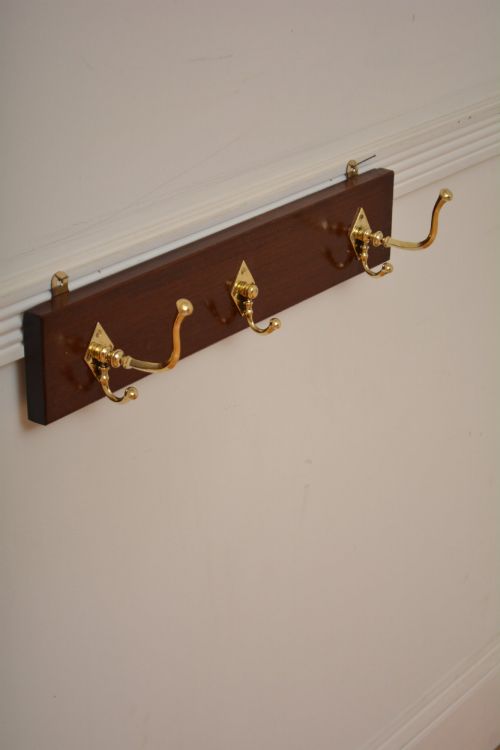
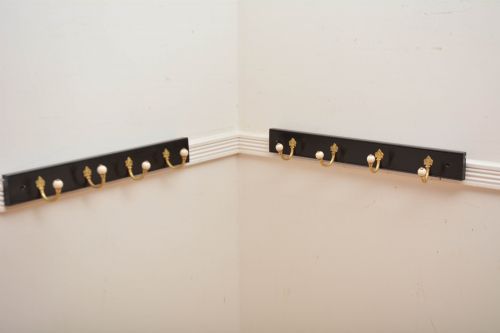
Common forms include simple brass hooks, items paired with ceramic centres, and French bronze designs. Backboards are fashioned from mahogany, oak, ebonised wood and pine, while related items like hatstands and mirrors also appear.
How they were made
Maker craft involved casting brass and bronze into robust shapes, often featuring decorative backplates and scrolled arms. These metal components were secured to timber backboards using screws.
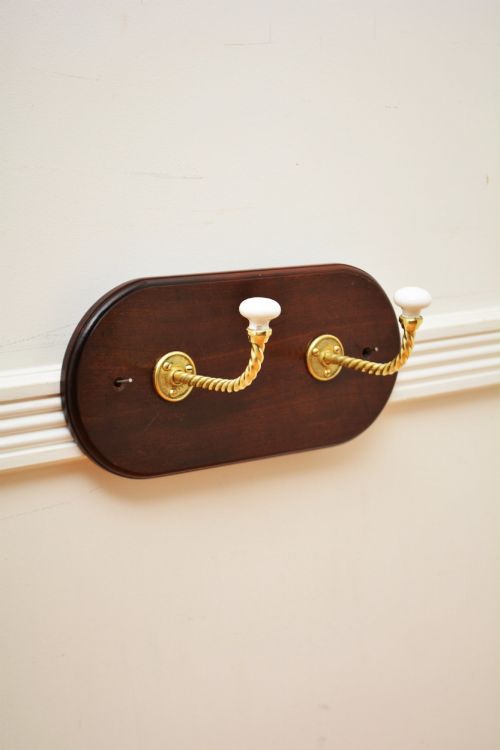
Backboards were constructed from hardwoods such as mahogany and oak, or painted and ebonised softwoods, shaped with bevels or moulded edges. Some designs integrated ceramic elements into the hooks or paired the metalwork with bevelled mirror glass.
Some Victorian equestrian novelty pieces bring horse brasses and horseshoe shapes directly to your hallway wall.
What varies in quality
Quality rests in the weight and crispness of the metal casting, seen in the depth of detail on mounting plates and hooks. Finer pieces display careful finishing and substantial gauge brass rather than thin pressed metal.
The choice of backboard timber and construction also defines the standard, with solid mahogany or golden oak providing greater substance than basic pine. The integration of contrasting materials, such as ceramic inserts or twisted rope details, marks out more ambitious manufacturing.
The Antique Brass Hat Pegs Glossary
- Backboard
- The wooden plank or strip to which coat hooks are fastened for wall mounting. It distributes the weight and protects the wall surface.
- Ebonised wood
- Timber treated with a dark stain or finish to imitate ebony. It was popular in the Victorian period for creating sharp contrast against polished brass.
- Aesthetic Movement
- A late nineteenth-century design style focusing on visual and material qualities rather than narrative content. Pieces from this movement often utilise clean lines and refined brasswork.
- Cast brass
- Molten brass poured into a mould to form solid hooks and plates. This technique creates durable items with distinct relief patterns.
Antique Brass Hat Pegs: Frequently Asked Questions
How do I mount an antique coat rack?
Most wall-mounted racks utilise existing screw holes through the wooden backboard to secure directly into wall studs or appropriate fixings.
Ensure the fixings match the weight of the timber and the anticipated load of heavy coats.
What is the difference between Victorian and Art Deco hooks?
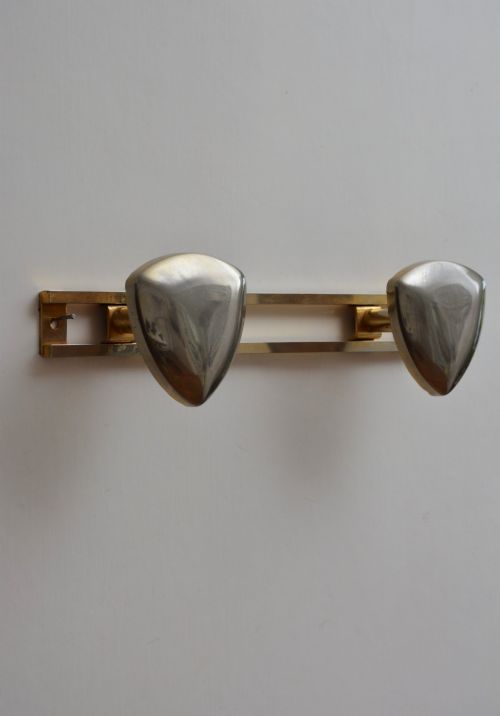
Victorian hooks tend to feature ornate casting, ceramic inserts, and rich timber backboards like mahogany or ebonised oak. Art Deco examples lean towards geometric shield shapes and gold or silver metal finishes.
Stylistic shifts reflect the changing decorative tastes between the nineteenth and twentieth centuries.
Can I use single hooks individually?
Single brass hooks and pairs are frequently mounted independently along a wall where a long backboard is not suitable. They offer flexibility for small spaces like alcoves or cloakrooms.
Check the mounting plate dimensions to ensure adequate screw placement.
What woods are typical for these backboards?
Mahogany and oak are commonly found on nineteenth-century racks, sometimes finished with an ebonised dark coating. Softer timbers like pine also appear on functional utility pieces.
The choice of wood often corresponds to the period and the formality of the room the rack was made for.